
At the beginning of November, Adam and I secured jobs as solar hot water installers at Sandri Energy. My friend Thom, who helped construct the foundation, is the project manager in Sandri’s renewable energy division, and recommended Adam and I for the positions. We had about a month before we would begin working full time, so we scrambled to get a bunch of things checked off the to-do list:
- Finish electrical
- Cedar walls for root room so light fixture and fan can be wired
- Purchase wall sconces and outdoor fixtures
- Finish plumbing
- Kitchen counter for sink
- Bathroom vanity for sink
- Finish stairs from first to second floor
- Railing around opening between floors
- Second floor bathroom floors
- Second floor bathroom shower
- Finish solar system plumbing and schedule Energy Star inspection (before end of year for rebate)
During this period of time I really served as a general contractor and odd-job guy. For the first time we had issues around “subcontractors” being in each other’s ways. Incredibly we pretty much got it all checked off.
Adam worked diligently on the stairs to the second floor and the railing on the second floor. He did a fantastic job.

Beginning to work on the finish stairs
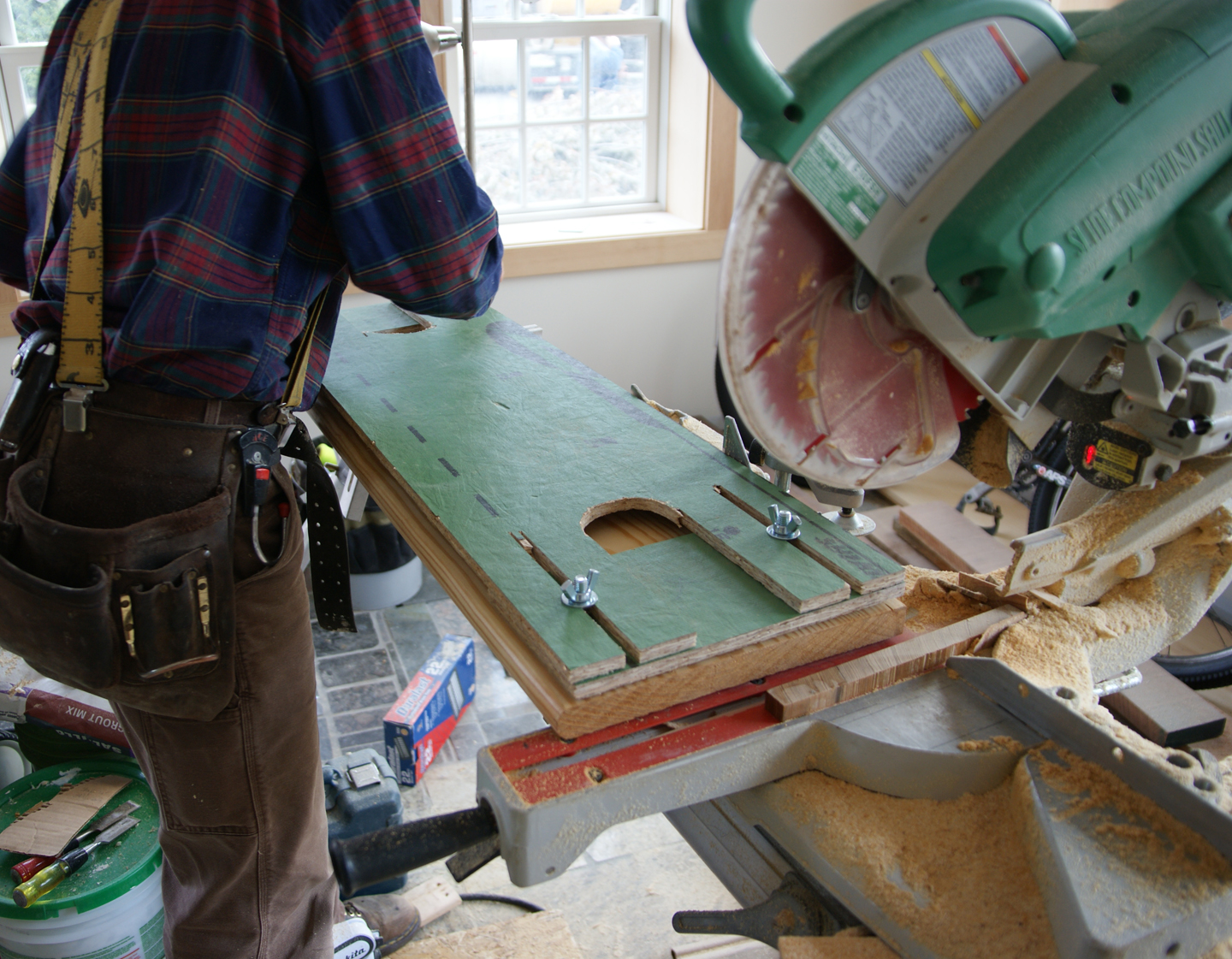
In order to "copy" the exact angles and length of the treads, Adam constructed this simple yet incredibly useful stair tread jig.
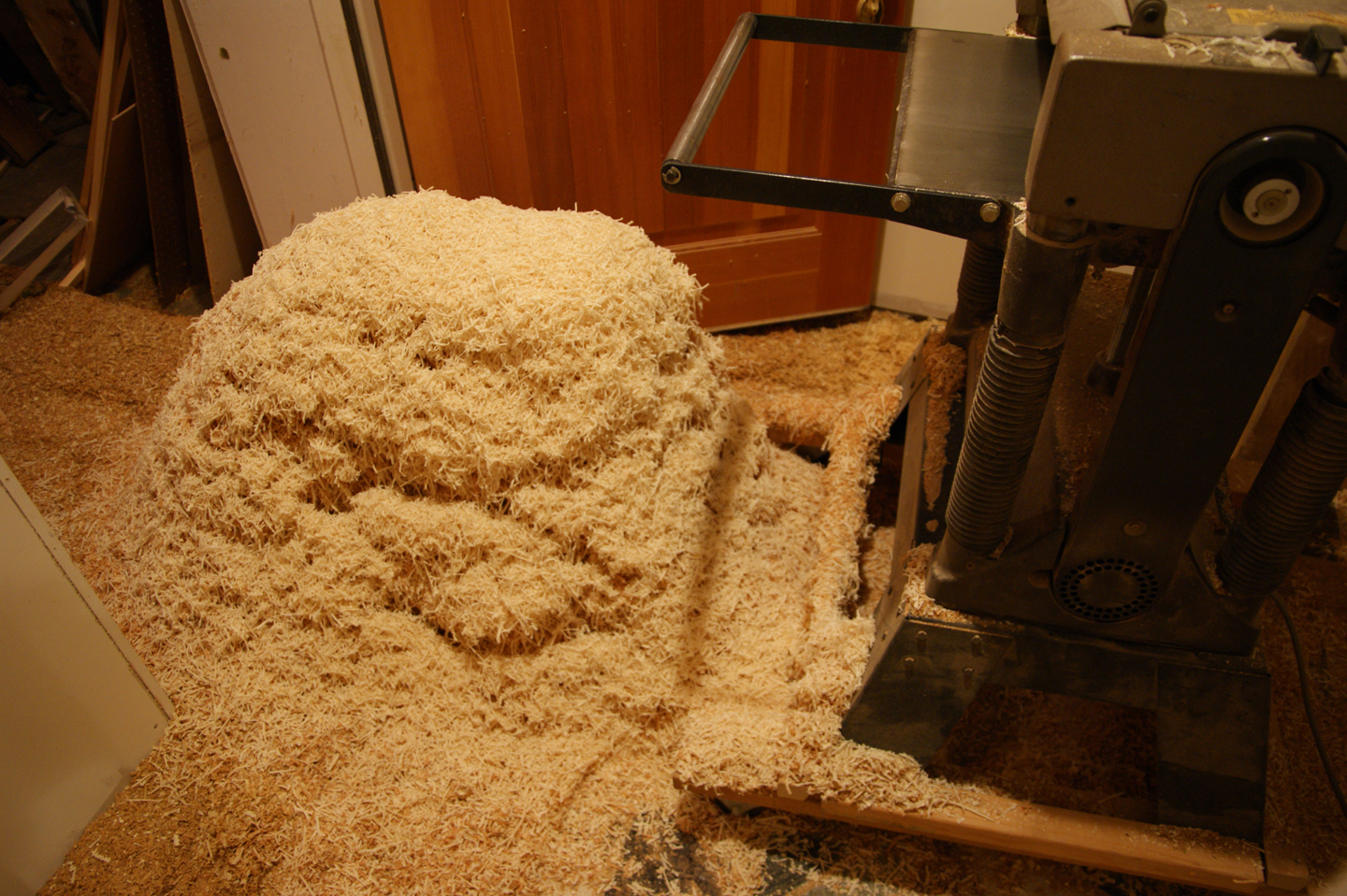
We purchased ready-made southern yellow pine treads, however, we bought rough material for the risers that needed planing. The wood shavings from the planer made a huge pile.
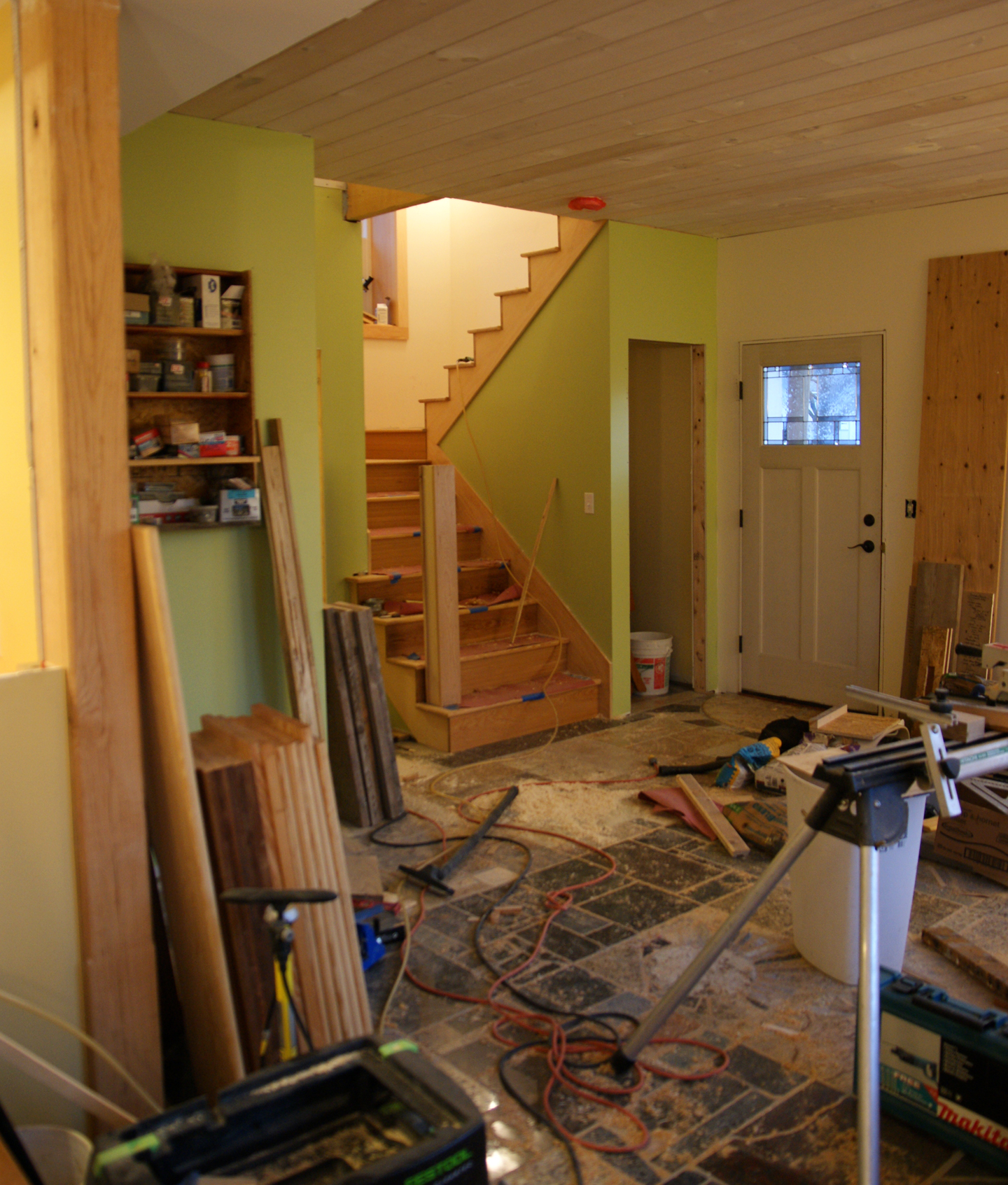
All the treads and risers are on. The newel post is anchored directly into the concrete slab. In order to tighten the nut you stick an extra long driver shaft down into the newel post.
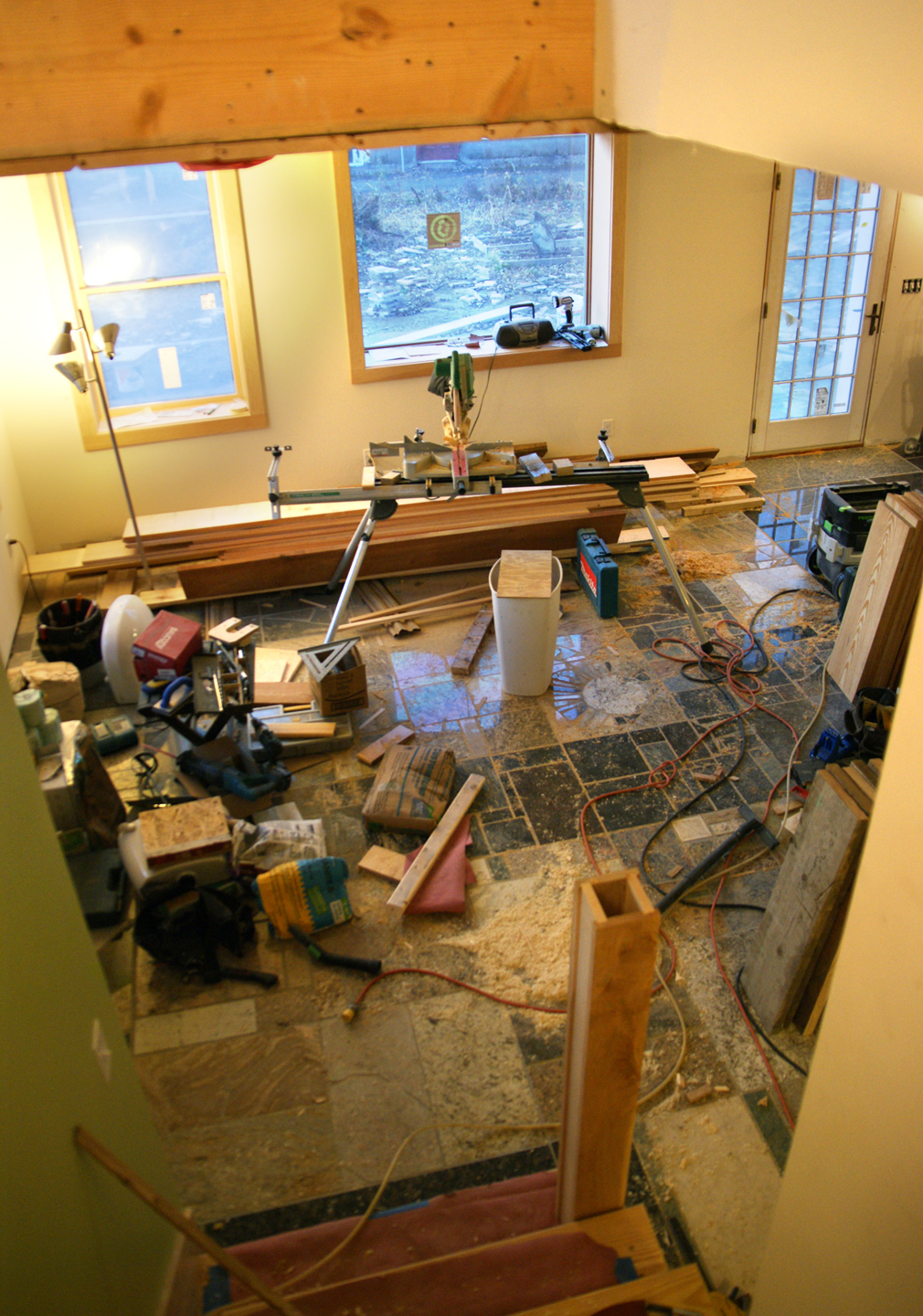
View from landing to the first floor.

View from top of stairs down to landing while under construction

Ordinarily, one can go ahead and add on wood to serve as the top tread nosing, however, since our sub-floor also serves as the finish floor, we needed to subtract from the 2x6 spruce floor. We wanted to use a strong wood since this thin piece of wood will see a fair bit of stress. For the job we used a piece of black locust that was kicking around.
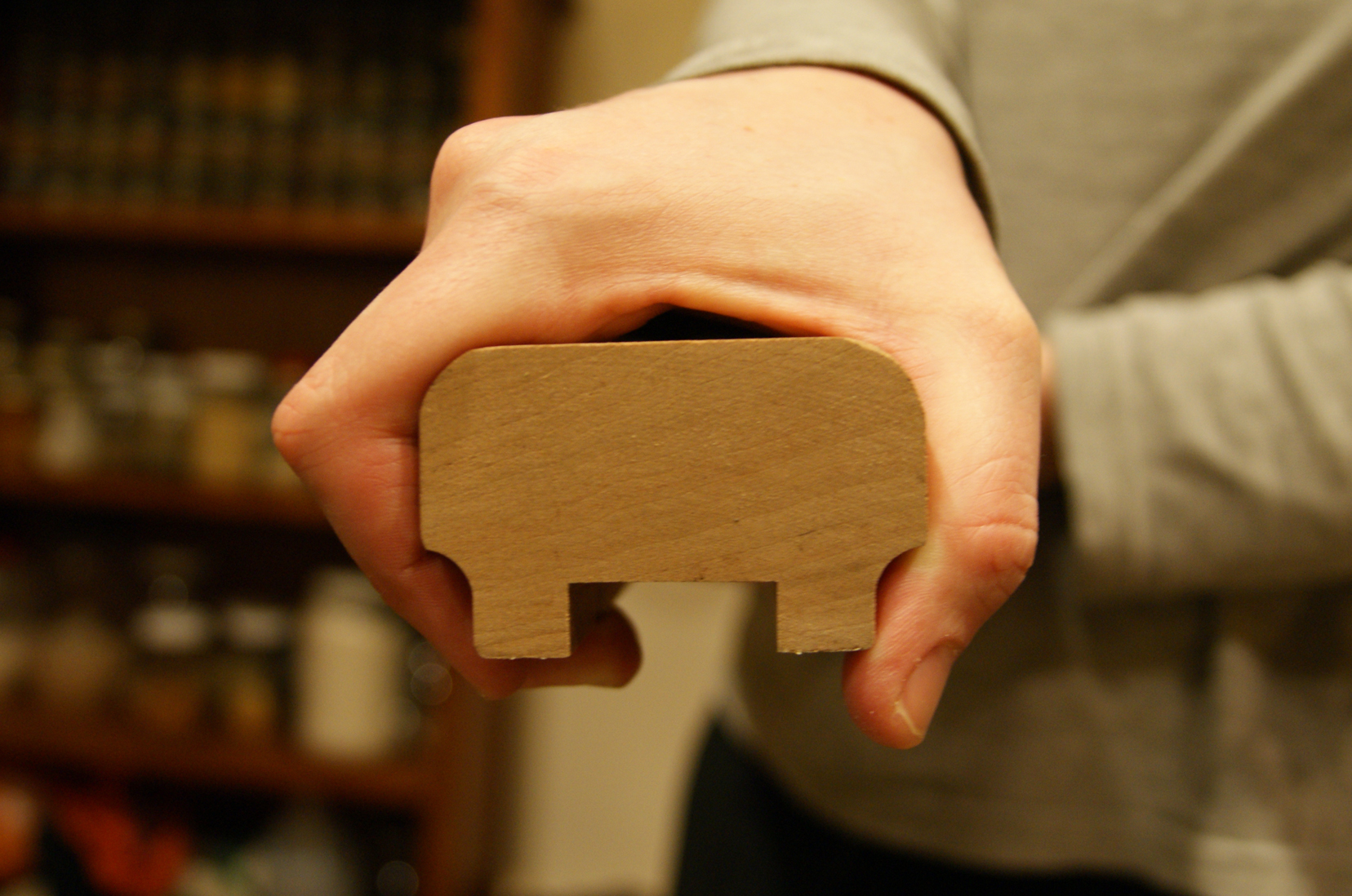
Adam and I collaborated on creating a custom cherry hand rail. We really like the finished product.

Our home made balusters are square in cross section. We put a round tenon on the end using a method inspired by the "For Pros by Pros Stairbuilding" book. The book recommends using a dado blade on a table saw. You set up a block of wood with a hole that has the same diameter as the diagonal of the square cross section of the baluster next to the dado blade. You then push the baluster through the hole into the dado blade and rotate it. In part because we only had a portable table saw on site, Adam created another style of jig for use with his router table. Basically, he clamped on a 6" section of plastic tubing (same inside diameter as the baluster's cross section diagonal) onto the table, and then pushed the baluster down onto the router.

The wood we purchased for the risers has a unique story. It was sold to Forest Products Associates, a local purveyor of domestic and foreign hard wood, by a local who had had it in his barn for decades. The long 1x10 and 12 boards we certainly had a previous life. Nail holes ran down both edges of the boards and one face of each board showed deep scoring of the softer summer growth wood. This type of gouging is similar to what Adam has seen on grain chutes. The wood was sold to us as southern yellow pine but it clearly isn't, as it isn't as tough, nor yellow. We were quite lucky getting this beautiful wood.

Whatever wood this is that we used for the risers, it shows incredible age. The sample here is about 7/8 of an inch thick. Even if you were to click on the much larger version of this image, you will still not be able to make out all of the growth rings. Perhaps putting it on a scanner might resolve some of the finer rings.
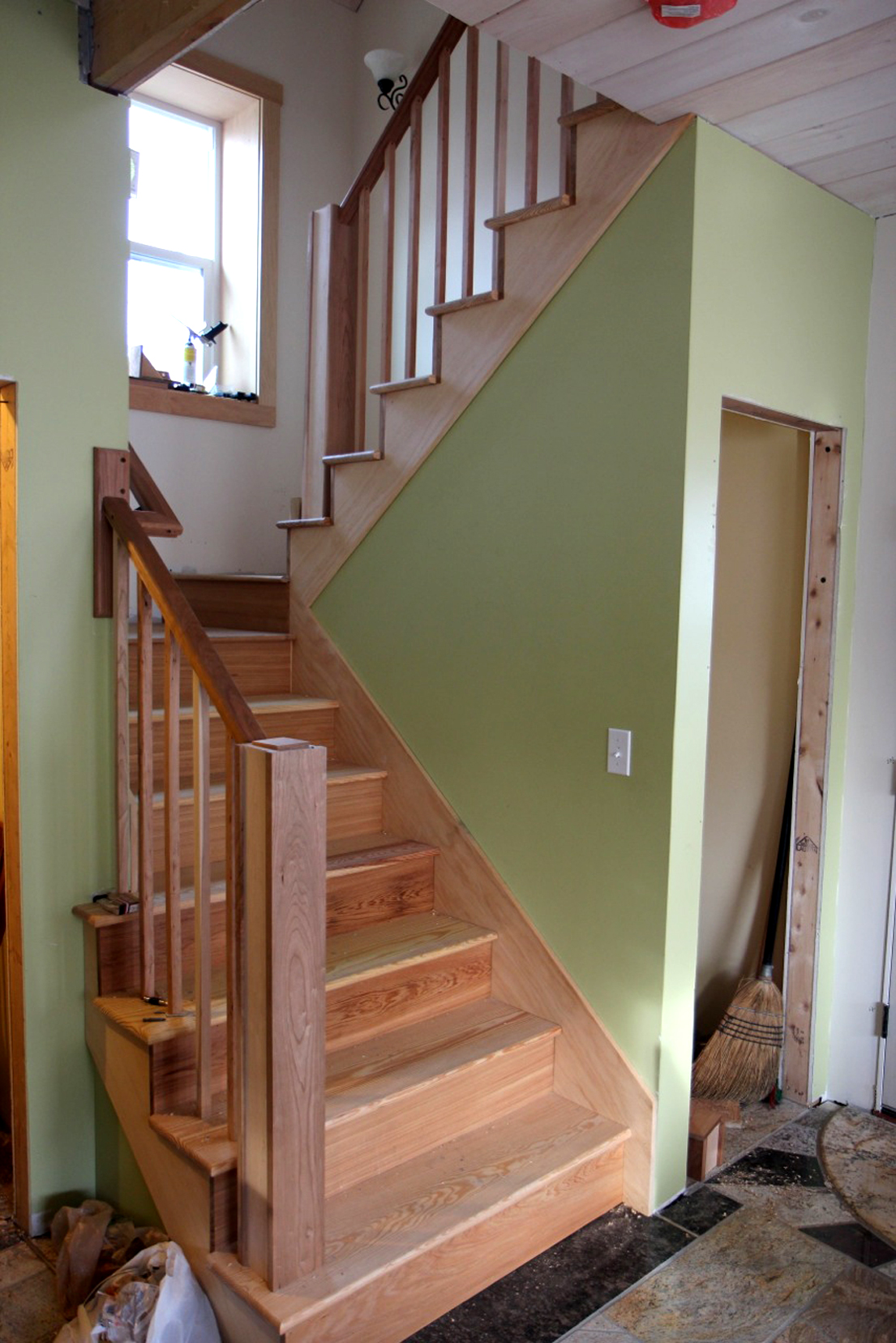
Our completed staircase uses a variety of different wood species. Southern yellow pine treads, an unknown species of recycled old growth wood for the risers and landing flooring, white pine for the skirt boards, cherry that we milled from our own trees for the balusters, maple and cherry for the newel posts, black locust for the final nosing, and cherry for the rails. (Photo by Andy Grant)

A view of the finished stairs looking from the top down to the landing. Adam put a tongue and groove on the recycled old growth wood used on the landing. Even though the boards were fairly tight to begin with, they shrunk some. Eighth inch gaps are visible between the boards. Perhaps they will close up this summer. (Photo by Andy Grant)
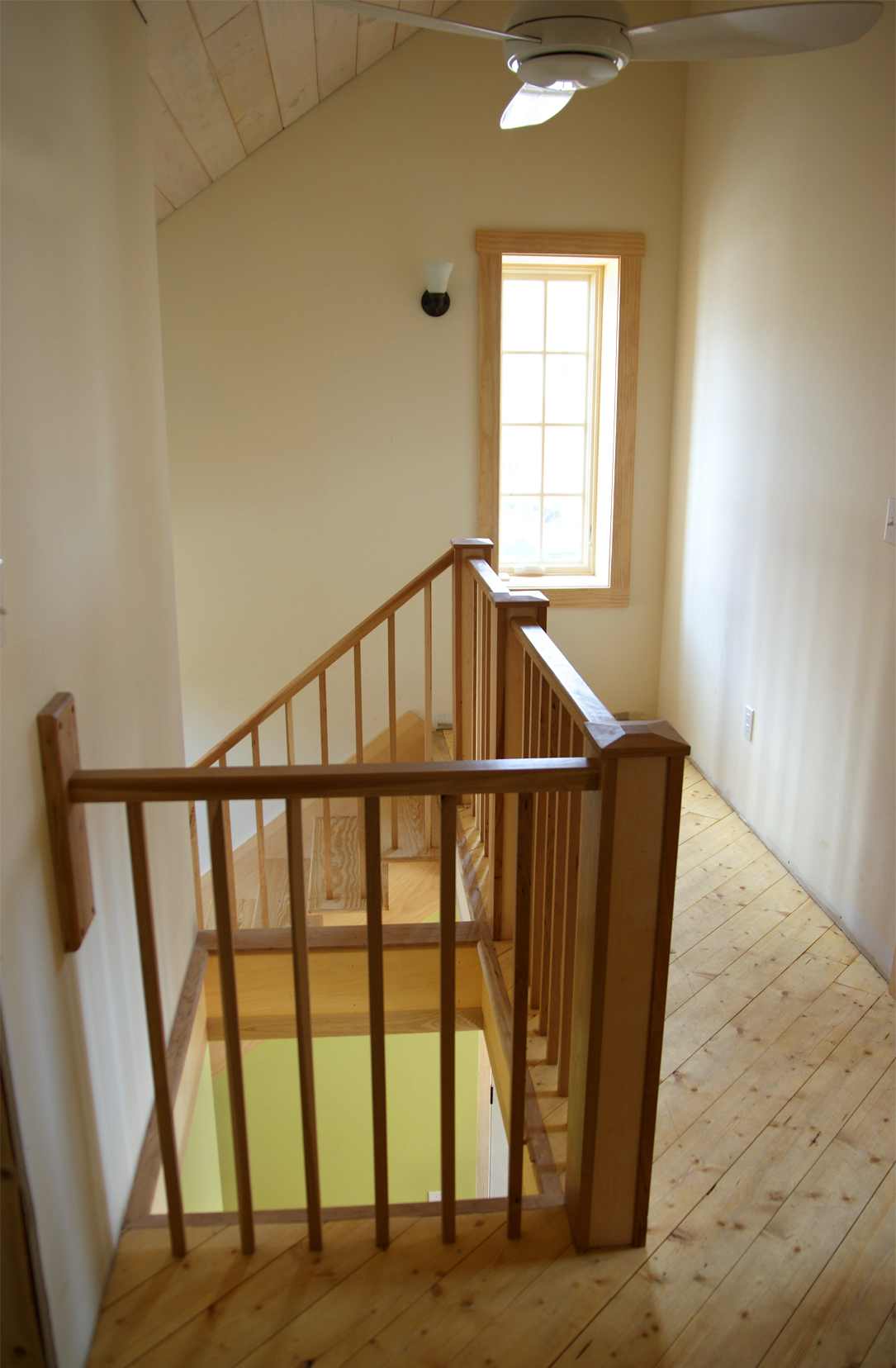
As I said earlier, Adam did a fantastic job on the railing and stairs.

These simple newel post caps were made by running a square piece of wood through the table saw with the blade set to a 5 degree angle. Sanding them took a while.

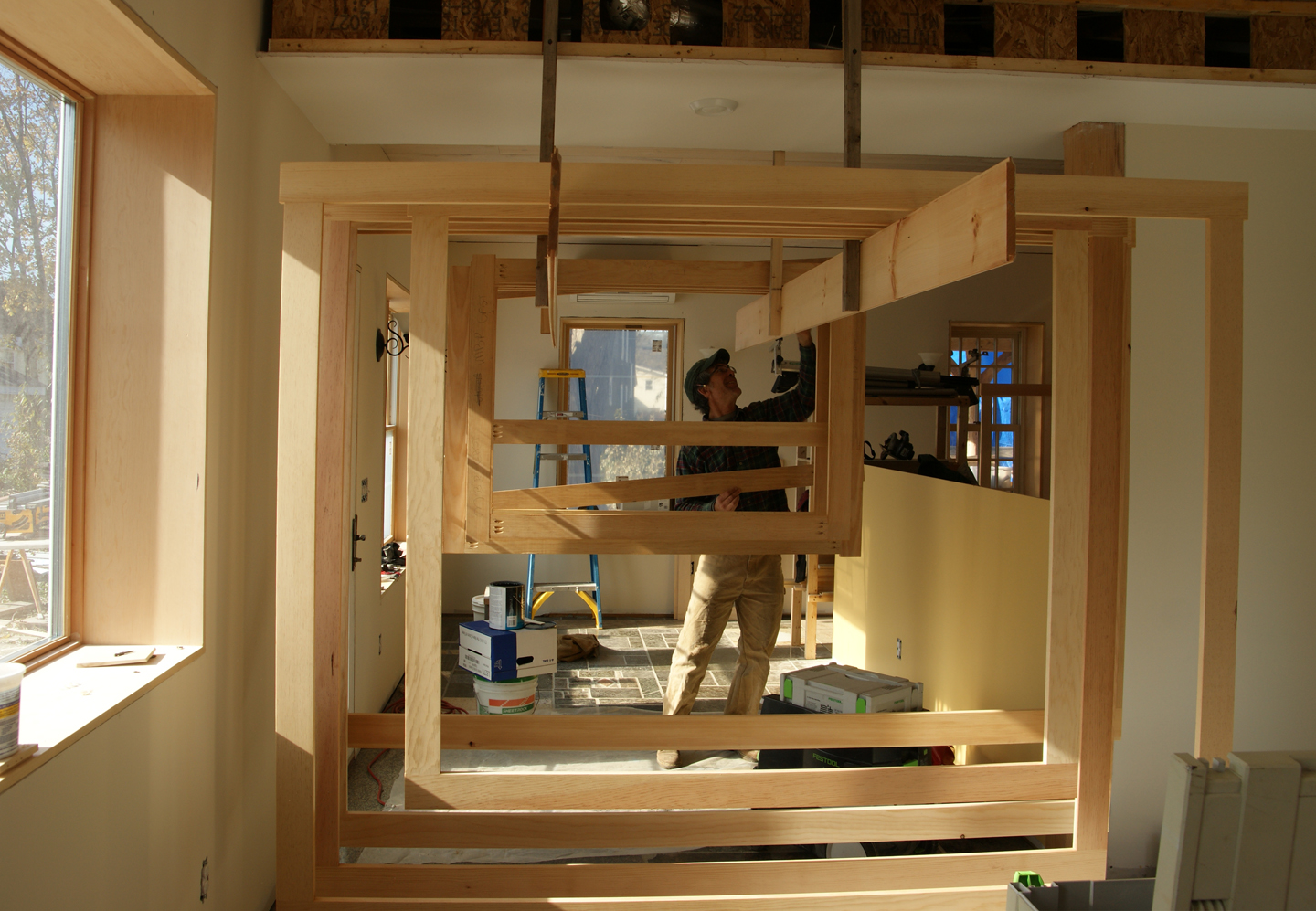
Although the view from the second to the first floor is small, it is still really cool. It is nice to be able to step back and view the recycled granite first floor from a distance. A local carpenter, Bill Deters, trimmed out the opening between the floors with white pine and our own cherry. Hannah pointed out that this shot is reminiscent of M.C. Escher's drawings.
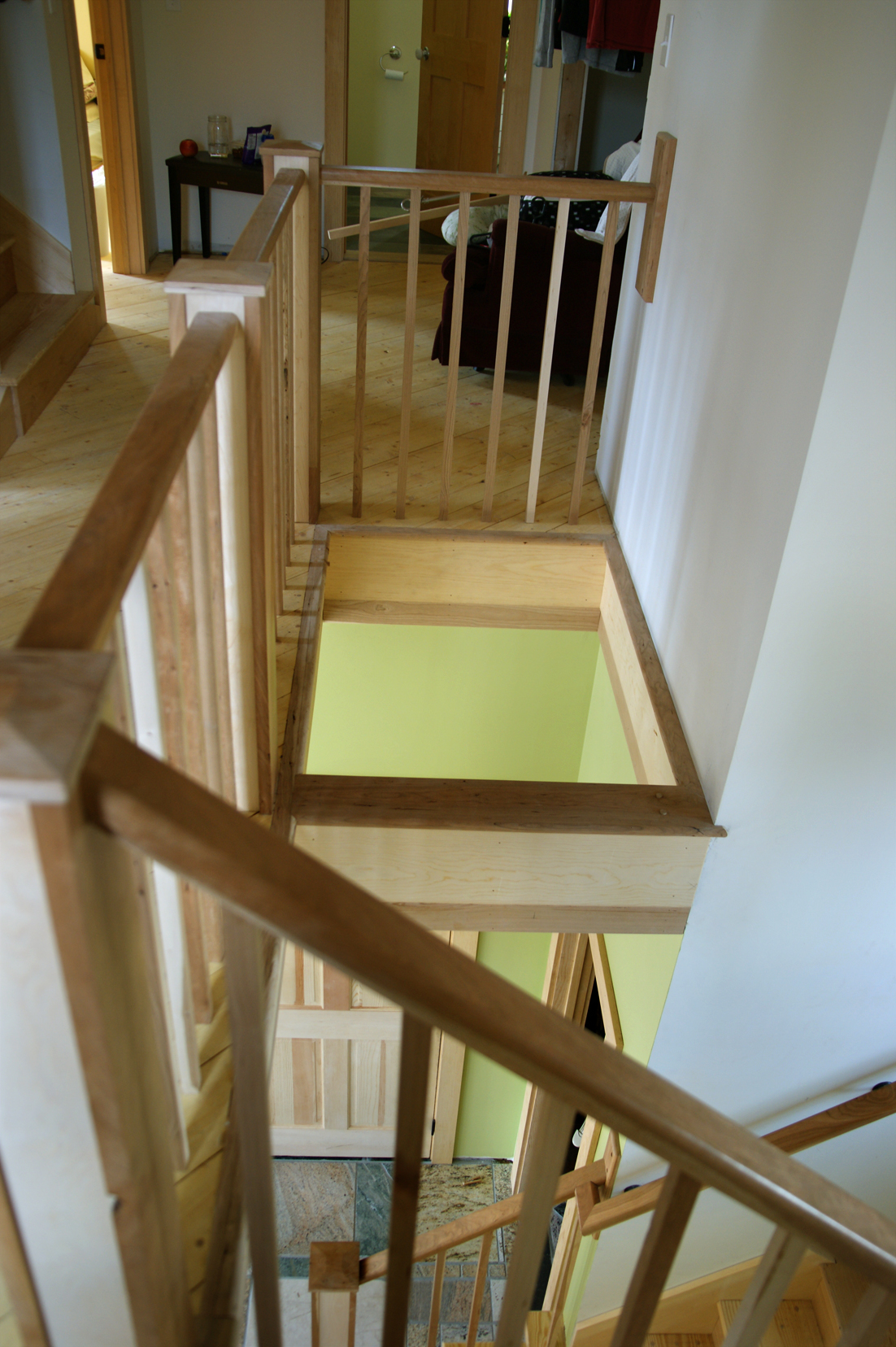
A view looking down the hall from the top of the stairs.








 Design & Construction of Spartan & Hannah's Home