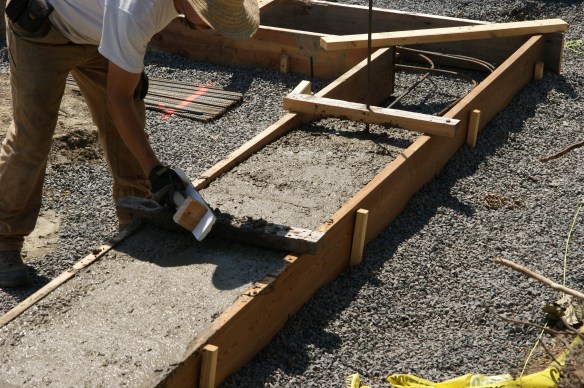
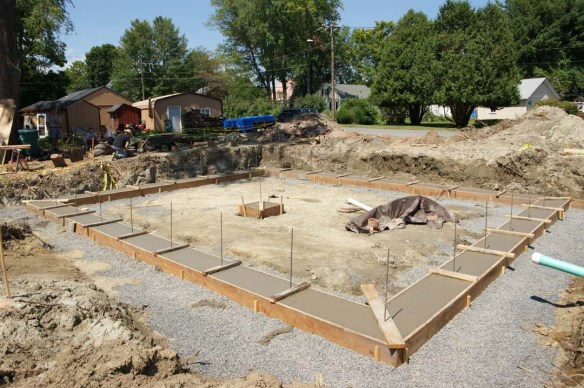
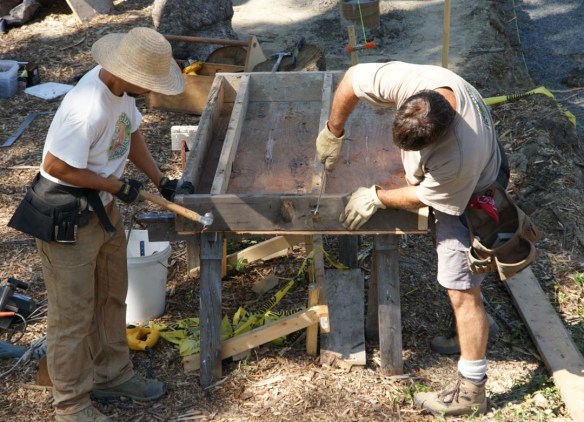
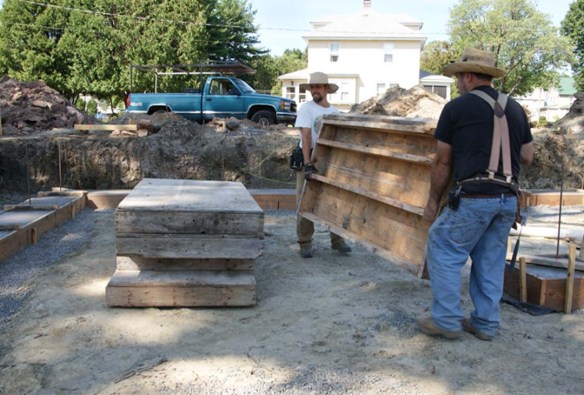
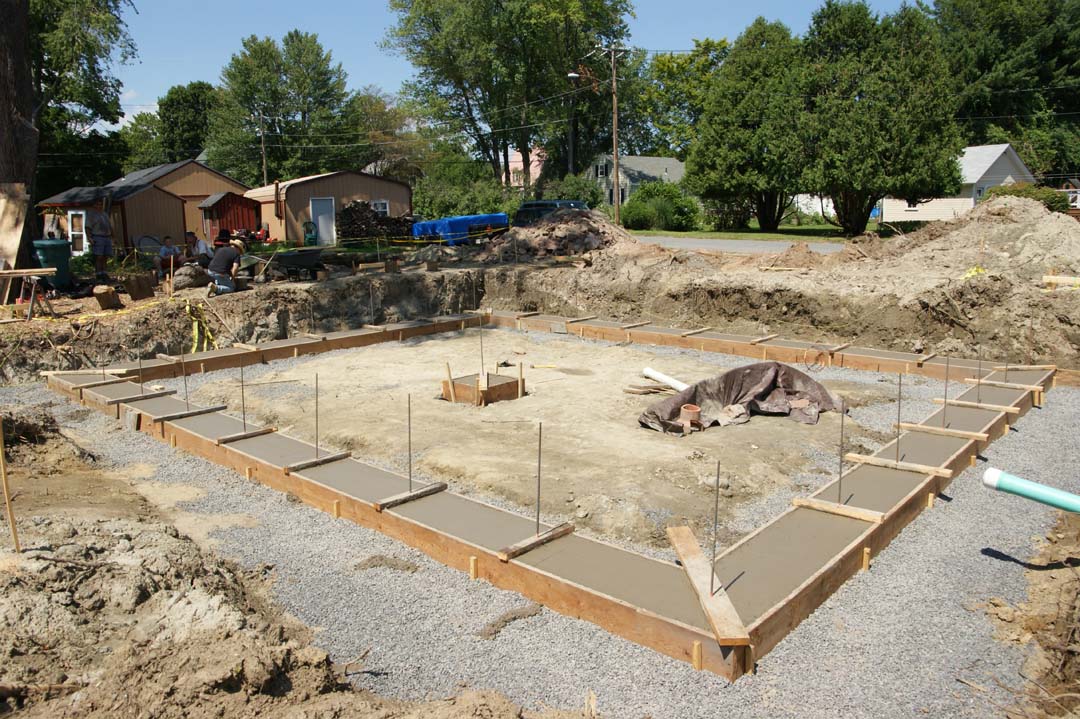
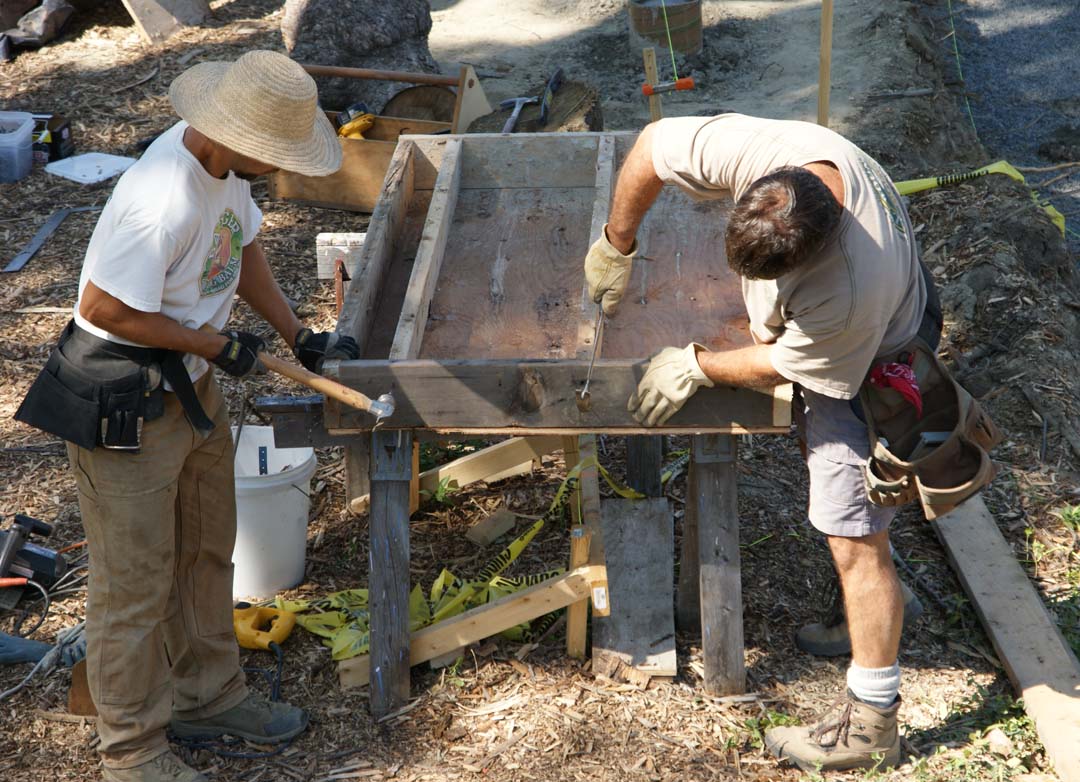
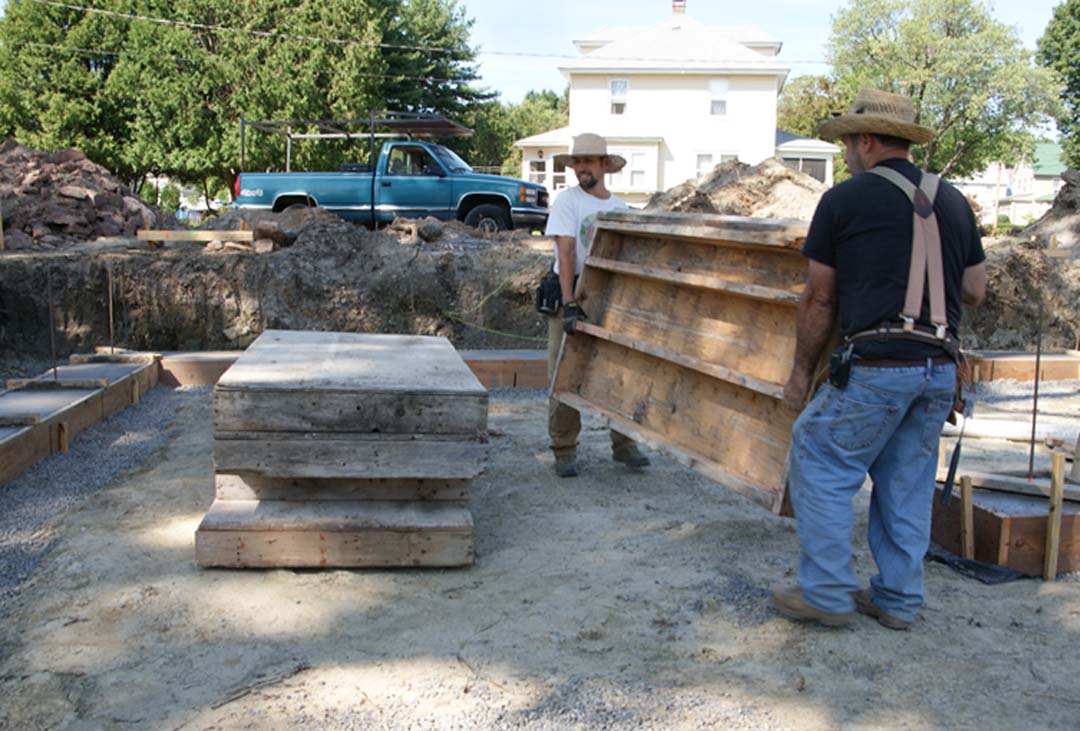
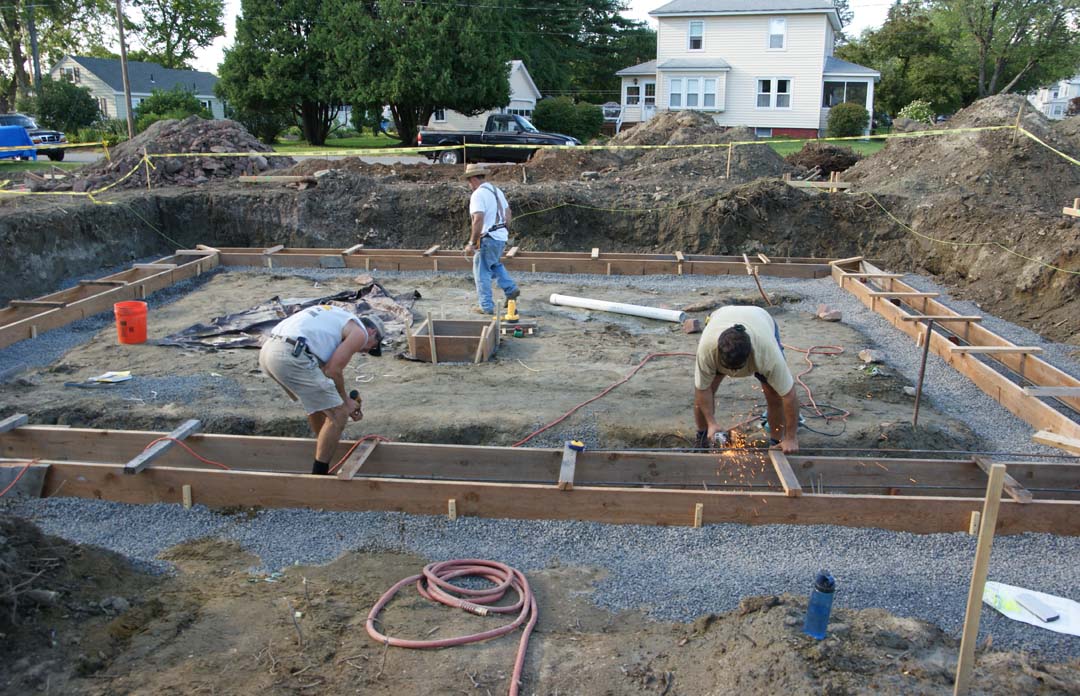
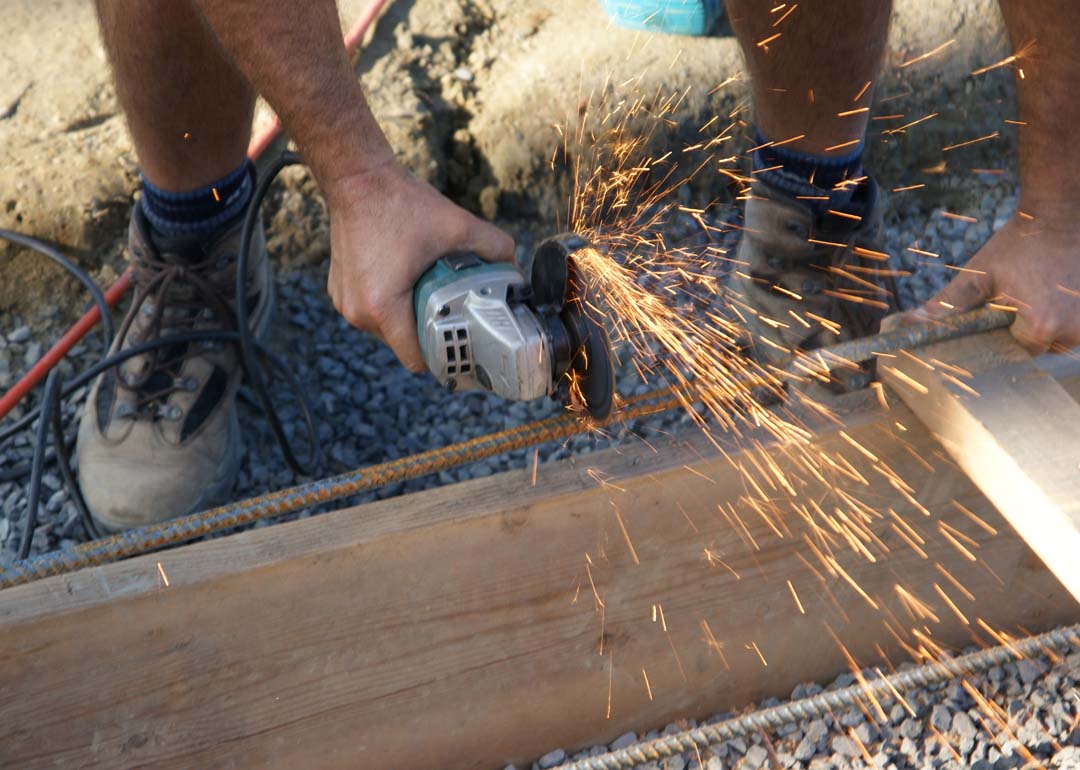
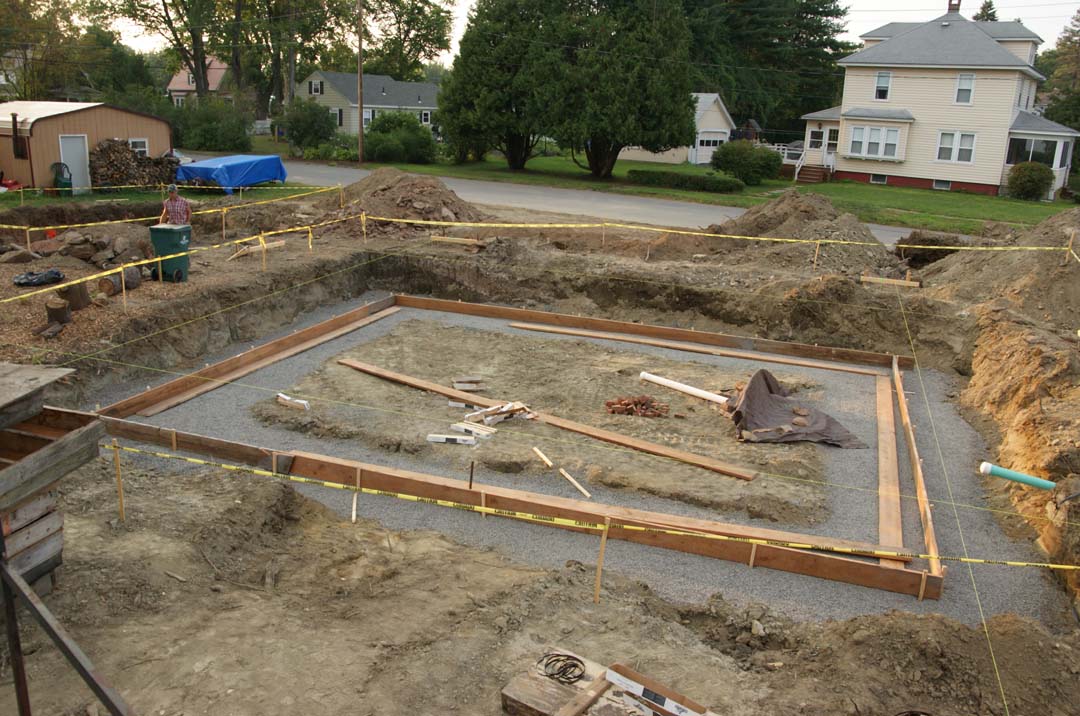
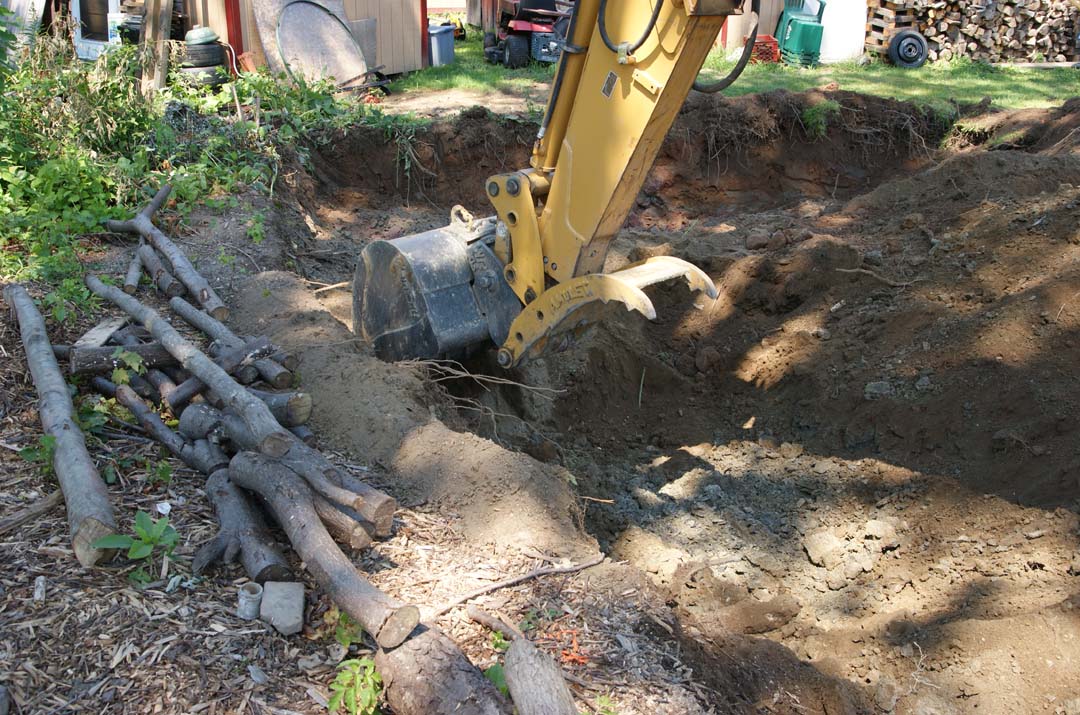
Today we continued working on repairing and adjusting the concrete forms. We also started making “new”ones using recycled materials. John S. showed off his carpentry skills by bending the twisted boards from Renew salvage into submission. John D. helped out today as well.
Author Archives: spartannah
Footing poured!
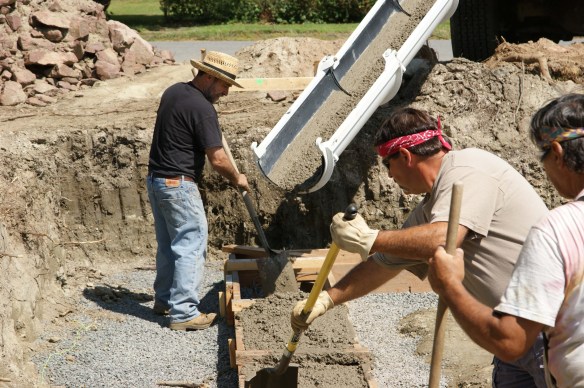
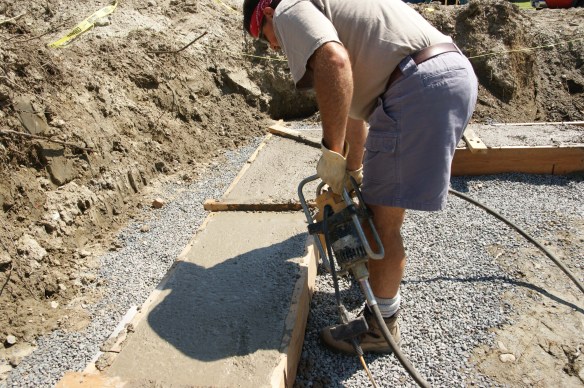
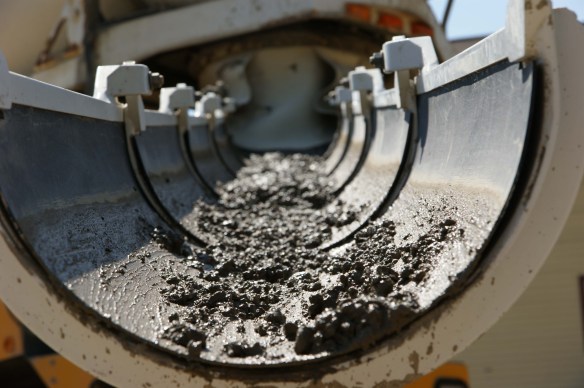
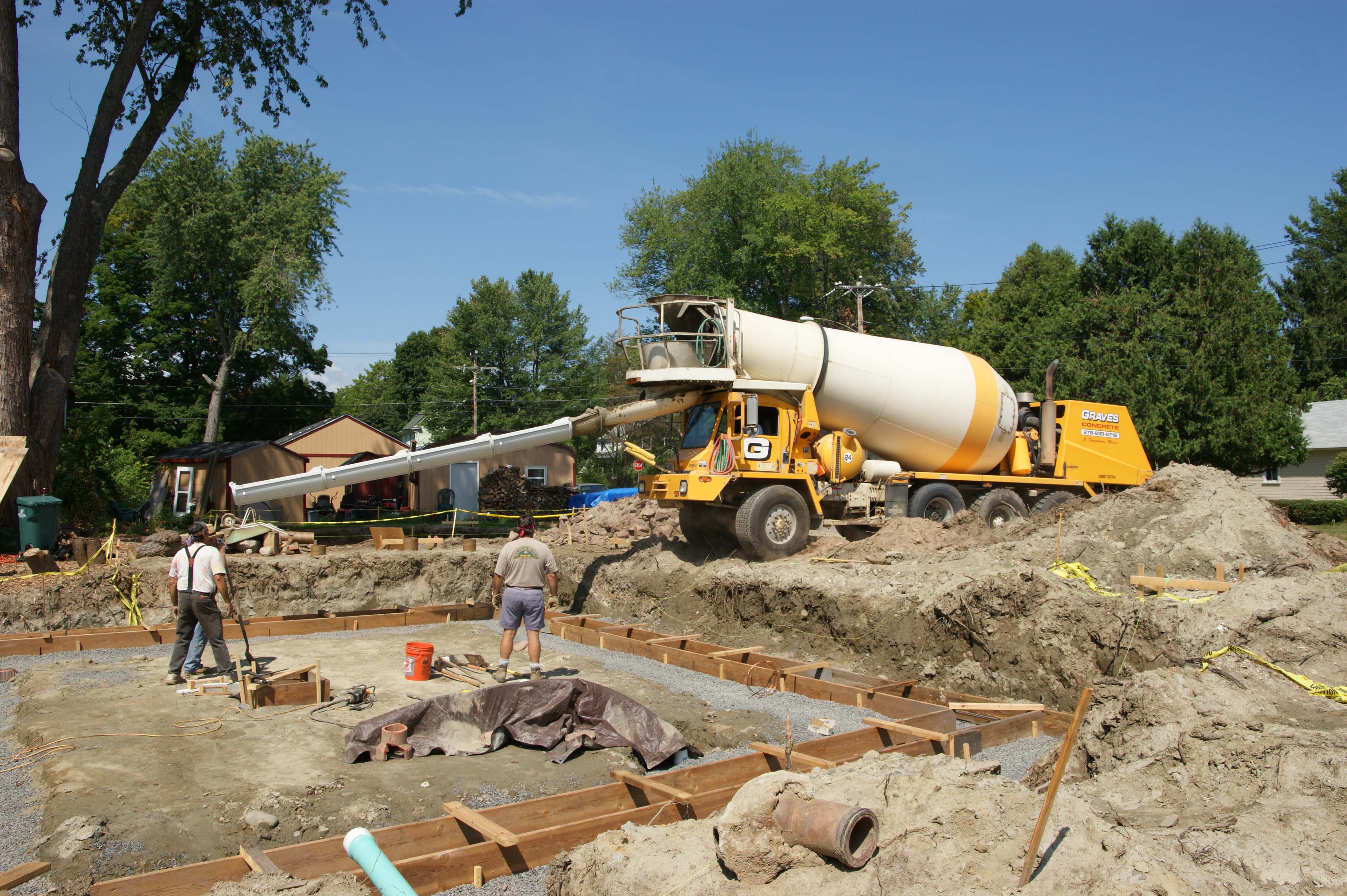
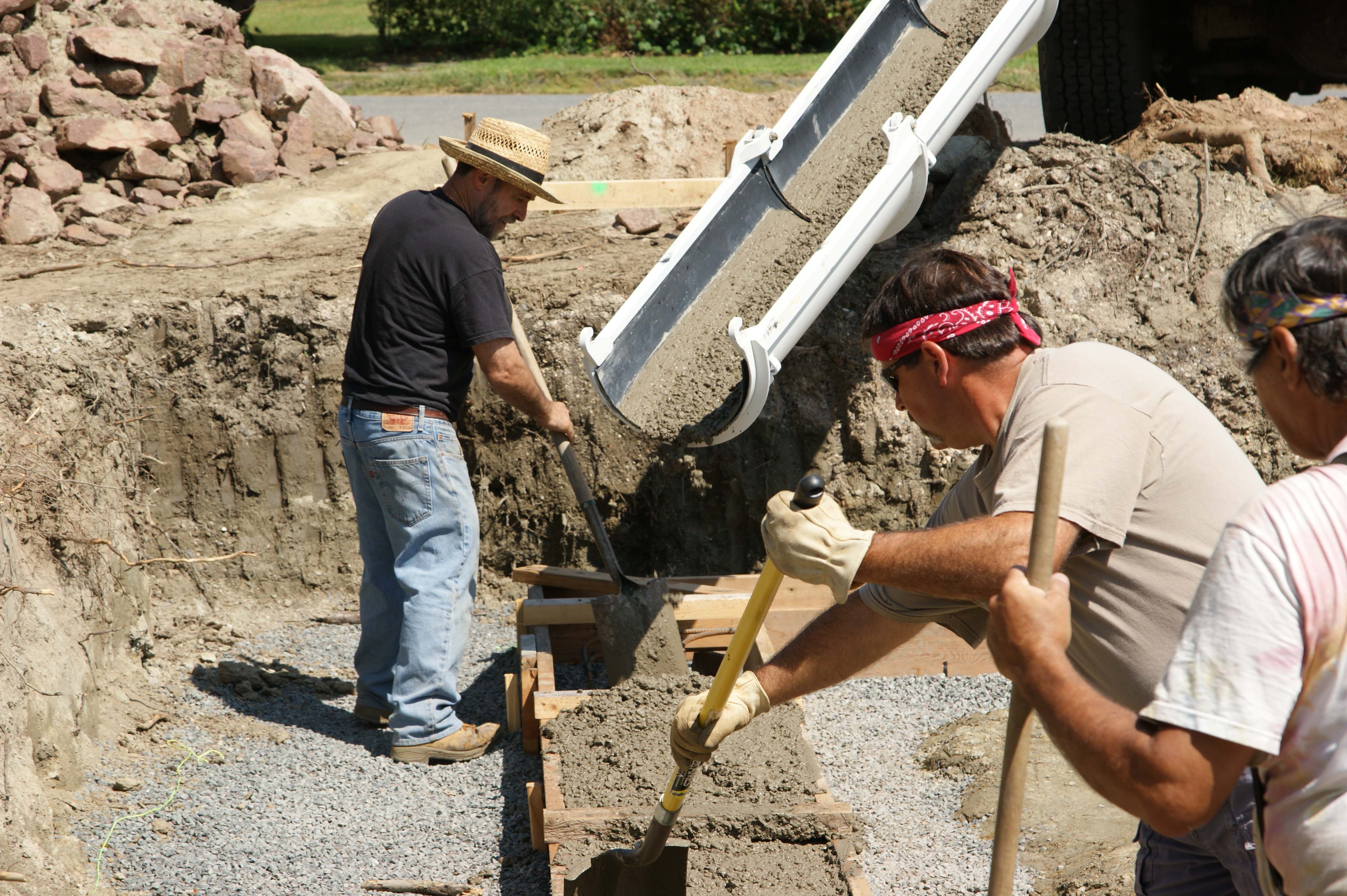
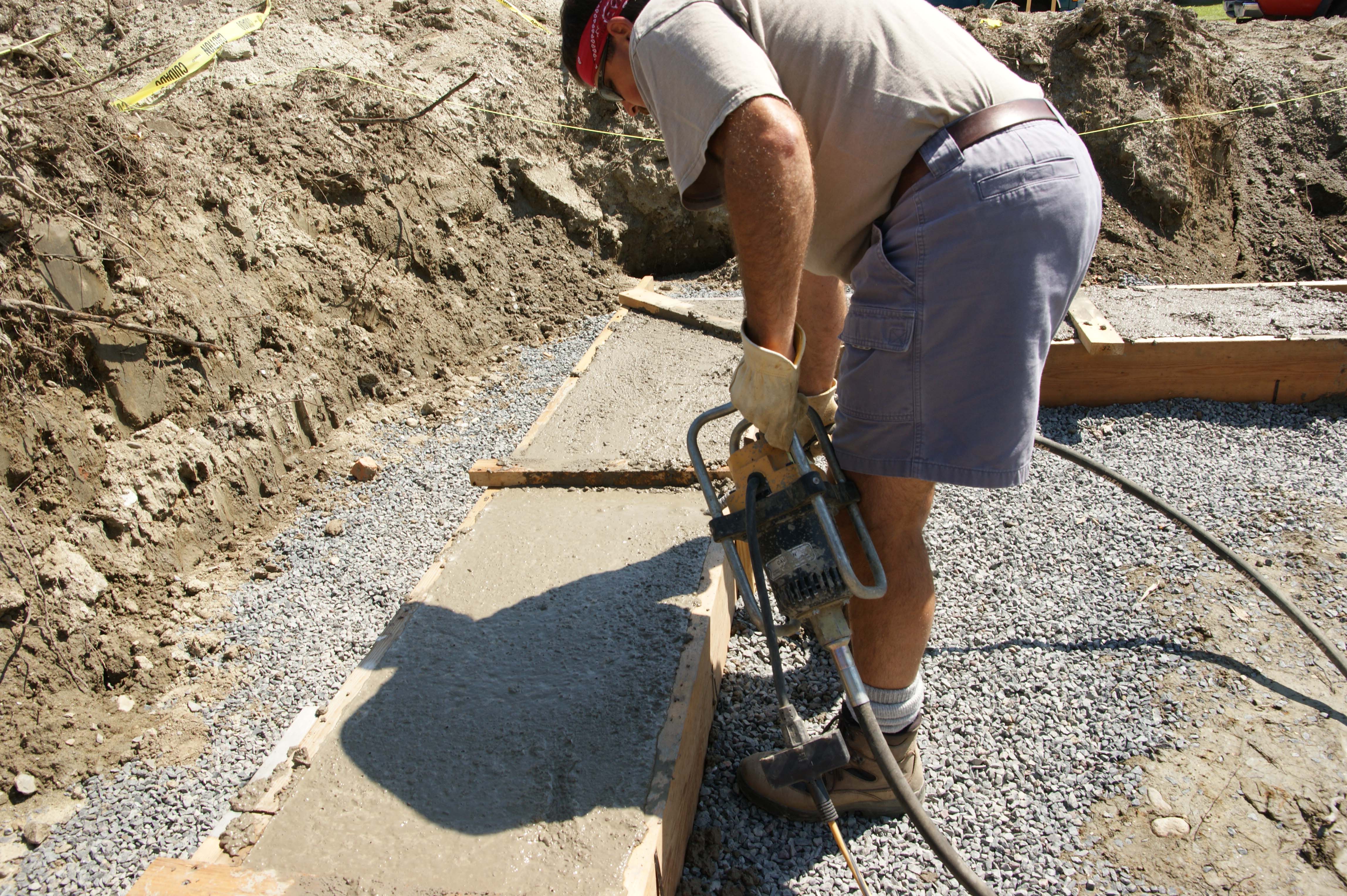
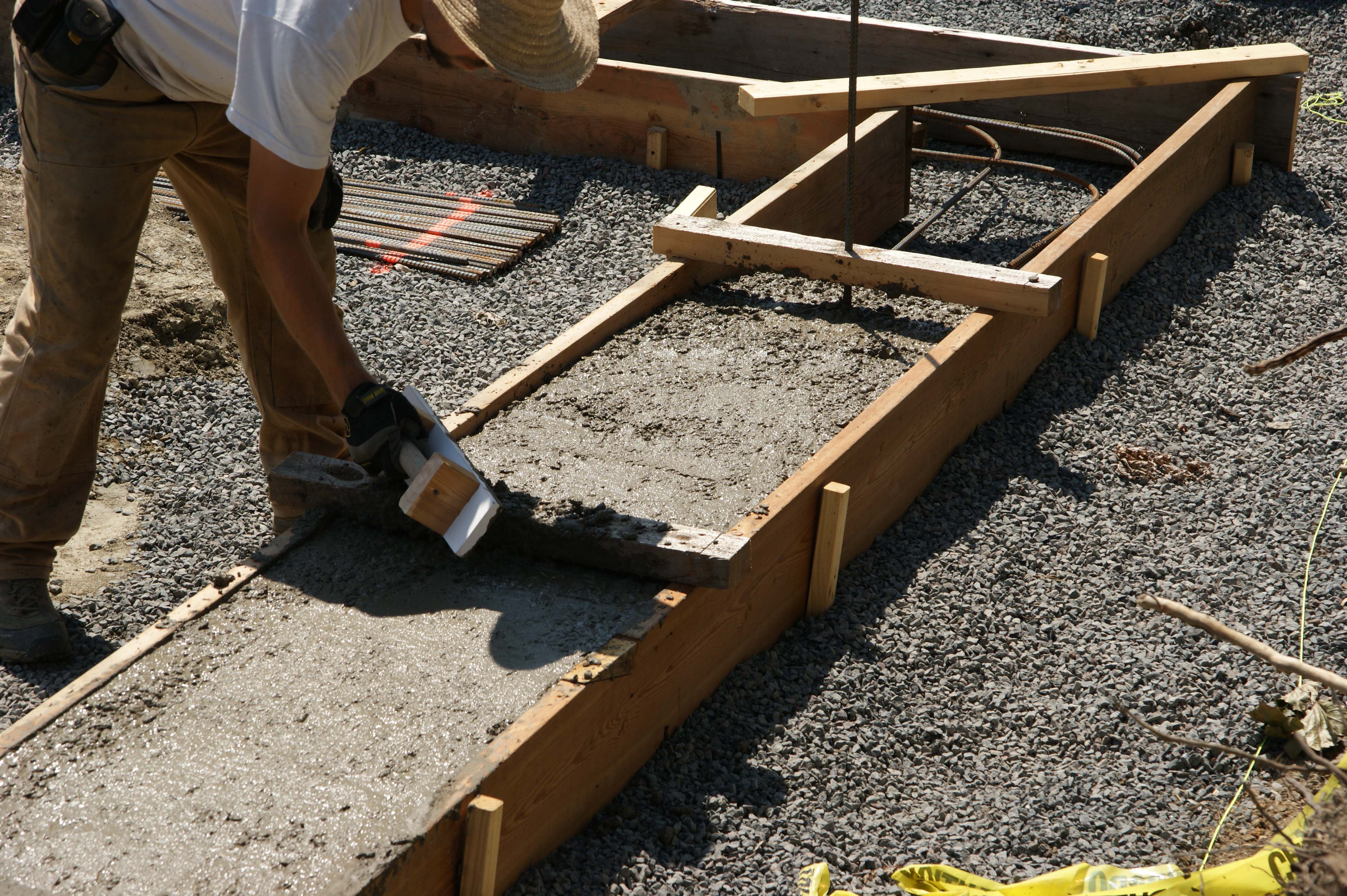
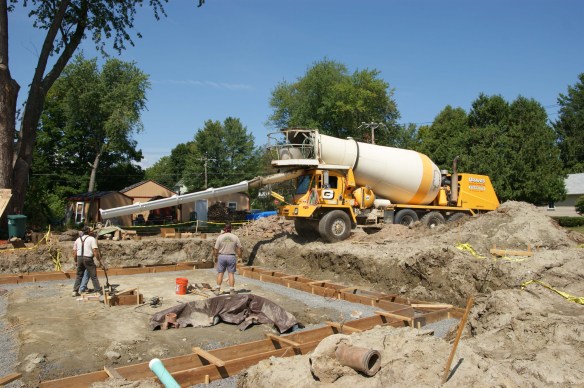
Yesterday John D., John S., Thom, Thom’s son TJ, and I worked together to pour the footing for the house as well as the piers for the porch posts. Everything went off without a hitch. We had exactly the right amount of concrete (6 cu. yards), the truck was able to get access to the whole footing, and, most importantly, there were no blowouts.
During the second part of the day Thom, John S. and I worked on fixing and adjusting the concrete forms for the stem wall.
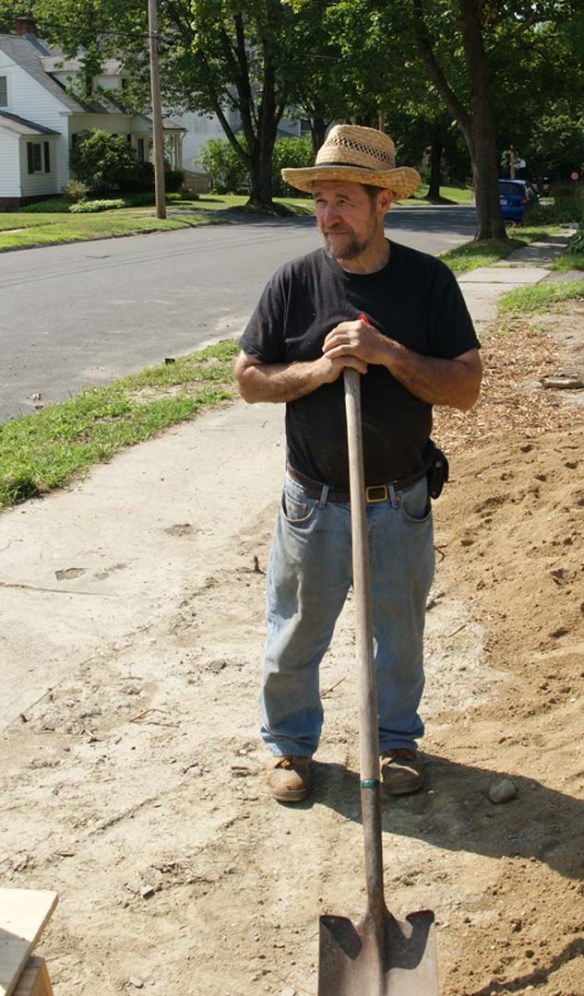
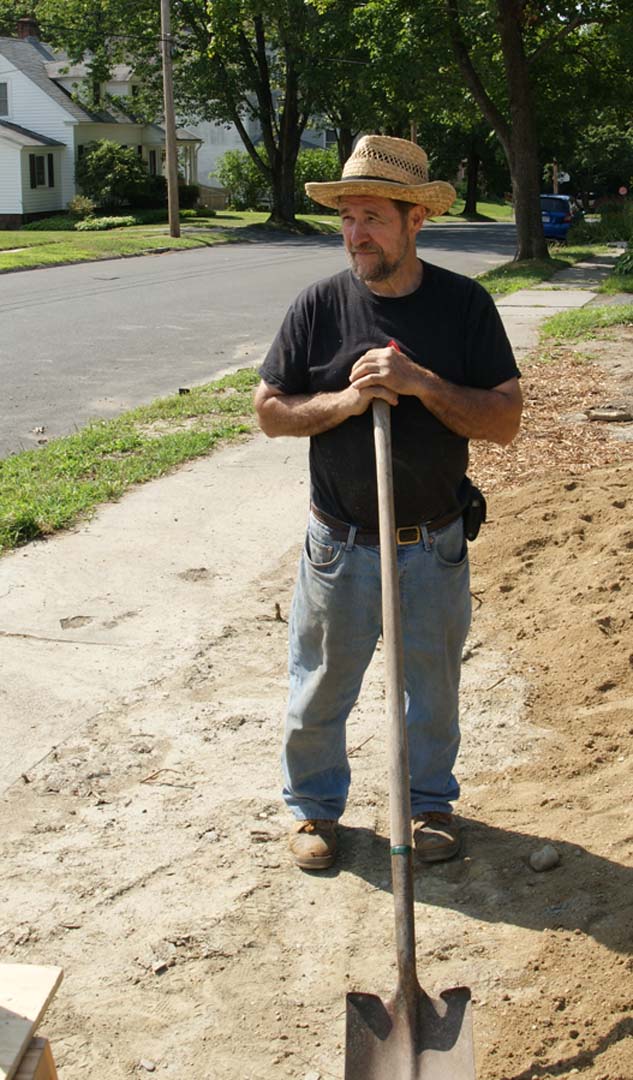
John S. poses while we wait for the cement truck to show up. Hannah brought us homemade vegan blueberry orange muffins and coffee. Hannah picked the blueberries the day before at the Benson Place in Heath.
Workin’ away
Thom and I spent the day working in the hot sun. We finished cleaning out the garage pit. After putting down geotextile fabric and stone we turned our attention to rehabilitating the concrete wall forms that John S. has given us. The forms have been sitting out in the weather for the past five years and have accumulated some rot.
Our electrician stopped by and tied on the copper wire to ground the rebar.
The concrete pour for the house footing is scheduled for tomorrow at 11 in the morning.
Posts for porch
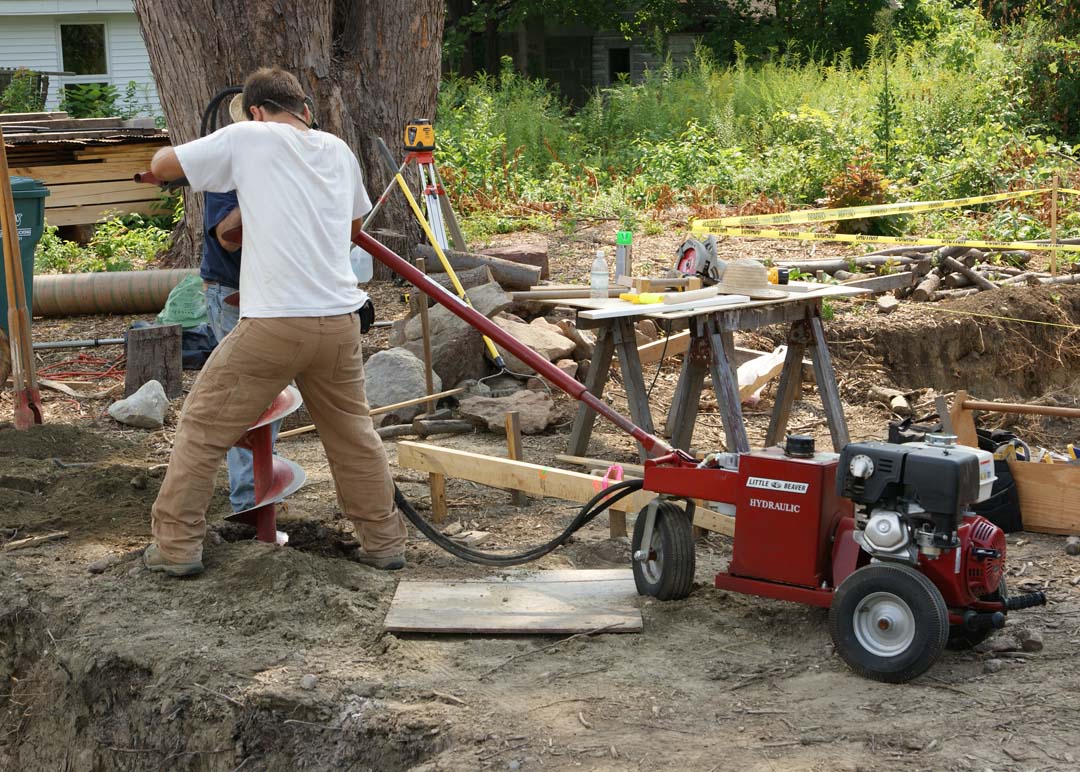
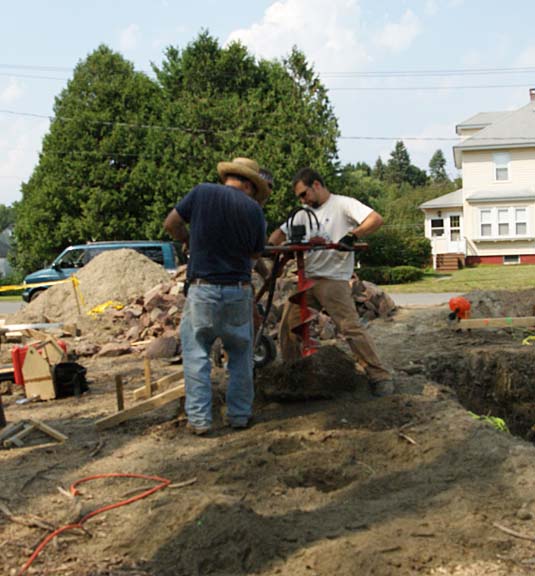
Today, John S., Thom and I worked on digging the the holes for the porch piers. We rented a hydraulic post hole digger from Taylor. It was a good thing we had all three of us there, it was a beast to operate. After we finished the setting the form tubes in the ground we turned our attention to laying out the rest of the strings for the garage batter boards.
I learned today that the rebar in the footing needs to be grounded. This creates a minor delay in pouring the concrete for the footing. Instead of tomorrow we will have to do it on Wednesday. Bob, my electrician, will come and take care of the situation tomorrow.
House footing forms day 3
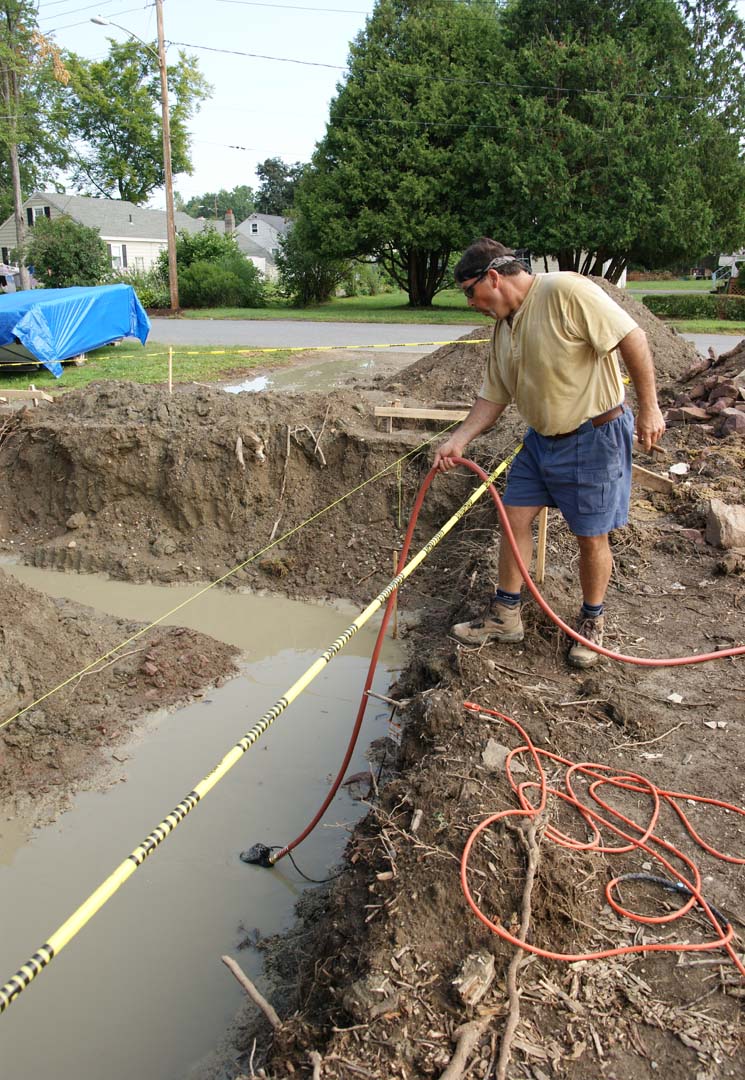
We spent the first few hours of the morning recovering from the rain storm. The clay does us no favors–it doesn’t drain and it turns into very slippery mud. A drainage ditch was dug to drain some standing water, dirt was put in low spots, wood chips were put on top. The garage pit had 6-7″ of standing water in it. Luckily Thom had a sump pump handy. It took about an hour to extract the water. Fortunately dry air and a good breeze helped dry things out. The day turned out great. We got our rebar, wire ties, and metal mesh dropped off in the morning ($715). Adam, John S., Thom and I finished up the form work for the house footings.
House footing forms Day 2
Unfortunately, we got some much needed rain and we only were able to get in a quarter of a day of work. The tools got rained on and the whole place turned into a mud-pit in short order.
House footing forms Day 1
Last Wednesday we got off to a great start working on the footings for the house. John D. compacted the crushed stone and John S. and I assembled the outside boards. Adam meanwhile worked on putting up batterboards for the garage as well as cleaning out the pit more. Our form boards came from Renew in Brattleboro. They are recycled 25′ long douglas fir rafters.
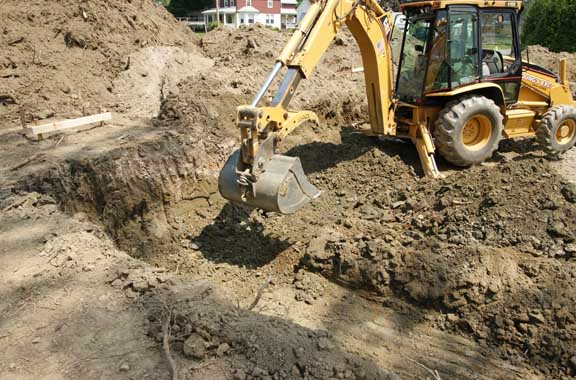
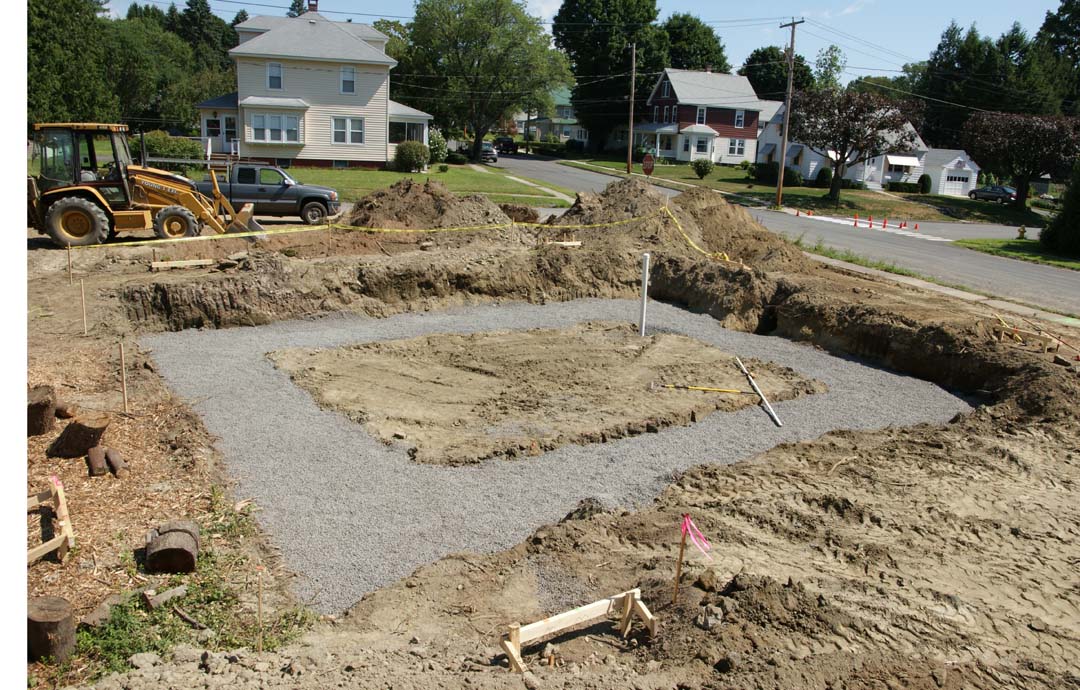
Sitework done for now
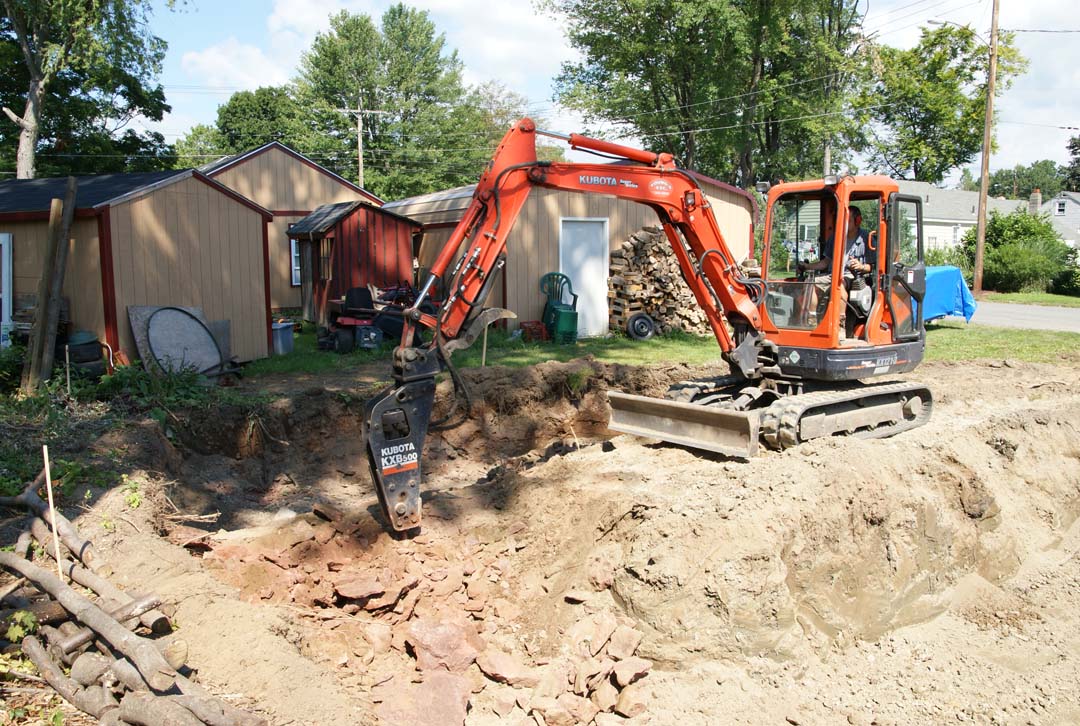
Work continued this past Friday and Saturday. Unfortunately we hit ledge under the garage. At first we thought it would be easy to hammer out because it is red sand stone, however, it wasn’t, and we spent quite of bit of time (and money) making slow progress. At this point, the plan is to pour the footing on top of ledge.
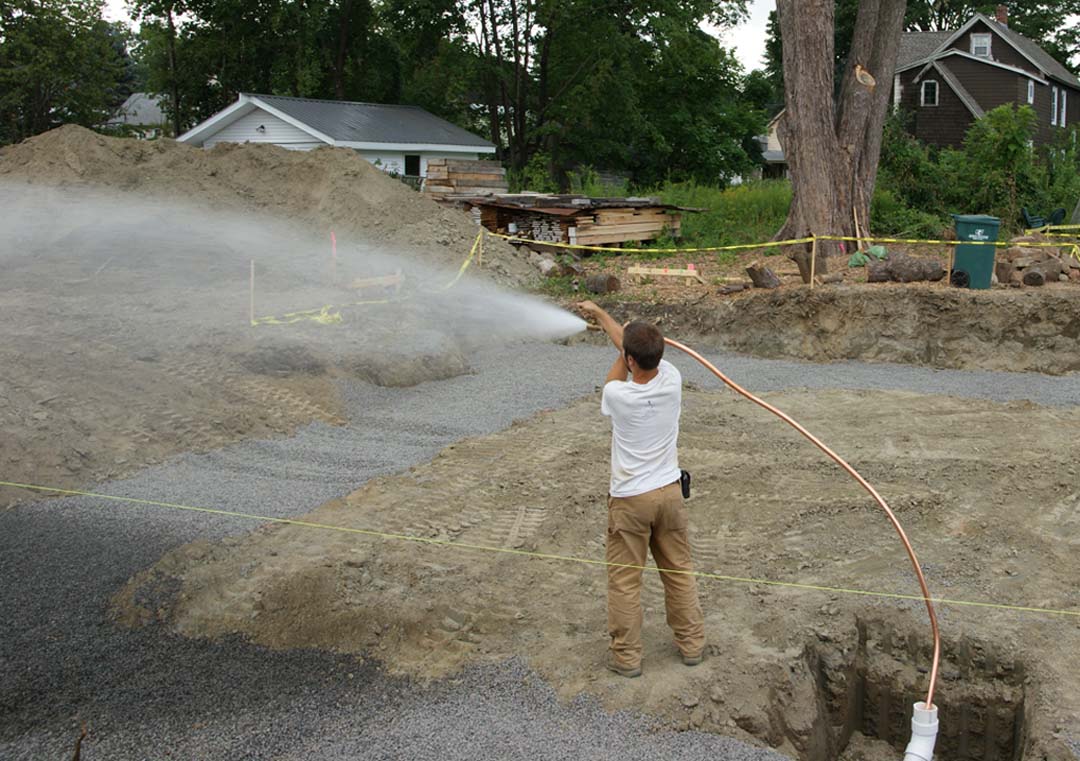
Today, we successfully connected to the water and sewer lines.
The next steps are to pour the footings and the stem walls. I got an estimate from one contractor: $8000 for the house foundation and $3750 for the garage foundation. The concrete represents about $4000 of the cost. Tomorrow I will be experimenting and looking into doing the footing and stem wall myself.

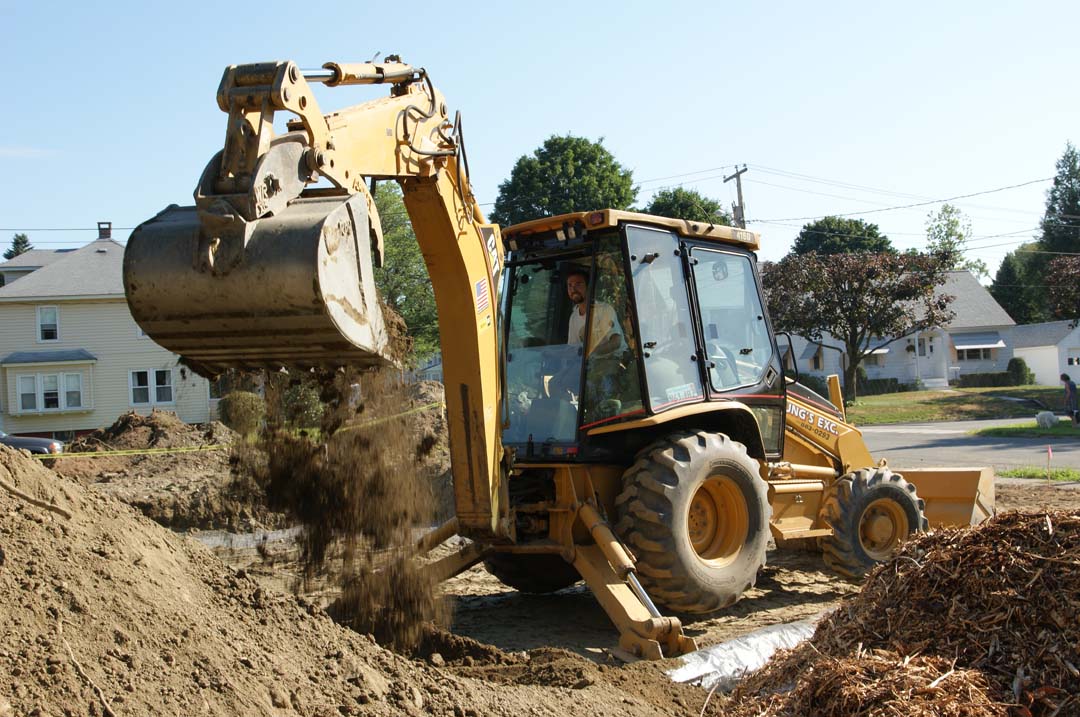
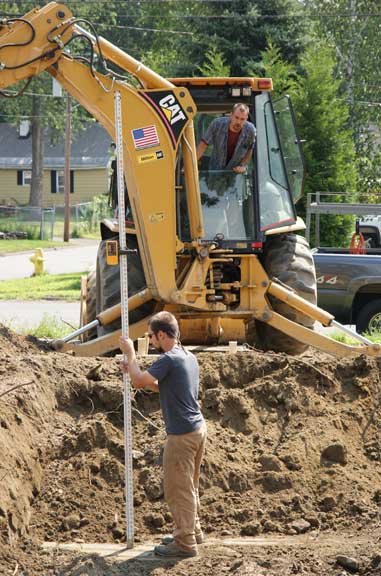
There was a problem getting the hammer to work on the mini-excavator. During the downtime I got my first lesson on operating a back hoe!

For no particular reason the hammer worked after I got the back hoe lesson. We hypothesized that there was air in the hydraulic line that bled out.

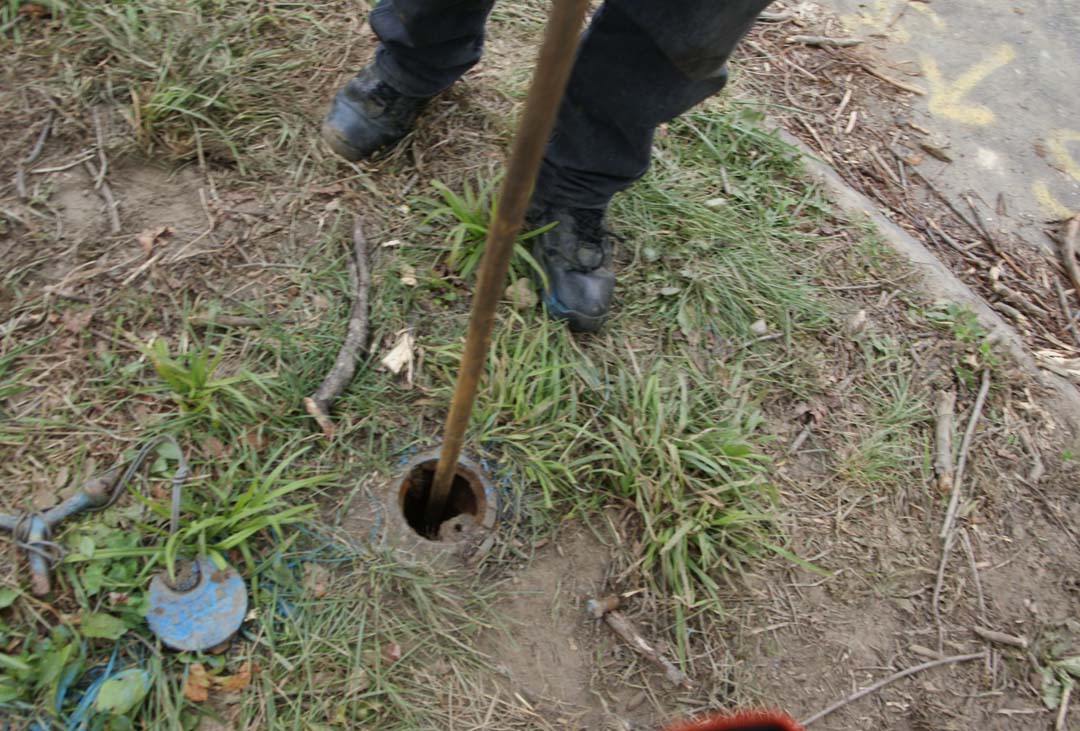
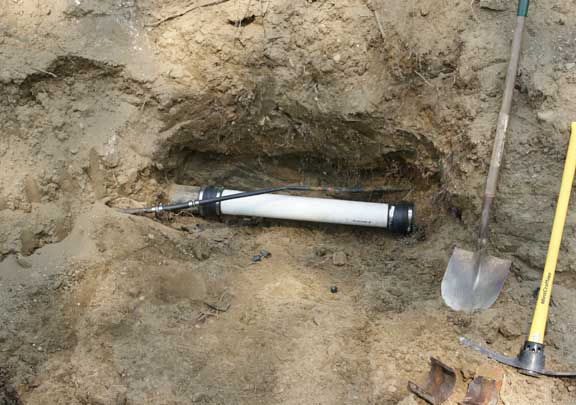
It turns out that the pipes we clipped at the northeast corner of the foundation actually were connected to our water and sewer lines. The black plastic 1" pipe is underneath the roll of copper.

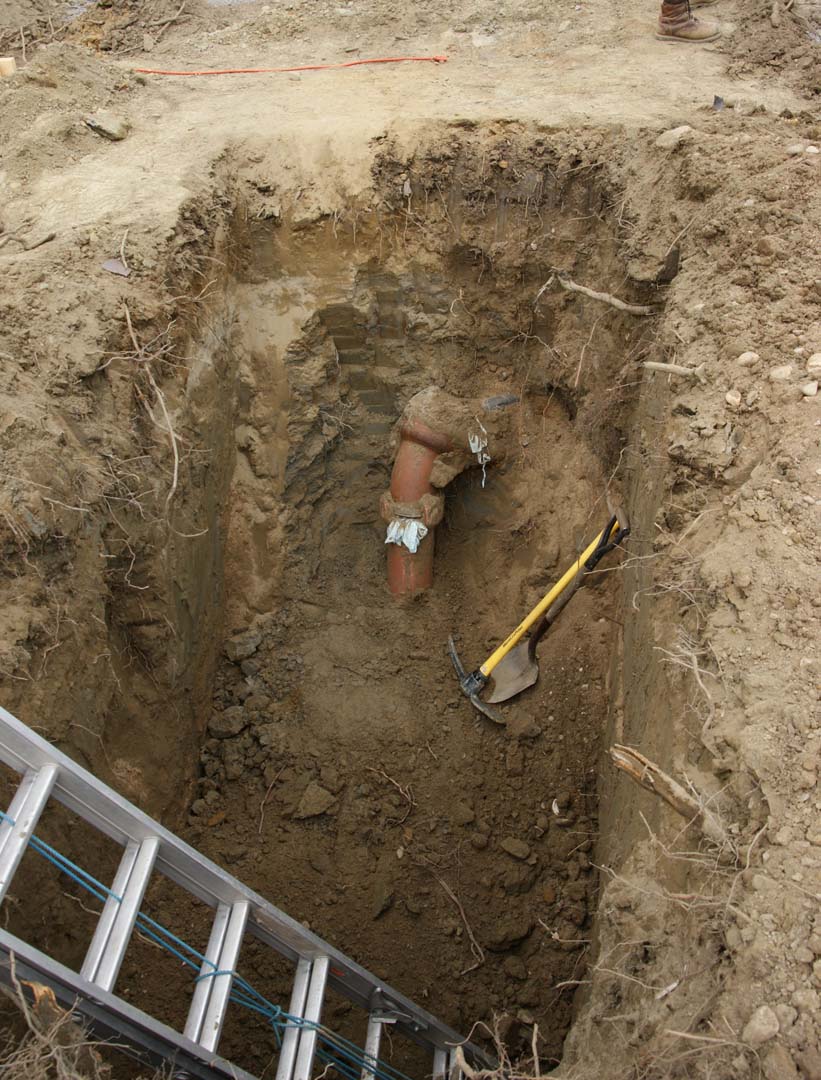
Old clay sewer pipe. We had trouble locating this pipe--partly because we thought we were looking for PVC not VC (Vitrified clay). The folks from the DPW, who you would think have seen it all, were very surprised by the size of the clay pipe as well as the fact that it was connected to unknown pipes.
Retrieving our front stoop
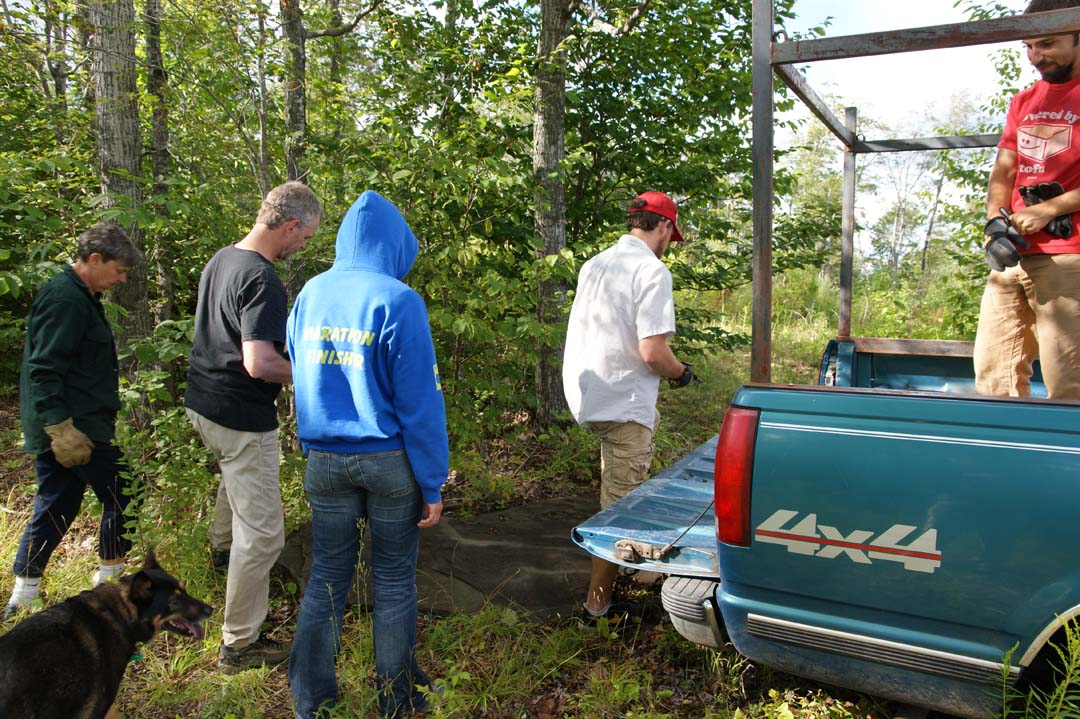
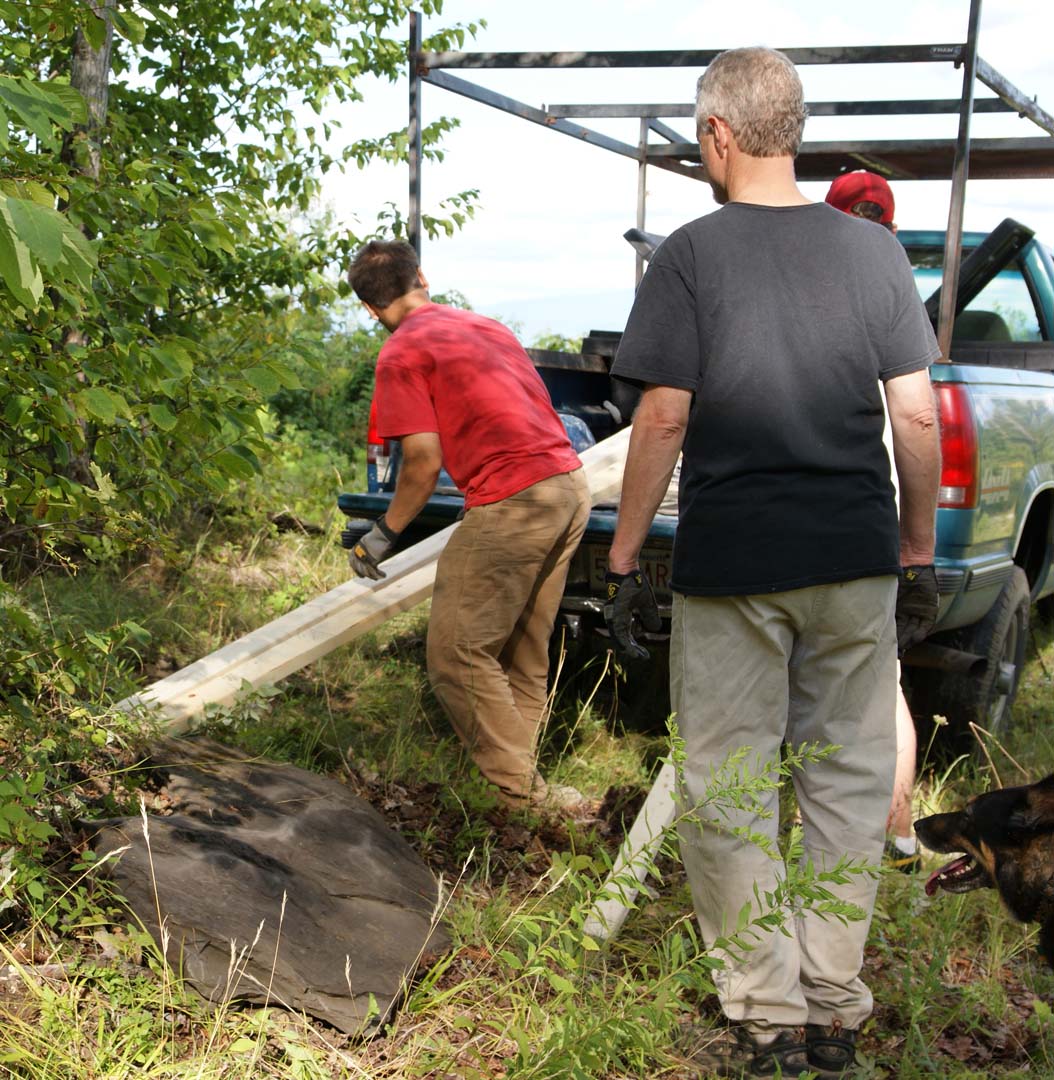
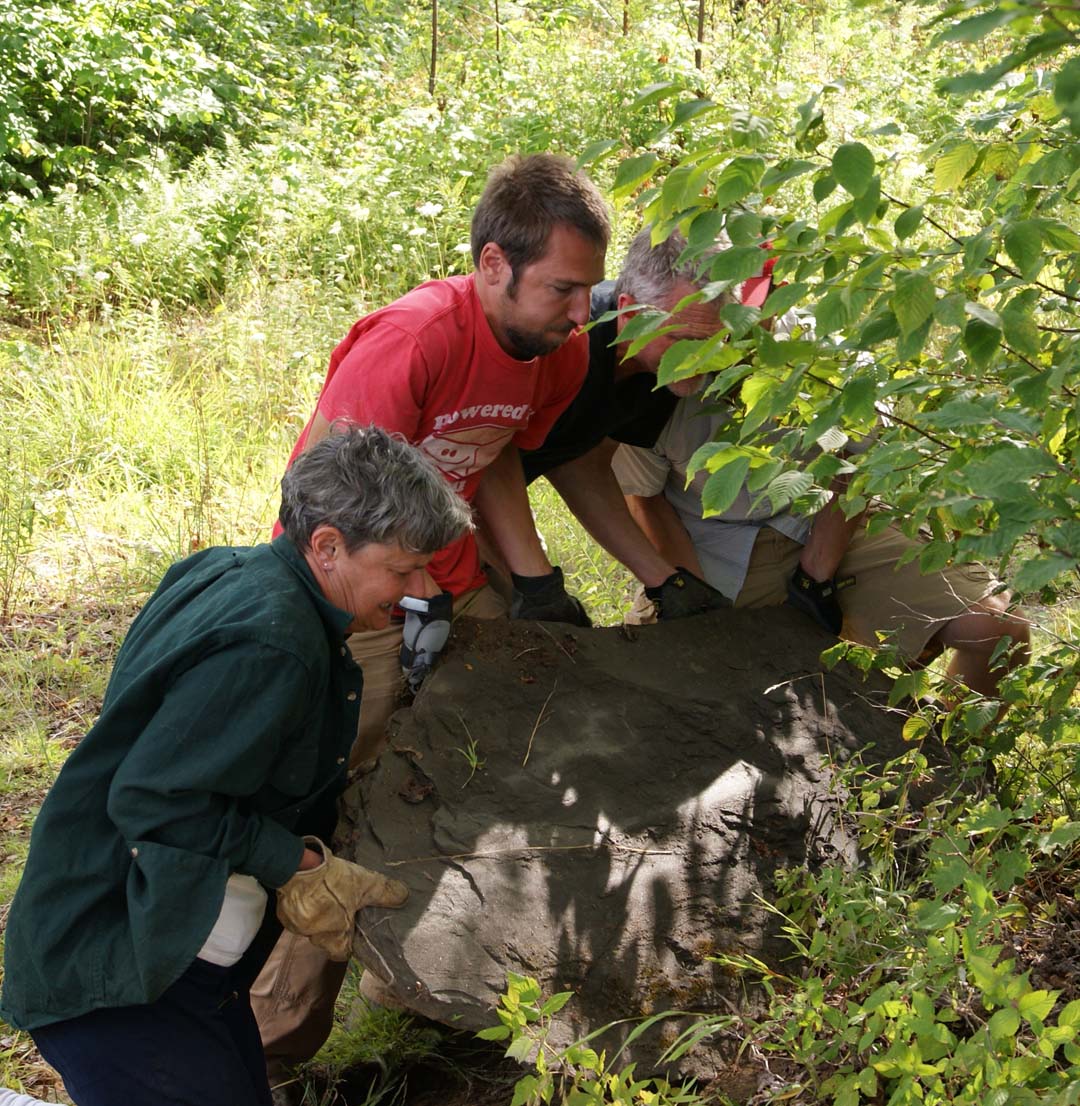
Over the weekend Hannah and I were in Vershire Vermont at the family Cabin at family week. While hiking around, we discovered a rock that would be perfect for a front stoop (right near table rock). Sara at the Vershire Riding School generously allowed us to take the rock (it was on their property). It took five of us to lift it up into the truck. I figure it weighed in between 350 and 450 pounds. Thank you Jay, Andrew, Margy, and Ancy! Pics by Julie.
Ground has been broken!

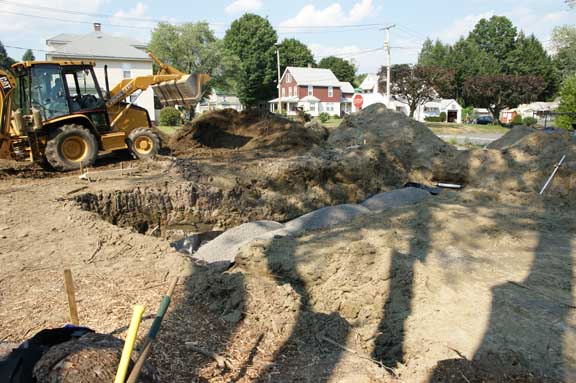
Yesterday I spent most of the day making batterboards. Batterboards allow one to keep track of the corners of the house after the corner stakes get removed for excavation. Two batterboards get erected perpendicular to each corner about 10' away from the corner. Before the stakes get removed, one runs string from one board to the opposite board above two corner stakes of the house. Repeat for the other three pairs of batterboards. The four strings form a rectangle that represents the perimeter of the house. Put a saw mark where the strings cross the batterboards and you can recreate the house perimeter with ease. Next time I make these I am going to get a second person to hold the stake while I pound it in with a full-sized sledge hammer. It took for-ever to pound the stakes in with a hand-held sledge.

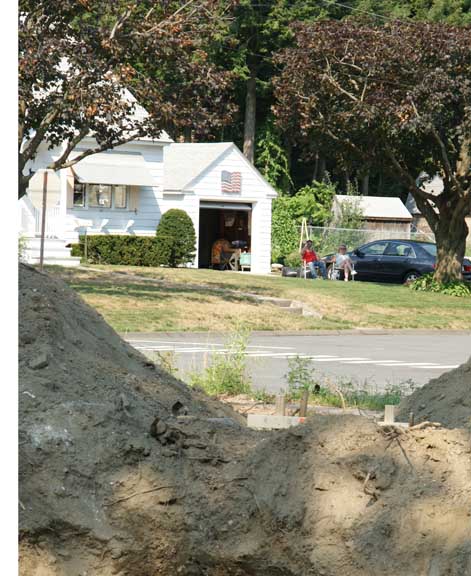
Our neighbors Pat and Ed enjoying the show. As it turns out Pat and Ed and another adjacent neighbor built their homes. No wonder everyone doesn't mind the ruckus!

We discovered and accidentally broke undocumented pipes in the Northeast corner of the property: a 4" orangeburg pipe and a 1" plastic pipe. Clearly neither had been used for quite some time, but we didn't want to take any chances and so patched them anyways. Orangeburg pipe, made of tarpaper rolled up to be 1/4" thick used to be used for sewer lines. Why one ran diagonally across the Northeast corner is peculiar.

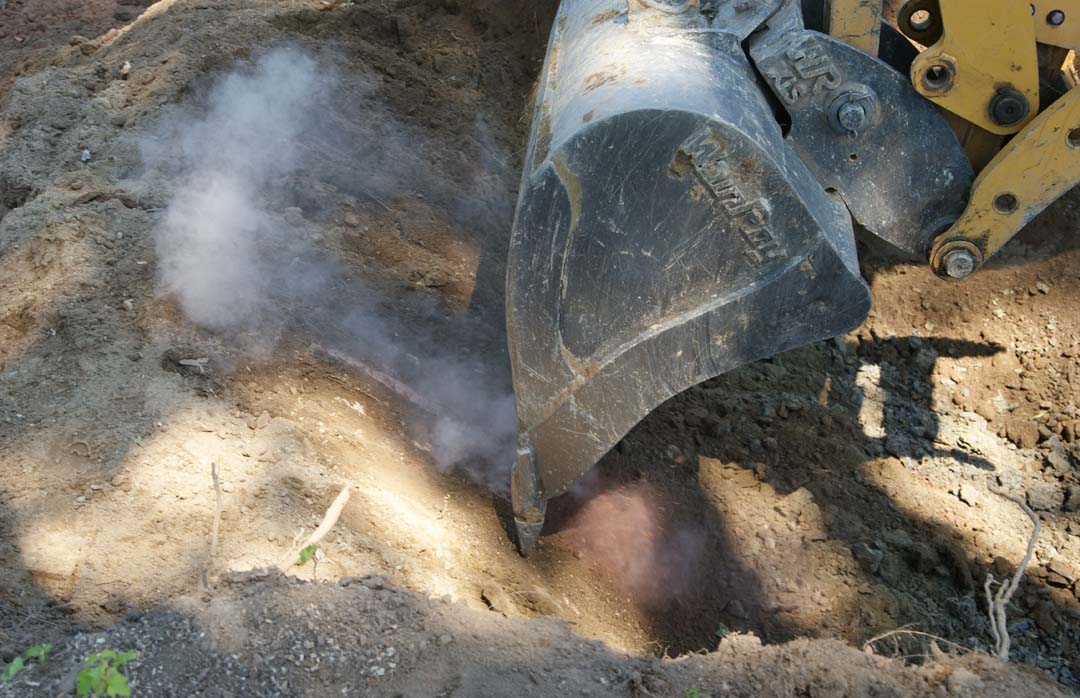
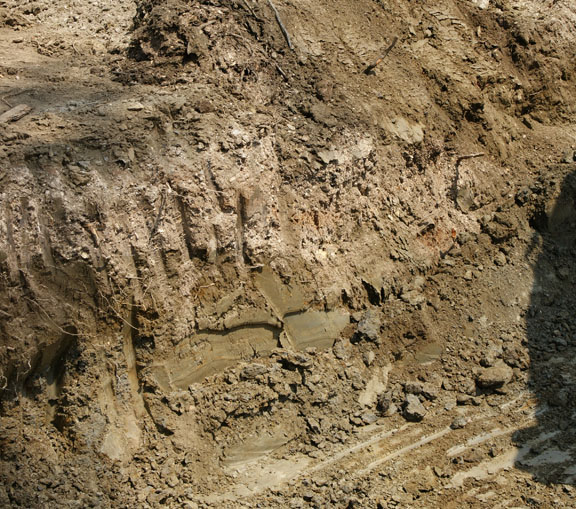
At some point someone used the land as a trash burning pit. The light colored area towards the top of the excavation wall is ash that has trash in it as well--mostly glass and rusty things.

It wasn't a surprise to find clay underground--the USGS soil maps say it should be there. In any case, clay expands and contracts a lot and is rather unstable to build on. The solution is to dig 18" deeper and 3' wider than the footing and backfill with crushed stone. Under the stone is geotextile fabric to keep water from getting pushed up from the clay into the stone.