House concept

Working with Archicad gets one tied down in details. Working with graph paper cut-outs that represent rooms allows one to quickly rearrange the design. Hannah and I both liked this layout. The top setup is the second floor.

House Concept using graph paper cut-outs

House Concept using graph paper cut-outs. First floor is on the bottom.

We shall soon see if this works out in Archicad.

Ideas: Design Themes, Design Uses, Spaces

Design Themes: Fun, organic, bring people together, atypical

  • Curves
  • Natural Materials: stone, wood in the round, cordwood masonry wall
  • Different levels
  • First floor open to second floor
  • Open floor plan
  • Spiral staircase or stairwell with landing
  • Small alcoves/small places to go to for privacy (idea: have an alcove perhaps for office desk off a stairwell landing)
  • Vaulted ceilings
  • Exposed beamwork

Spaces: First Floor

  • Kitchen (be able to entertain from)
  • Pantry off kitchen insulated from rest of house kept cold during winter for root storage. Should be on North side. Chest freezer and bulk food storage.
  • Dining (be able to have many people around a long table)
  • Living (couch, coffee table, armchairs)
  • Mechanical, laundry
  • Place to hang dry clothes including large sheets (works well with first floor open to second, use pulley system)
  • Mudroom (make larger and have sunroom combination – grow seed starts)
  • .5 Bath
  • Enclosed porch (can’t be on South face)

Spaces: Second Floor

  • 3 bedrooms (have master face East, master abuts bathroom not another bedroom)
  • Small second floor porch
  • Full Bath
  • Storage Under eaves/lofted storage

Spaces: First or Second Floor

  • Space for guests to sleep (idea: stage style curtain to close off living area–fold out bed couch)
  • Space for piano/music
  • Game alcove (built in opposing seats with built in table between, small)
  • Office alcove

Spaces: Accessory Building

  • Workshop/tools/wood
  • Store kayaks, bicycles
  • Other storage
  • Garage for one or two cars (carport is fine, less concrete used)

Survey Maps

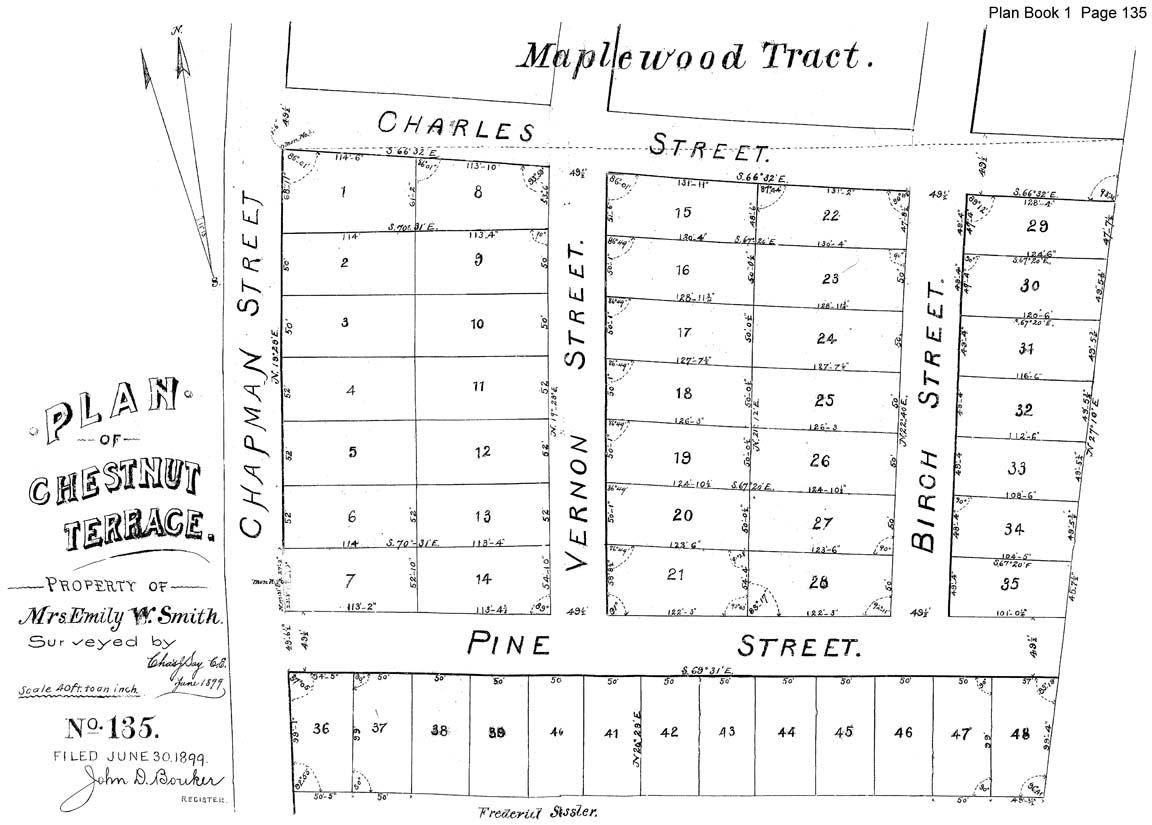
neighborhood lot map 1899 survey-web

The original 1899 detailed survey of our neighborhood

I love the old style lettering. In the upper left is the compass pointing north. It looks like the declination back then was 11 degrees 13 minutes. Today it is 14 degrees 28 minutes. I have a little trouble with this still, but it appears to me that the north south compass is pointing to solar south and north, not magnetic.

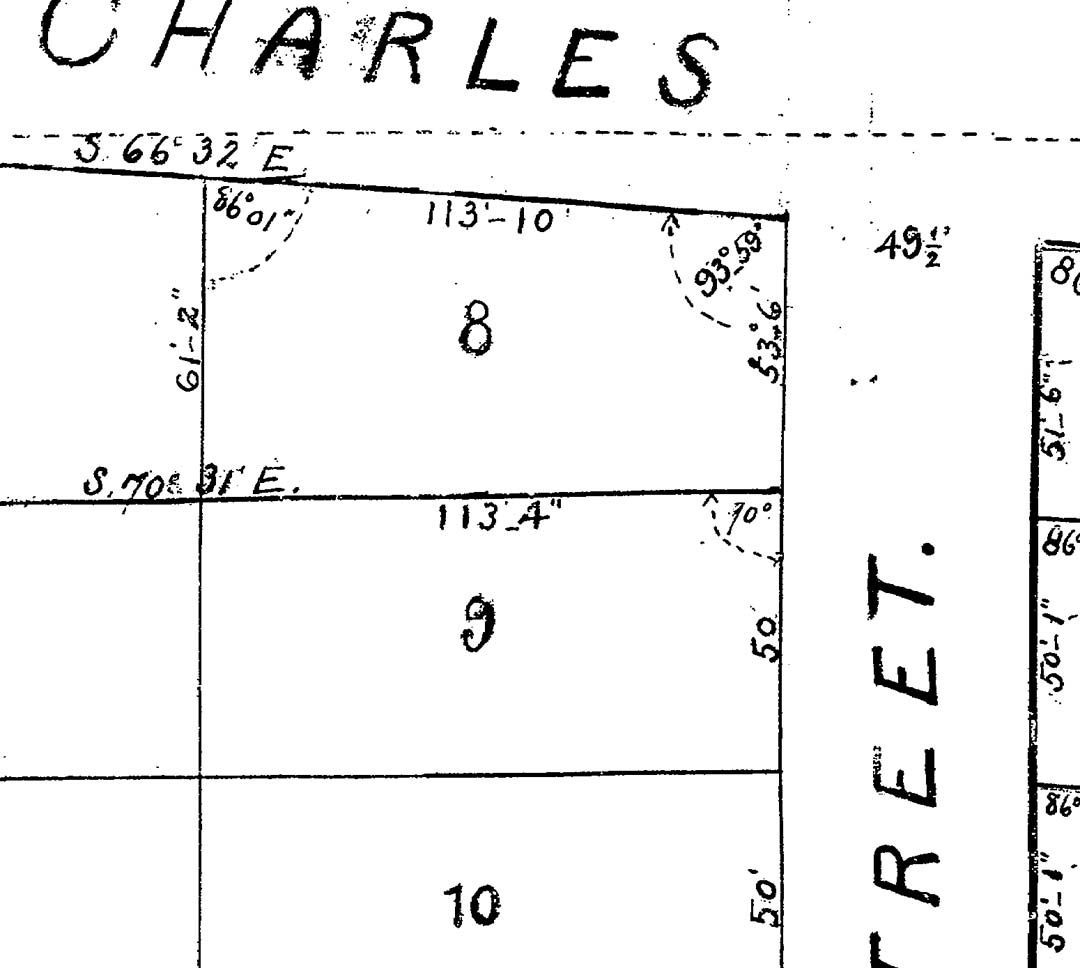
lot map 1899 survey-web

Close up of our lots (8 and 9 now combined)

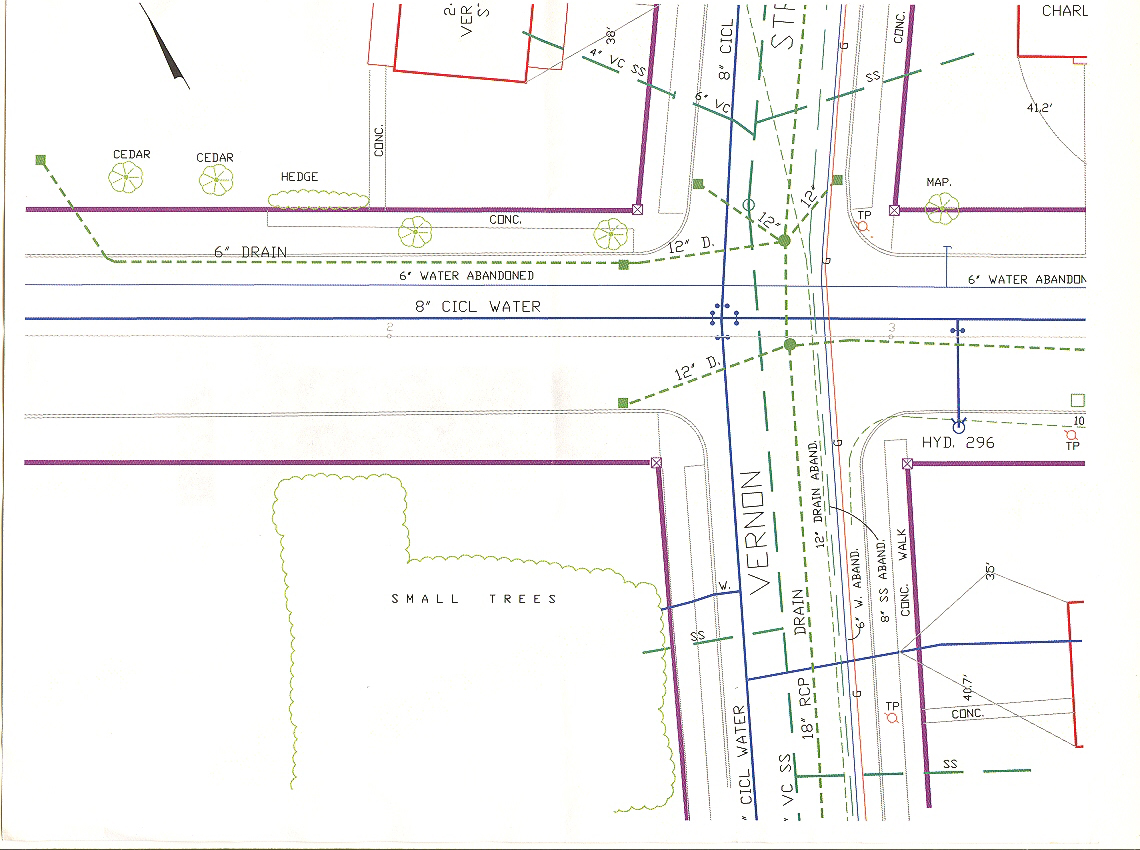
Sewer water line map

Sewer and water stub lines already run under the sidewalk = Savings

If you look at the sewer and water lines on Vernon St. you can see that there are stub lines already run under the sidewalk, which is great. It means we don’t have to pay to cut and repair the street. Unfortunately it also means we can’t tap into the gas lines. Greenfield won’t cut streets that are 5 years old or younger unless it is necessary.

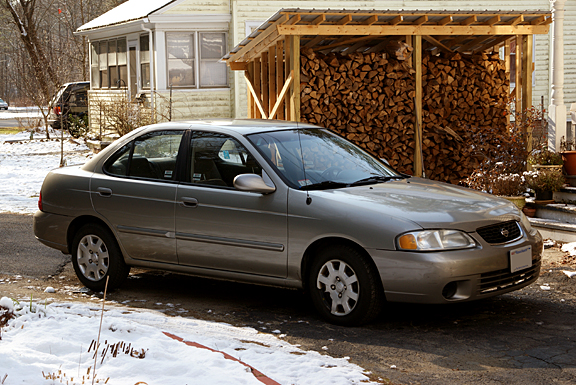
Selling the Sentra and Buying a Truck

I’ll be needing a pickup truck while building the home so its time to sell my Nissan Sentra. Here is the link to the Sentra for sale page on Craig’s List.

http://westernmass.craigslist.org/cto/1587104902.html

Let me know if you are interested! Family and friends get a discount!

I have had quite a number of folks interested in the Sentra, hopefully someone will go for it soon. I also found a pickup truck. My mechanic is selling it. Will post more soon.

Solar Pathfinder

I borrowed a Solar Pathfinder from GCC yesterday and used it to analyze the solar access and gain for the site (once the trees are cut).

How the Pathfinder works:

The device is quite simple. (pictures below) A semi reflective/semi transparent dome that sits above a sun path chart for our latitude. The dome reflects the entire horizon and sky and effectively superimposes it on the sun path chart. You can than see what trees and buildings obstruct the sun throughout the entire year. One can do out the calculations by hand, it is easier and quicker to take a digital image looking down on the Pathfinder and load it into the associated software.

Setting up the Pathfinder:

Orient the Pathfinder so that the it is level and pointing towards magnetic South using the bubble level and compass that are on it. Make sure there is no magnetic metals near the pathfinder including nails and belt buckles. The tricky part is correctly rotating the sunpath chart so that it is facing the solar south and not magnetic south. The amount and direction of rotation depends on where you are on the planet. For Western Massachusetts the difference between magnetic south and solar south (declination) is about 14.5 degrees West of North. It is somewhat confusing to explain without pictures which direction to rotate; suffice to say one rotates the chart clockwise. If one is in the western part of the country one would be rotating the chart a certain number of degrees counter clockwise. If you are in the correct location in Mississippi river valley, there is no declination, magnetic south and solar south align.

Links:

Declination Calculator http://www.ngdc.noaa.gov/geomagmodels/Declination.jsp

Declination World Map http://www.ngdc.noaa.gov/geomag/WMM/data/wmm-D05.pdf

Results:

As you can see (at least for the center of the lot) the solar gain is fantastic once the trees are gone. All of the trees will be cut except for on large silver maple on the west side of the lot. Incredibly, this silver maple is situated so that it won’t impinge on the winter sun and will block the summer afternoon sun from the west (which is typically the most problematic from the point of view of overheating). What luck!

I need take more readings with the Pathfinder from different locations so I can get a better idea of what the house will experience. Also, I need to recalculate the kWh/m^2/day with a 64 degree tilt. Sixty four degrees is the optimum angle to maximize winter gain.
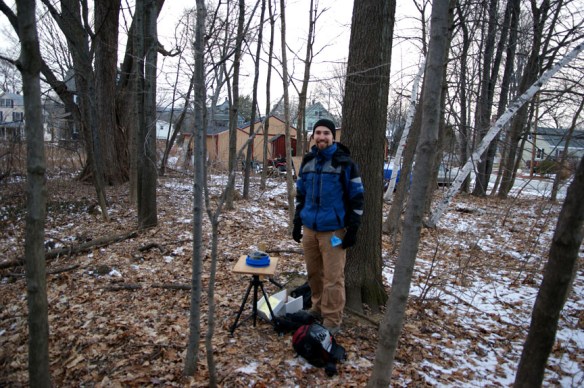
Picture of me with the pathfinder. You can see the large silver maple in the back left.

Classes and Designing

I just wrapped up my class at GCC on Archicad. I am really grateful for having and being able to use a CAD program. Attached is my first run through on a design for the first floor. I haven’t drawn up a second floor or roof yet for it.

First Run with Archicad. First floor plan. North is up.

Solar hot water and air class started yesterday and Piping and Passive Solar start today.

I am certain now that the house will have two floors. Although I haven’t been to the site with a solar pathfinder (to determine the amount of sun the site gets based on obstacles) I am fairly certain the neighbors house to the south will block a significant portion of the winter sun. Having the panels on top of a second floor roof will mitigate this issue.

House Design

Although I have not yet designed the house I have many of ideas. Here is a list of some of the characteristics that the house will have

  • The general idea is a small, passive solar, super-insulated home in the saltbox style.
  • The house will be small maybe in the 1100 sq ft range. Not including porch space.
  • No basement – on slab due to the high water table and the fact that concrete has a high carbon footprint
  • The foundation will be insulated using ICF’s for the stem wall and foamboard under the slab
  • There will also be a skirt of foamboard buried around entire perimeter. This will effectively raise the frost line so the stem wall does not have to be four feet deep–less excavation and less concrete.
  • The wall system will have a double stick frame wall design. This will allow for more insulation and less thermal bridging. Overall the wall will probably be about a foot thick.
  • I have heard good things regarding the Zip system for exterior sheathing and will probably be using it.
  • Stained cedar shingles or clapboards with a rain screen
  • Metal roof, ideally standing seam. It should be white or silver to reflect as much heat as possible.
  • Solar hot water system
  • 2 foot overhangs to keep water away from the house
  • Cathedral ceiling or open ceiling space to the second floor on at least part of the house

Its official!

Hannah and I bought land! We will now embark upon the journey of building ourselves a home!

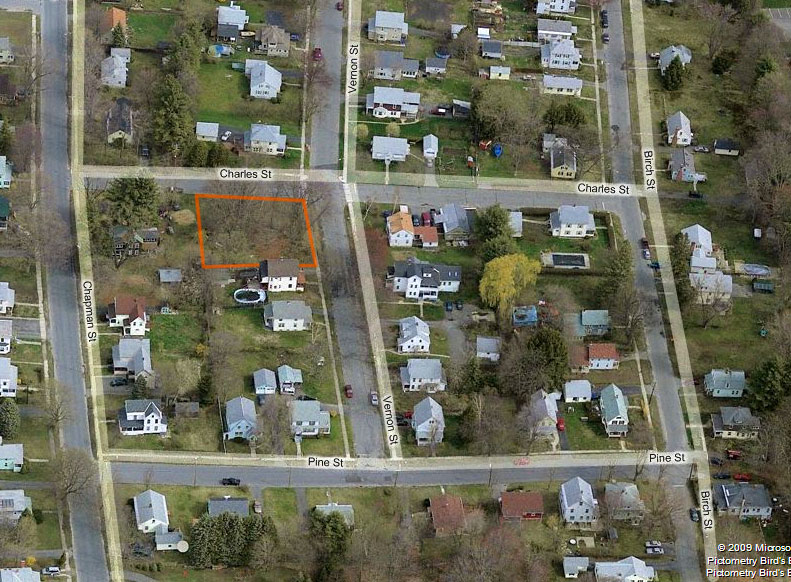
The plot is in Greenfield, MA, our current hometown, at the corner of Charles St and Vernon St. We really got quite lucky, it is 1 mile north of downtown and in a desirable established neighborhood.

The lot is .27 acres and currently has trees on it. Although the trees are nice they need to be cut. A few of them are leaning away from the property. Others are where the house will be located. Finally the majority of them are on the Southern side of the lot, which would block the wintertime passive solar gain.

We would like to thank all of our friends and family who have supported us throughout the years. We send special thanks to those who put up with our non-traditional request of asking for money for a home at our wedding–we will shortly be putting all of it to use.

Learning to Build

Looking back at where I was 3 years ago I would have never guessed I would now be in the position of building my own home. During the fall of 2008, I read Building Green and was quite inspired. I ended up taking a few building science courses at Greenfield Community College (GCC) in their Renewable Energy/Energy Efficiency program. I can’t recommend these classes enough–especially to anyone who owns a home. I also learned timberframing with Devin Smith in Rockingham VT. You can see pictures of Devin and I working at his Flickr account here.

In preparation for building our house I will be taking a half a dozen classes at GCC–all oriented towards designing and building the house. In fact, one of my classes, Green Building 2 with Scott Baum,  is exclusively about designing your own house.