Sitework done for now

Work continued this past Friday and Saturday. Unfortunately we hit ledge under the garage. At first we thought it would be easy to hammer out because it is red sand stone, however, it wasn’t, and we spent quite of bit of time (and money) making slow progress. At this point, the plan is to pour the footing on top of ledge.

Today, we successfully connected to the water and sewer lines.

The next steps are to pour the footings and the stem walls. I got an estimate from one contractor: $8000 for the house foundation and $3750 for the garage foundation. The concrete represents about $4000 of the cost. Tomorrow I will be experimenting and looking into doing the footing and stem wall myself.
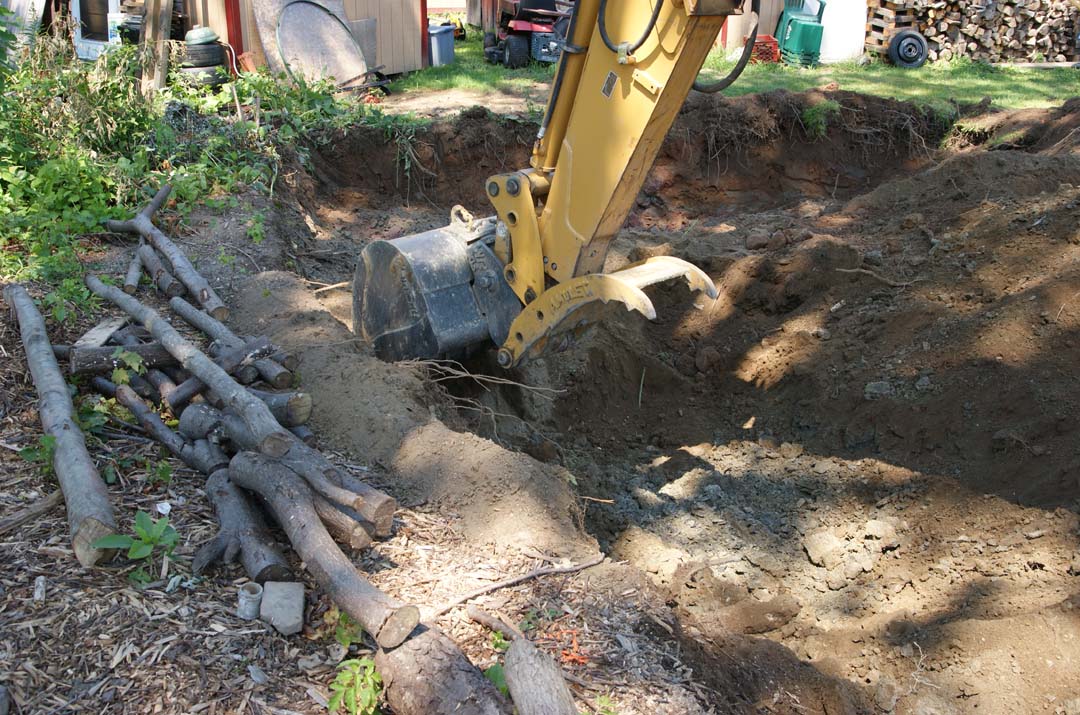
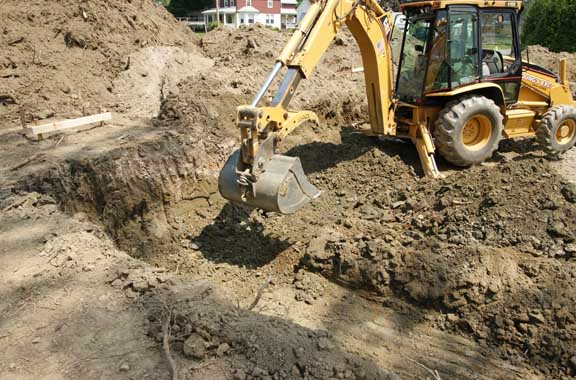
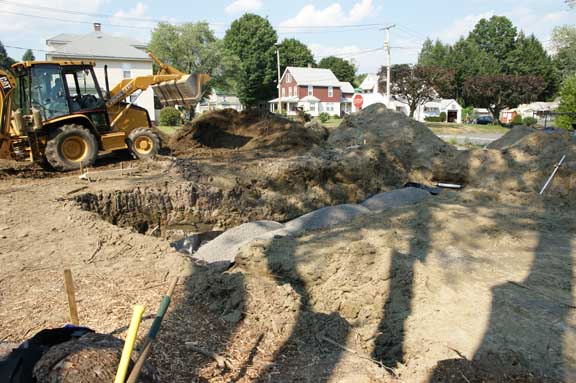
Garage excavation
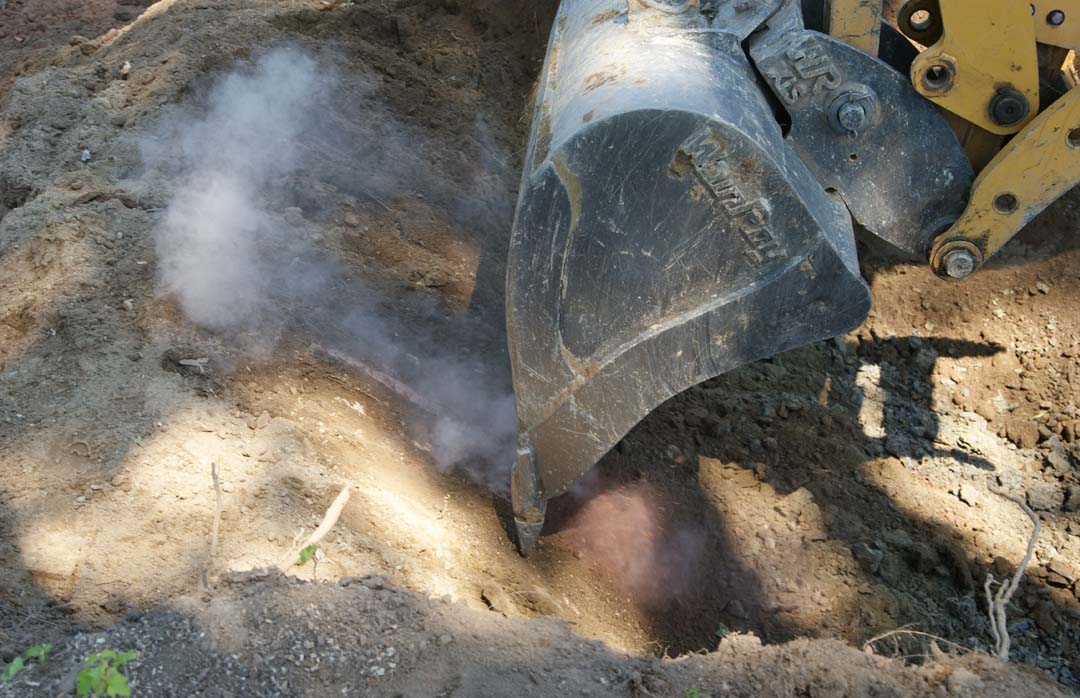
Garage excavation

Ledge

Scraping the Ledge

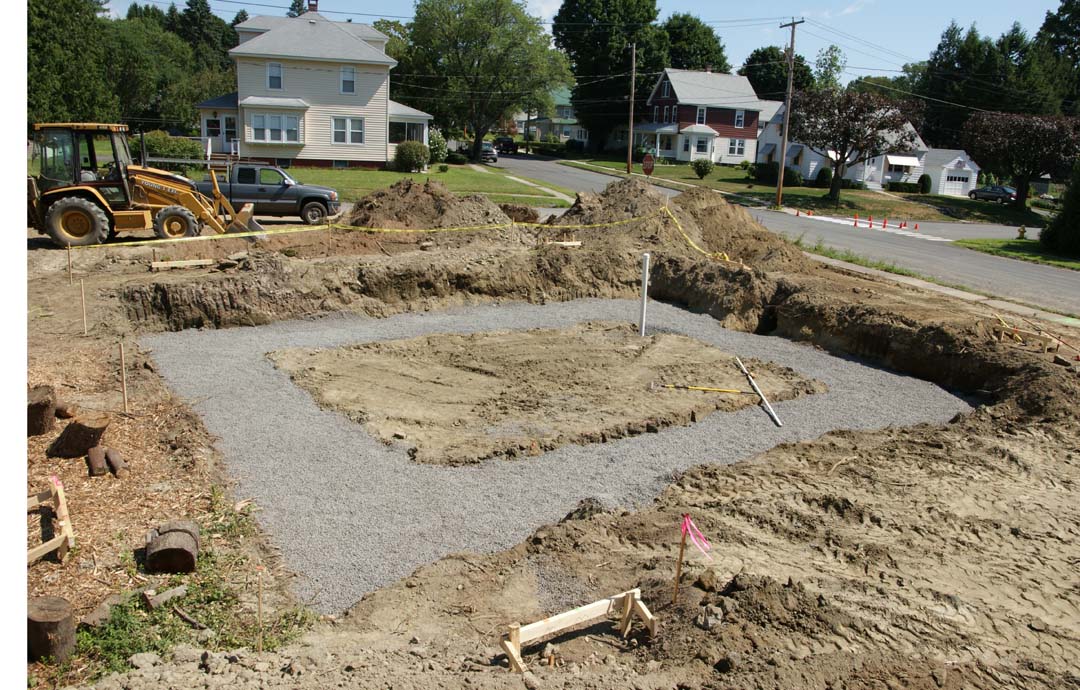
Ready for footing
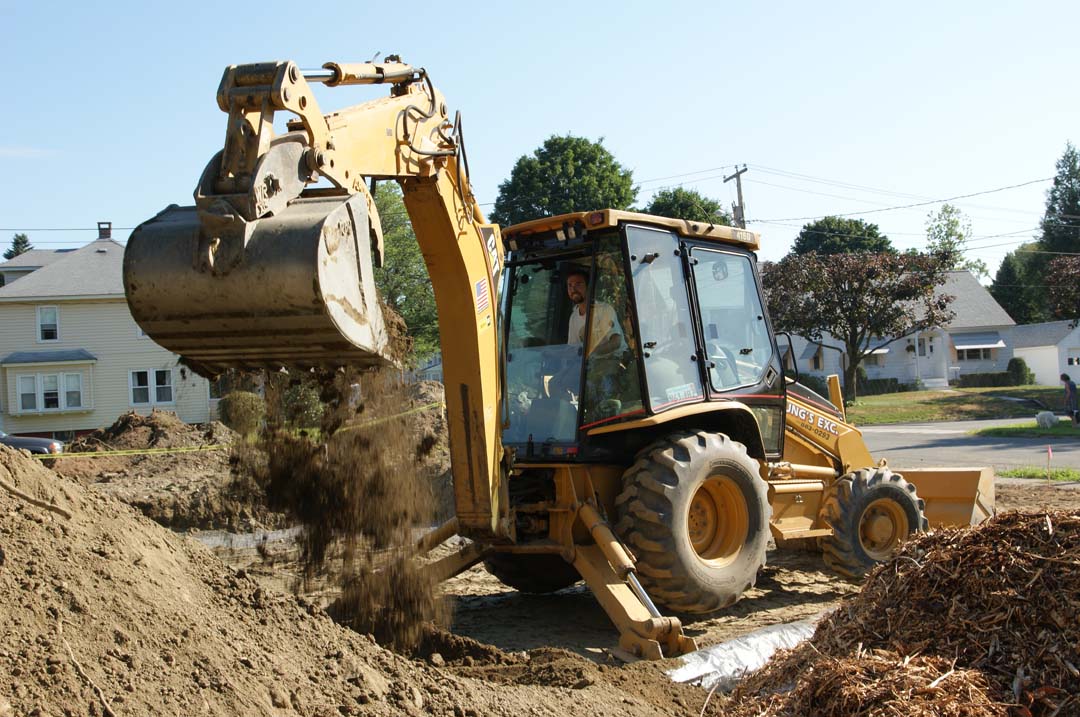
Ready for footing

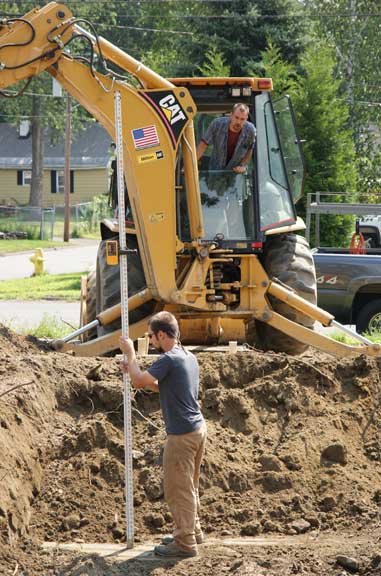
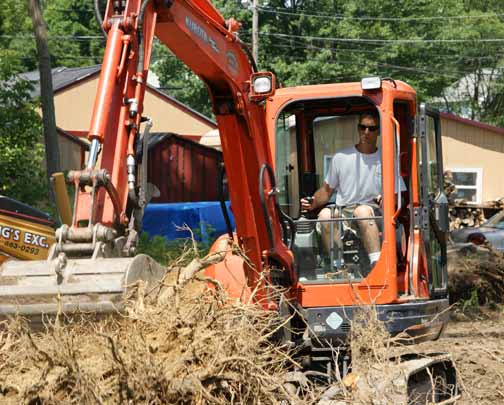
Backhoe

There was a problem getting the hammer to work on the mini-excavator. During the downtime I got my first lesson on operating a back hoe!
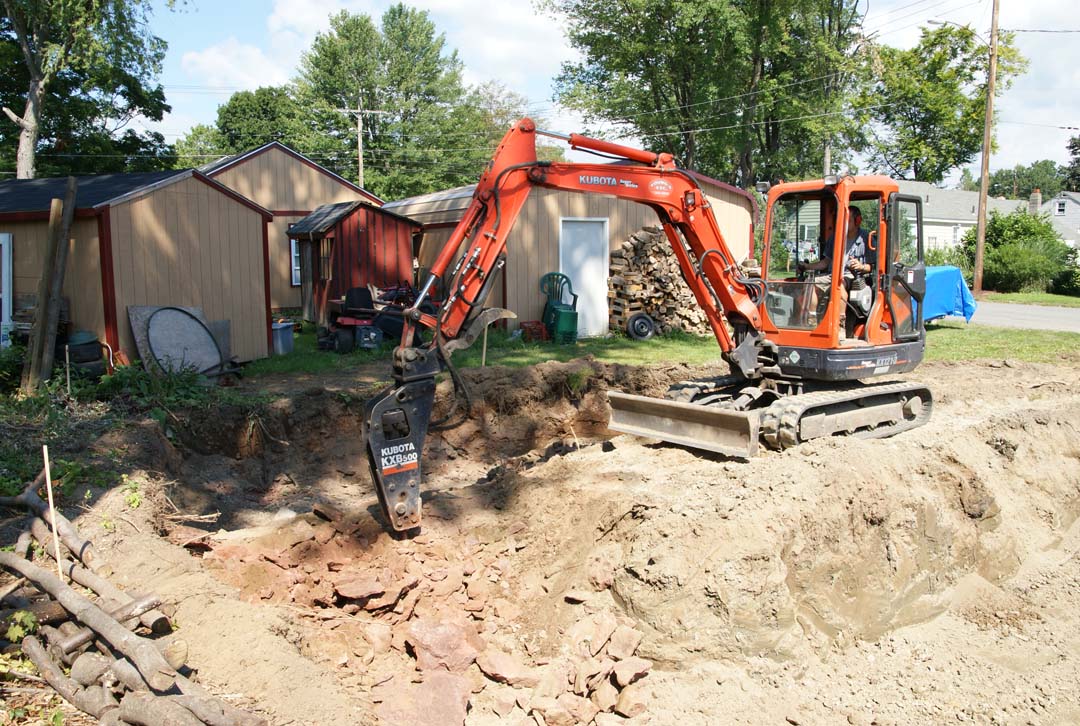
Hammering ledge

For no particular reason the hammer worked after I got the back hoe lesson. We hypothesized that there was air in the hydraulic line that bled out.

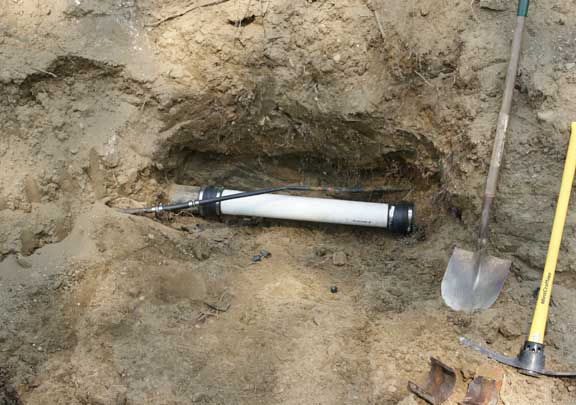
Water connection

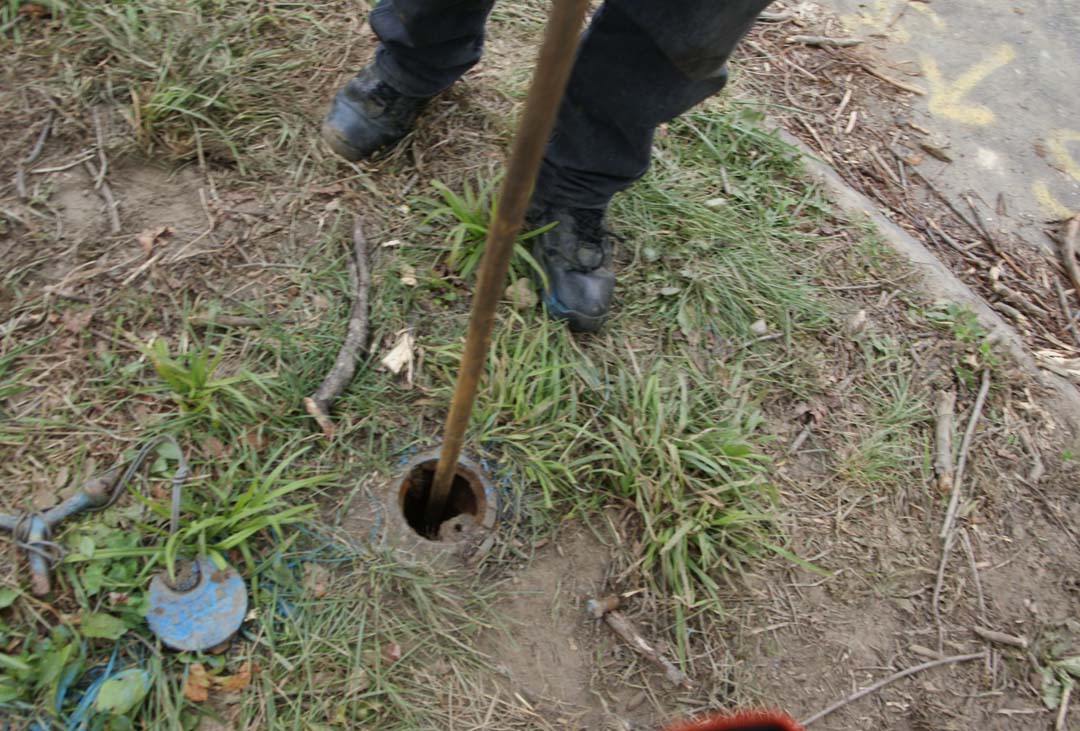
It turns out that the pipes we clipped at the northeast corner of the foundation actually were connected to our water and sewer lines. The black plastic 1" pipe is underneath the roll of copper.
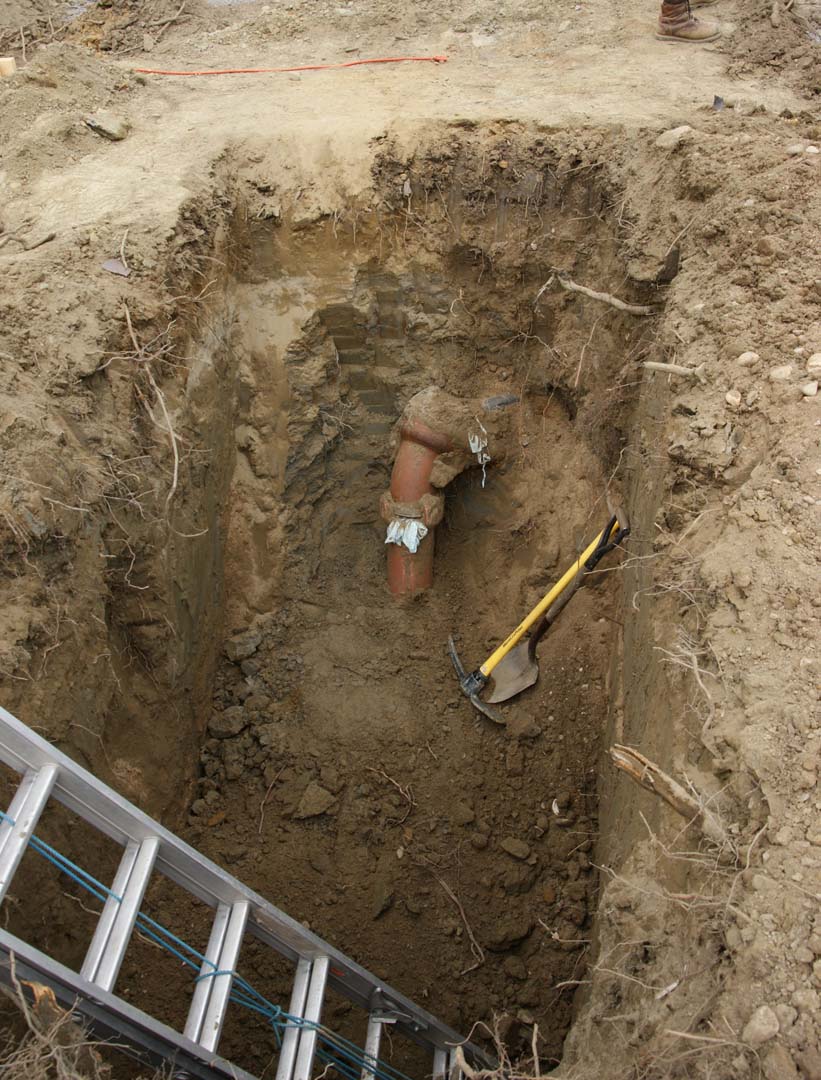
Old clay sewer pipe

Old clay sewer pipe. We had trouble locating this pipe--partly because we thought we were looking for PVC not VC (Vitrified clay). The folks from the DPW, who you would think have seen it all, were very surprised by the size of the clay pipe as well as the fact that it was connected to unknown pipes.

Our sewer connection

Our new sewer connection

Turning on the water
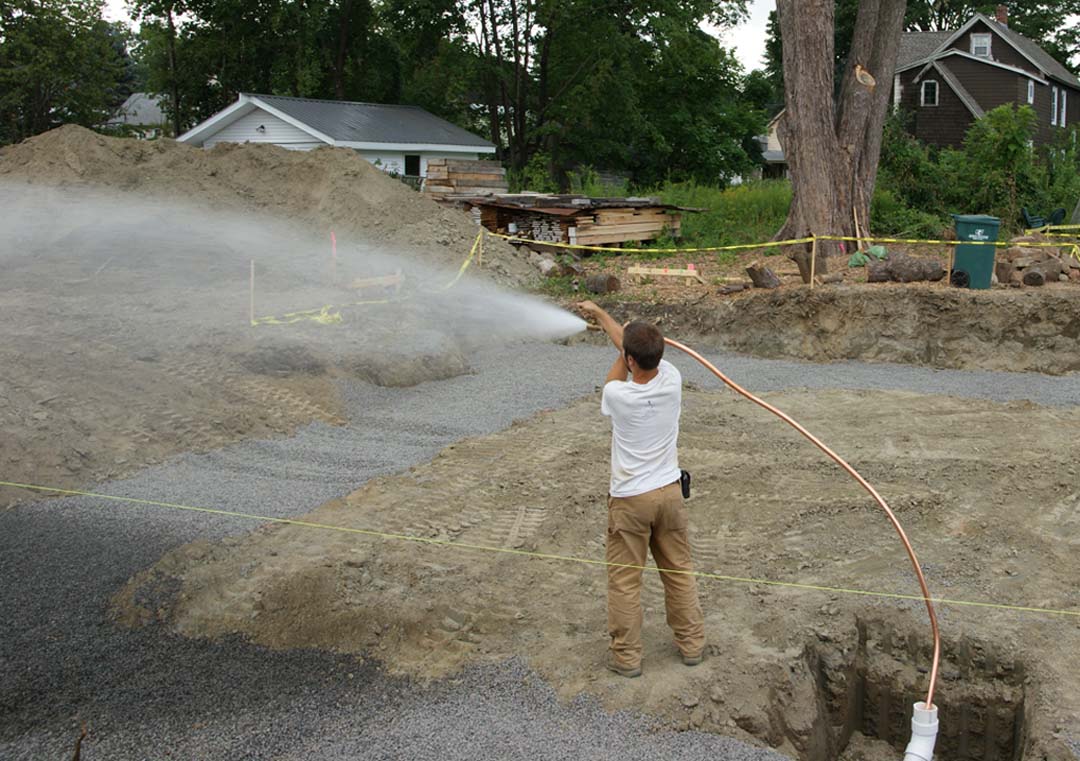
Turning on the water

Water test

We have water!
Retrieving our front stoop

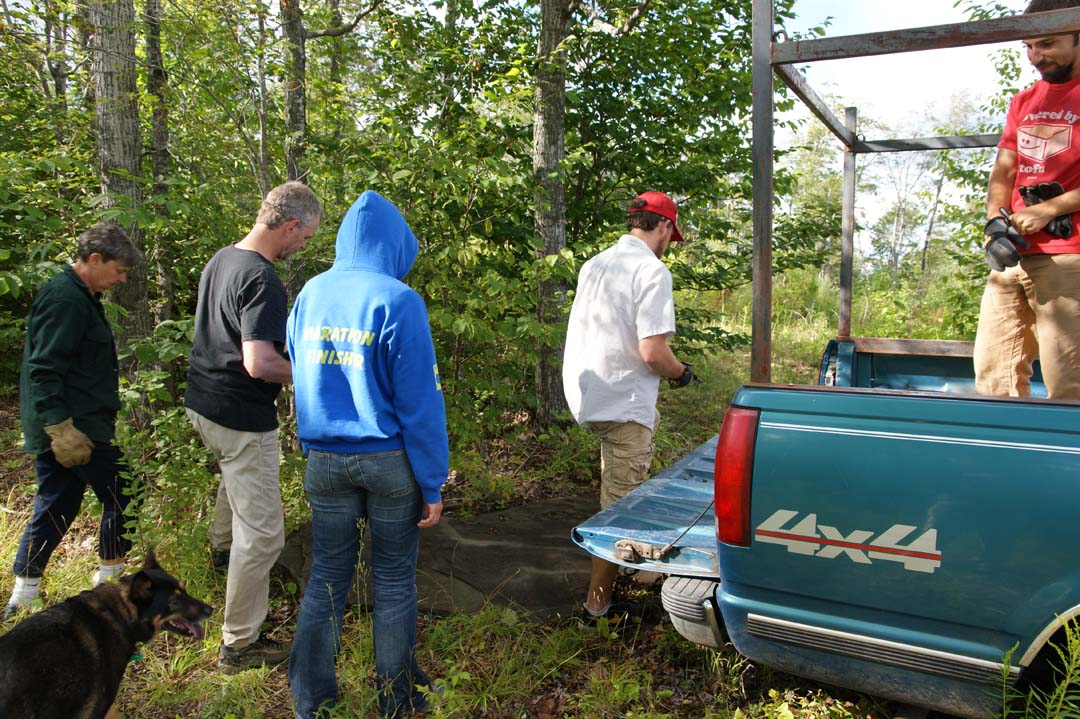
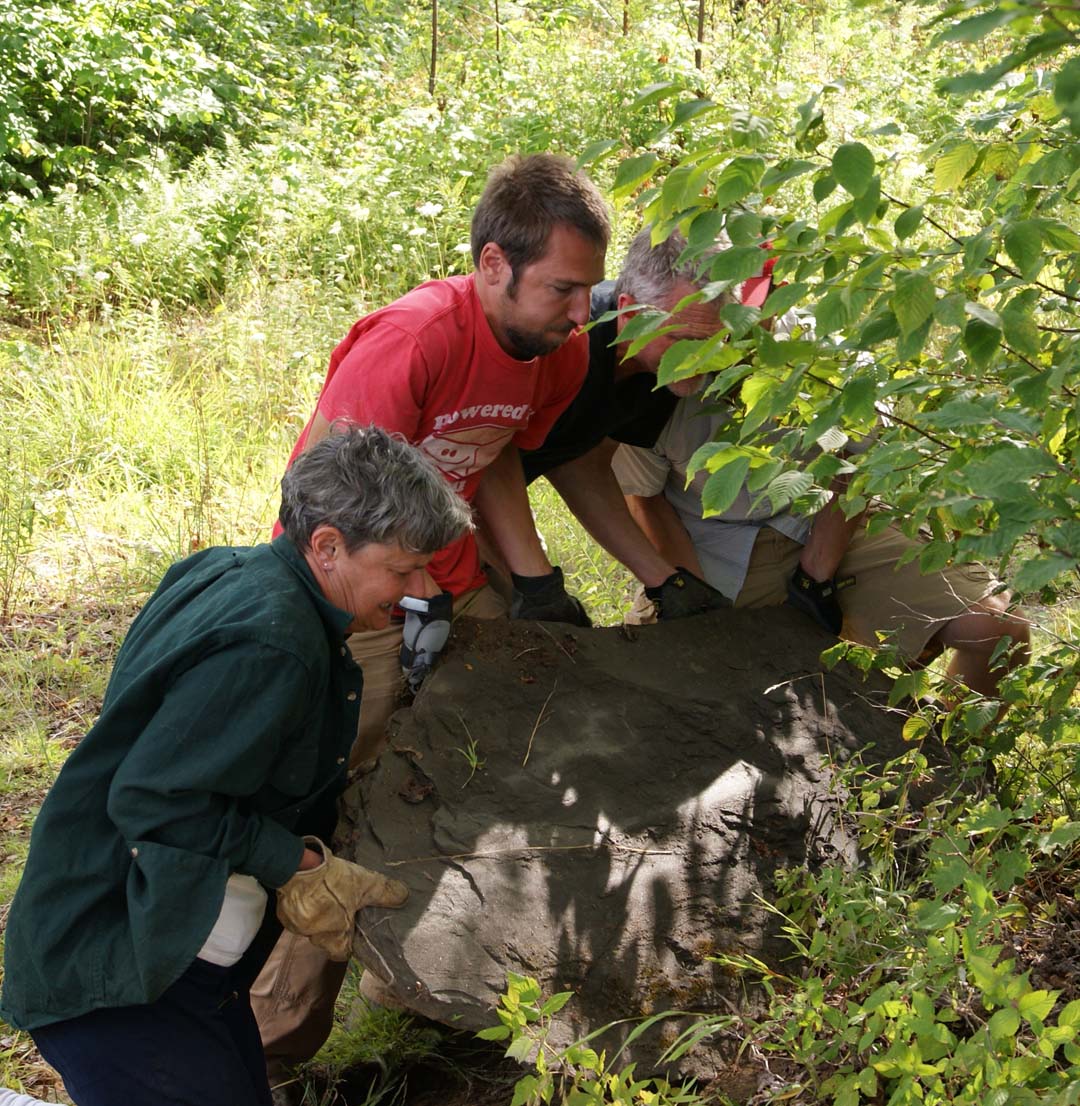
Over the weekend Hannah and I were in Vershire Vermont at the family Cabin at family week. While hiking around, we discovered a rock that would be perfect for a front stoop (right near table rock). Sara at the Vershire Riding School generously allowed us to take the rock (it was on their property). It took five of us to lift it up into the truck. I figure it weighed in between 350 and 450 pounds. Thank you Jay, Andrew, Margy, and Ancy! Pics by Julie.

Getting ready to lift the rock

Put your gloves on!

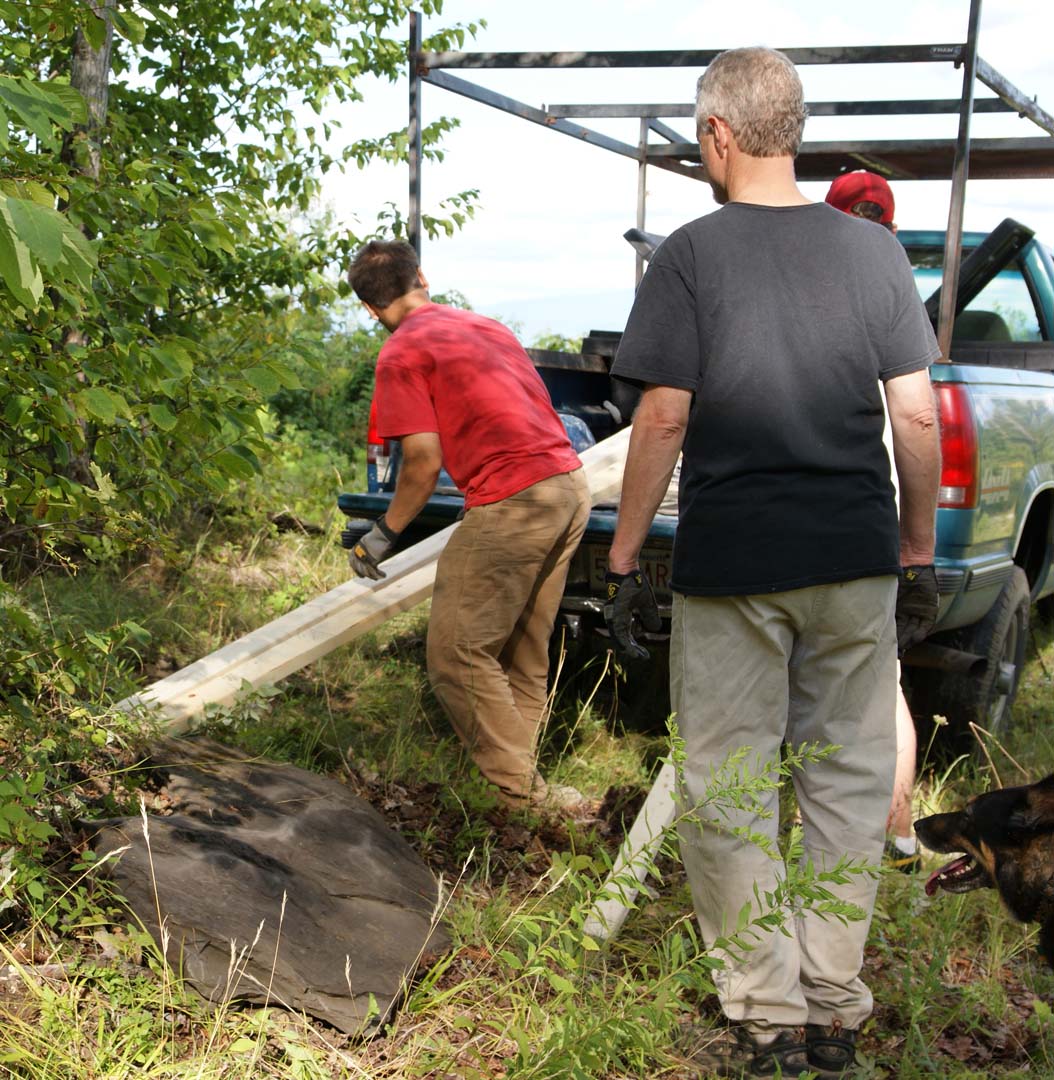
Makeshift ramp

We set up a ramp and used rollers to help us get the rock into the truck.

Powered by tofu

Good thing I was wearing my powered by tofu T-Shirt

Success

Success!

Rock in Greenfield

My neighbors' family helped get the rock out of the truck. Thank you Al, Leo, and Dick.

Ground has been broken!

Batter boards

Yesterday I spent most of the day making batterboards. Batterboards allow one to keep track of the corners of the house after the corner stakes get removed for excavation. Two batterboards get erected perpendicular to each corner about 10' away from the corner. Before the stakes get removed, one runs string from one board to the opposite board above two corner stakes of the house. Repeat for the other three pairs of batterboards. The four strings form a rectangle that represents the perimeter of the house. Put a saw mark where the strings cross the batterboards and you can recreate the house perimeter with ease. Next time I make these I am going to get a second person to hold the stake while I pound it in with a full-sized sledge hammer. It took for-ever to pound the stakes in with a hand-held sledge.

Excavating

Excavating!

Depth Test

Me using a laser level to gauge the depth of excavation

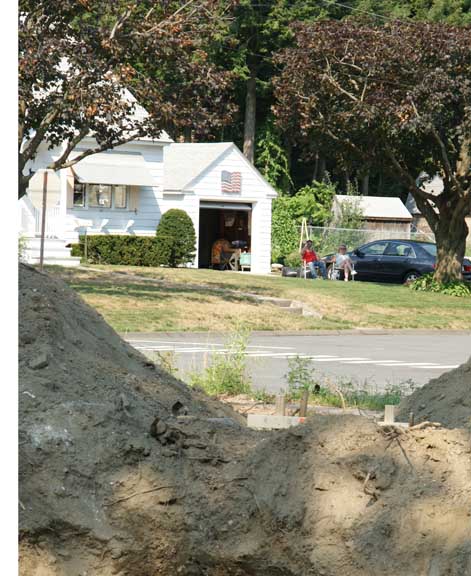
Neighbors watching

Our neighbors Pat and Ed enjoying the show. As it turns out Pat and Ed and another adjacent neighbor built their homes. No wonder everyone doesn't mind the ruckus!

Broken pipe

We discovered and accidentally broke undocumented pipes in the Northeast corner of the property: a 4" orangeburg pipe and a 1" plastic pipe. Clearly neither had been used for quite some time, but we didn't want to take any chances and so patched them anyways. Orangeburg pipe, made of tarpaper rolled up to be 1/4" thick used to be used for sewer lines. Why one ran diagonally across the Northeast corner is peculiar.

Pipes fixed

A few O-rings, some new pipe, and a bunch of digging later, I'm done.

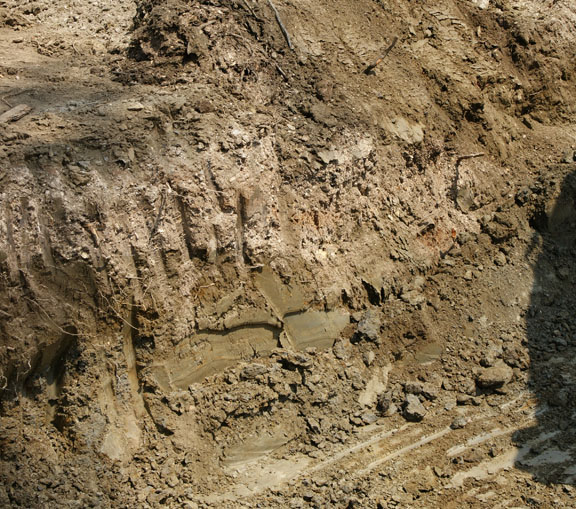
Ash pit

At some point someone used the land as a trash burning pit. The light colored area towards the top of the excavation wall is ash that has trash in it as well--mostly glass and rusty things.

Clay

It wasn't a surprise to find clay underground--the USGS soil maps say it should be there. In any case, clay expands and contracts a lot and is rather unstable to build on. The solution is to dig 18" deeper and 3' wider than the footing and backfill with crushed stone. Under the stone is geotextile fabric to keep water from getting pushed up from the clay into the stone.

Stone below footing

Our preventive measures against clay under the foundation. Incidentally, we can see that the silver maple tree will be blocking the summer afternoon sunlight quite well.

Removing stumps and dirt

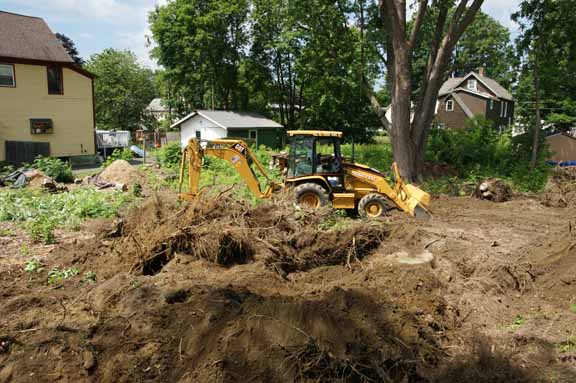
We took away about six loads of dirt, roots, and stumps today.

End of day of excavation

We started at 7am and finished at about 6pm. Whew! After putting up caution tape I am ready for sleep.

Permit Approved!

Hooray!

Over the weekend David Vreeland, an engineer, made time in his busy schedule to work with us on the foundation. (Thank you David!) As it turns out, although we made a couple of alterations, I did design the shallow frost protected foundation correctly. David got the stamped plan to us on Tuesday; that afternoon I was at the building inspection office with the rest of the revisions and going over them with the building inspector. After making another few small adjustments on the fly we finally got the go-ahead!

This afternoon sitework will resume. Life is about to get hectic.

Below are some pictures of the sitework that was done in the previous week and half.

Stump removal

Stump removal

Stump Removal

Stump Removal

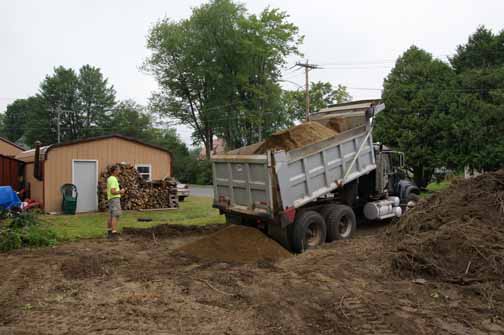
Dump of gravel for driveway - $350

Dump of gravel for driveway - $350

Compacting driveway

Compacting driveway with vibrating roller

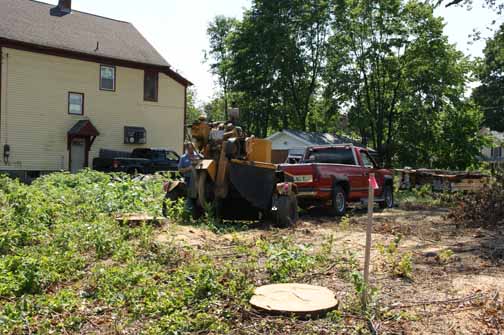
Stump grinder

Stump grinder

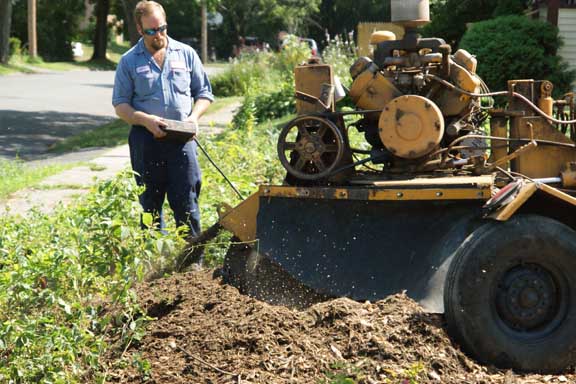
Stump grinding

Stump grinding. The stumps that were not under either foundation were ground. It disturbs the soil less.

Sad news for the red maple

Last week we were testing out some possibilities for the height of the first floor (shooting elevations/grades). Much to our dismay it revealed serious problems with the red maple tree on the corner near the streets. That corner is 18″ higher than the low corner opposite it. This means that we would either have to dig into the root system even more (the water line runs 5-6′ to the side of it) or fill the other side (very expensive). Even with a compromise between the two there would still be serious drainage concerns where the tree would be higher than the house. Lastly, leaving the tree meant that the excavator would have to work around it, and at $90/hr…

So, alas, we spent the last two days removing the tree. I felt bad–especially when I saw one neighbor drive by with a stunned look.

Permit update

Last week we finally got word back from the building inspector. Below are his questions/issues  which I have been working on. The most troublesome of which is the second point. I have since confirmed that the inspector is looking for is an engineer’s stamp for the foundation (not clear in the letter below). The inspector never guaranteed that he would OK my design for the shallow frost protected foundation, but that he would consider it if I submitted detailed support and calculations. Since last week I have been trying to find an engineer who has time to complete the project on short notice. If I can’t get a stamp for it by the middle of next week, I will be aborting the notion of doing the shallow foundation.
>>>>>>>>>>

Spartan,

I reviewed the plans for the new single family home and detached garage you propose to construct. The following are questions, or issues found during the review,

  1. Since the driveway to the home is located off from Charles Street , A Charles Street address will have to be assigned,
  2. As a home owner, you have designed the home and a frost protected shallow foundation, can you please provide this office with credentials you hold as a designer?
  3. The design for frost protected shallow foundation shows insulation board being used, how is the insulation board is protected against termite infestation, see 780 CMR section 5320.
  4. According to elevation plans, the overall height for the new home is approximately 30 feet, is this accurate?
  5. What is the finished ceiling height for the study room located on the 3rd floor?
  6. Plans indicate you are using a single top plate, how are the walls being tied together? See section 5602.3.2 regarding top plates.
  7. Plans indicate you are using full dimensional lumber, is the lumber being used native lumber? If so, please refer to 780 CMR 110.R4 regarding native lumber, the grading and restrictions for native lumber.
  8. Plans are unclear to me as to the length the 2”X10” floor joists are spanning, please provide the span.
  9. Plans show the trusses are designed for a 44 lb live load, roof systems for this area must be designed for a 50 lb ground snow load, please ensure manufacturer for the trusses are aware and resubmit calculations for trusses.
  10. Since a prescriptive method is not being used for the energy code, please submit the res-check calculation work sheet for the energy code.
  11. Plans show a detached garage is proposed, see 780 CMR table 5602.10.5 for braced walls panels, plans are unclear whether you the front wall meets this requirement, please provide information how this wall meets braced wall requirement.

Once these questions/issues are resolved a permit can be issued.

No news yet / Stump work / New purchases

Still no news on the building permit, unfortunately.

On the other hand we don’t need a permit to pull stumps or grind them so things are moving ahead on that front. (pictures to follow)

John Thom and I put  in a full day last week taking branches out of the large silver maple tree. We ended up taking away another four truckloads of wood off of the property. We estimate that there was 10 cords of firewood in all. We avoided renting a chipper again because I spent half a day using a loppers to chop the small branches into 6″ sections.

New Purchases:
-Stained glass window for first floor bathroom, which would otherwise get no natural sunlight. Hannah and I picked the window up at a yard sale in Cleveland OH.
-90 gallon stainless steel hot water tank manufactured by my GCC professor Peter Talmage. The tank is designed to be a solar hot water drainback tank.

The Plans

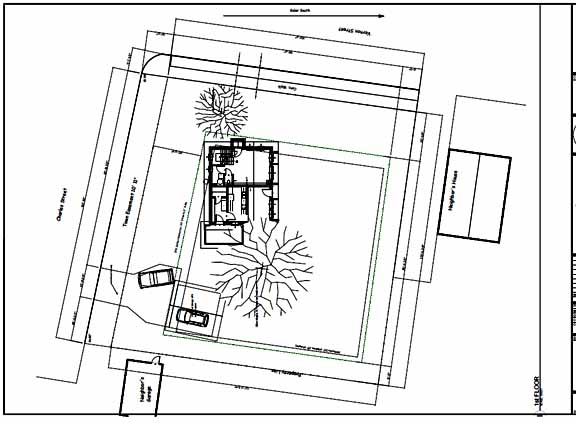
Here are the complete architectural plans for the site, house, and garage. I submitted the plans on Friday as planned, and I was told to expect a 2 week review period. Legally, it could take as much as 4 weeks.

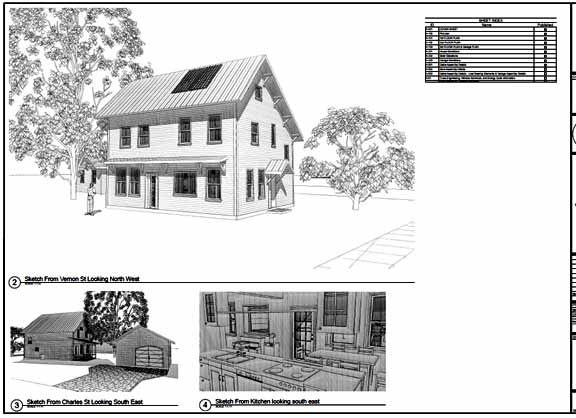
3D Views and Table of Contents

14 Vernon St Plans Complete Architectural Plans (3.5mb)

Quick overview:
*1500 S.F. overall; 1100 S.F. living space
*On Slab (Frost Protected Shallow Foundation so the stem walls only go 14-16″ below grade, details in the plans)
*Saltbox style
*2 Floors plus a 3rd floor room
*2 Bedrooms (Master has 15′ cathedral ceiling)
*1.5 Bathrooms
*128 S.F. West-facing Screen Porch
*324 S.F. Single car garage with storage space
*15,000 BTU per hr heat load at 0 dgr outside 65 dgr inside (Typical new construction is around 80,000 BTU/hr)
*Heated with a gas space heater on the first floor (for details on this and other appliances in our home see our appliance wish list)
Cover sheet for plans thumbnail

Site Plans thumbnail

Plans done!

I have spent the last 36 hours putting in a tremendous push to get the plans done, polished, and ready for printing–and that is pretty much all that remains to be done. After some R&R this weekend I will put up the detailed final plans on the blog. There will, of course, always be room for changes and input is always appreciated.

Growing mushrooms (the edible kind)

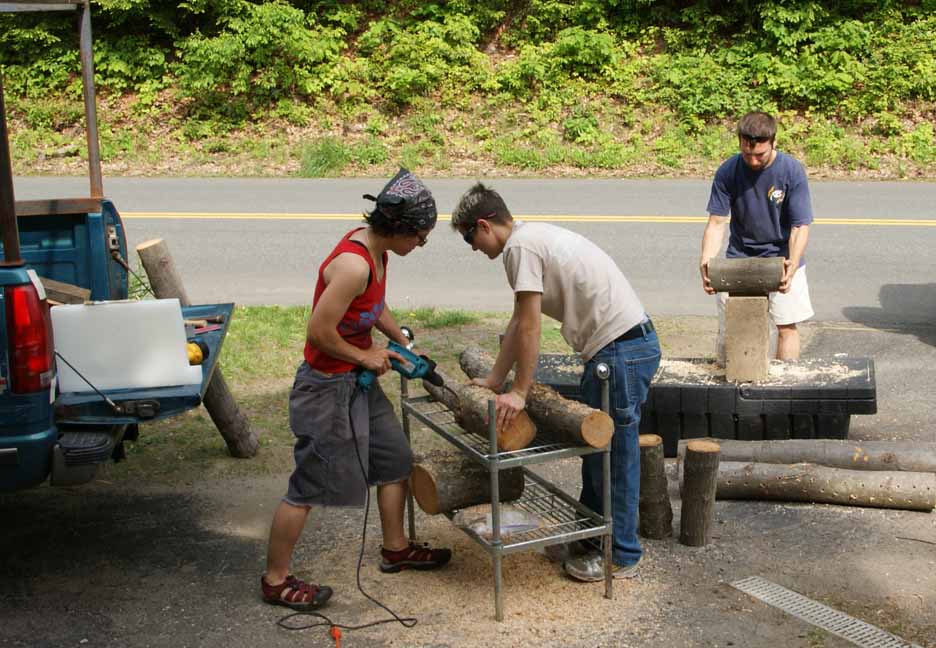
As part of our urban homestead we are growing edible mushrooms on some of the logs that came from our land. Last Saturday Keja and Sarah came to help. (Hannah wasn’t able to help on account of the Winchester Elementary School talent show she was helping to direct.) We purchased innoculant for shitake, maitake, oyster, and lion’s mane from Fungi Perfecti. Oak is one of the best types of wood for the job, which we had plenty of from the land. The process involves drilling holes in the log, inserting the innoculant, which is in the form of dowels or sawdust with mycellium growing on it, and sealing the holes and ends of the log with wax.

Innoculating logs with mushroom spawn

Innoculating logs with mushroom spawn

Sarah and Keja moving innoculated log

Sarah and Keja moving innoculated log

Drilling holes in the logs

Sara and Keja drilling holes in the logs. The white brick on the tailgate is ten pounds of cheese wax for sealing the logs. On the ground is our camp stove for melting the wax. You can also see our new (used) lumber rack on the truck (many thanks Justin!).