We finished the siding a month ago: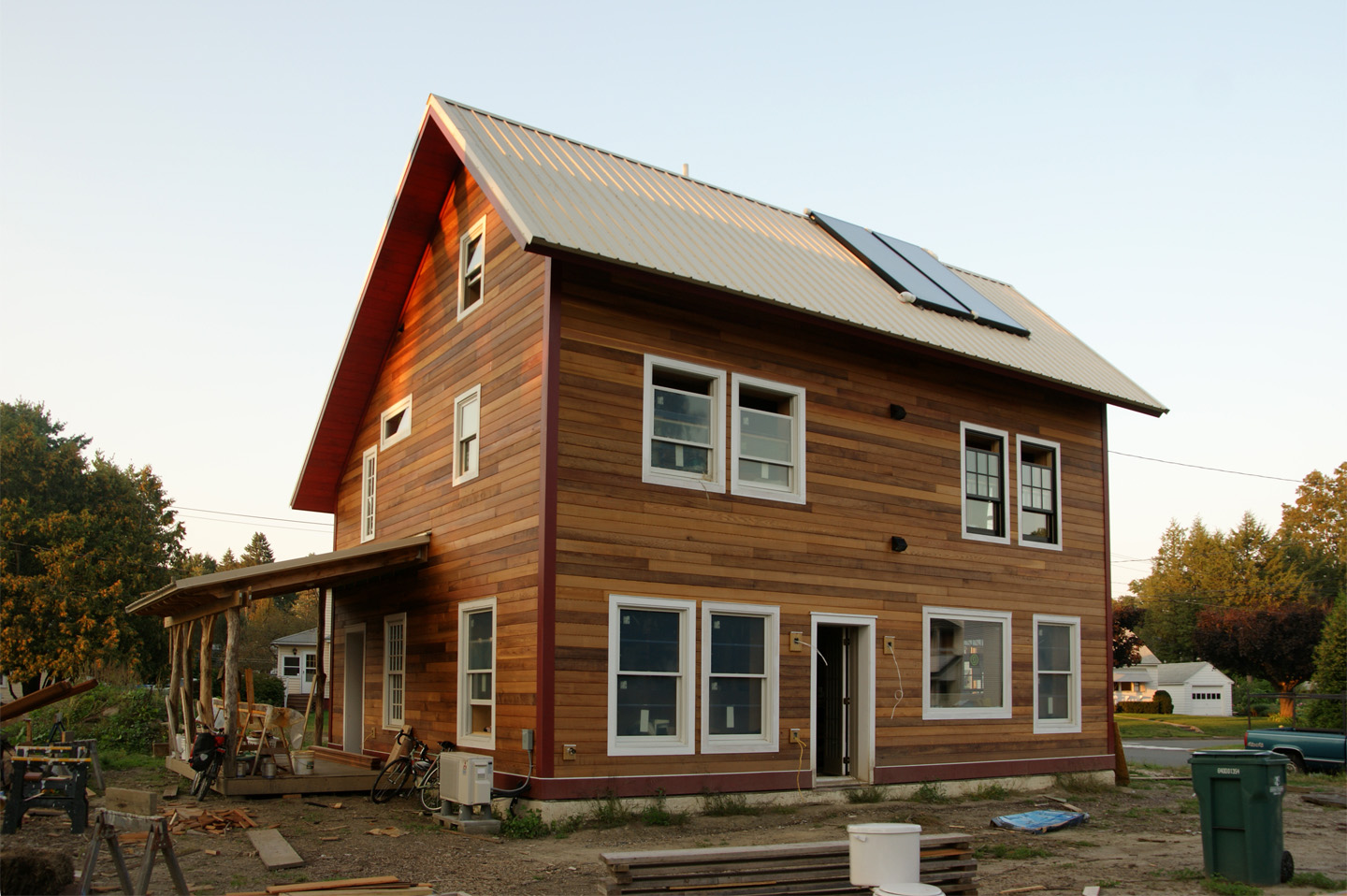
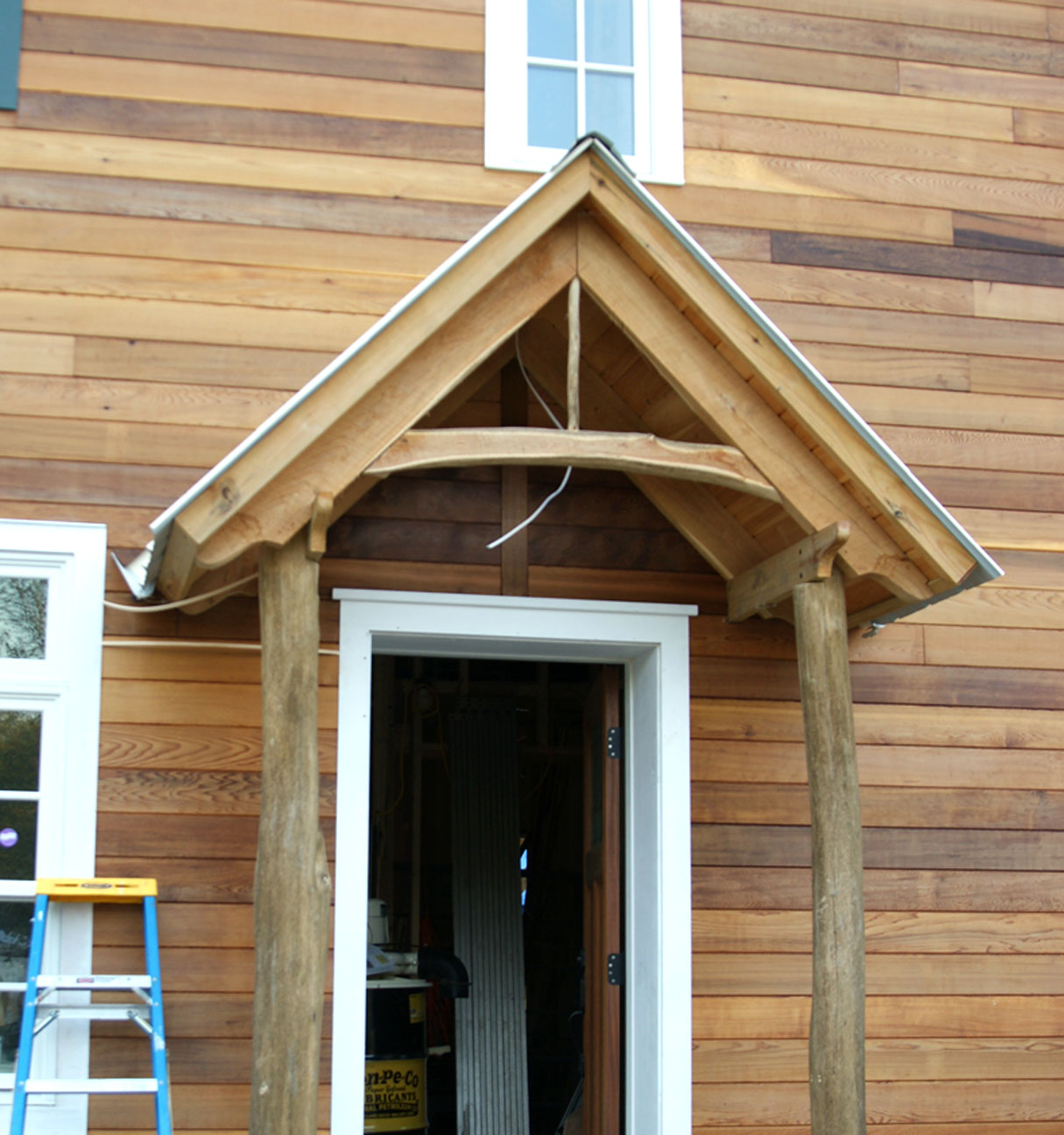
Detail work above entry way mirrors the black locust truss
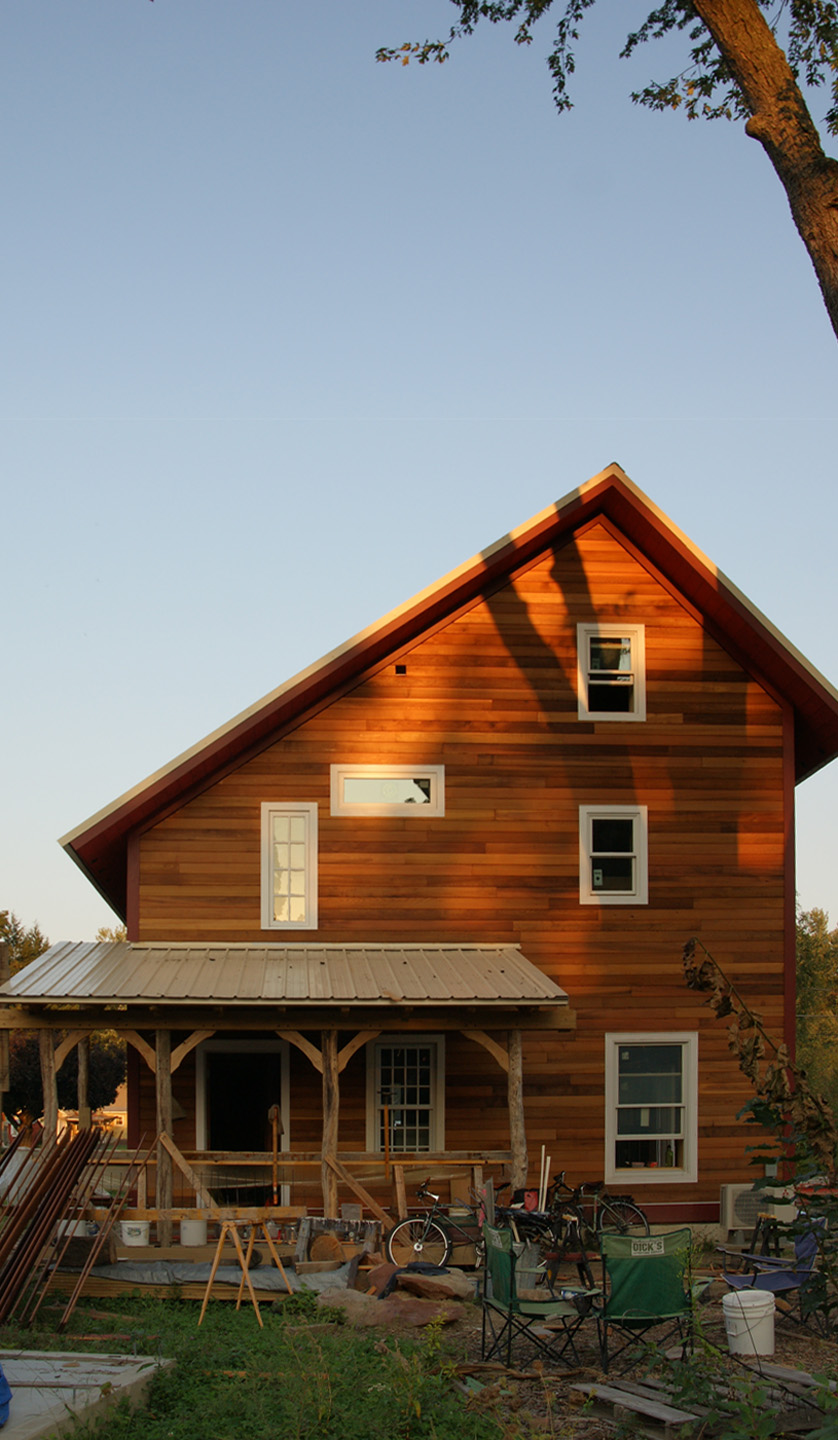
Sunset light on west face of house

We finished the siding a month ago:
Detail work above entry way mirrors the black locust truss
Sunset light on west face of house
While Adam and I were having lunch a while back we saw this cool bug hatching from its larvae. Does anyone know what it is?

Cicada hatching from larvae?
The building inspector signed off on our insulation today. I feel like we are in the home stretch now. Our energy star rep. from CET still needs to inspect the insulation, then we can start covering it all up with dry wall.
Over the last couple of weeks we had to take time away from siding the house to put up some dry wall and wooden ceilings. The dry wall that we put in was so the insulators could insulate some partition walls for sound or fire proofing. Dense pack cellulose does a great job at both, and we are looking forward to a very quiet master bedroom. We put in the wooden ceilings because they hold up the cellulose in the roof in some areas, and we simply needed to get the material out of our way after bringing it in from the garage due to the hurricane.
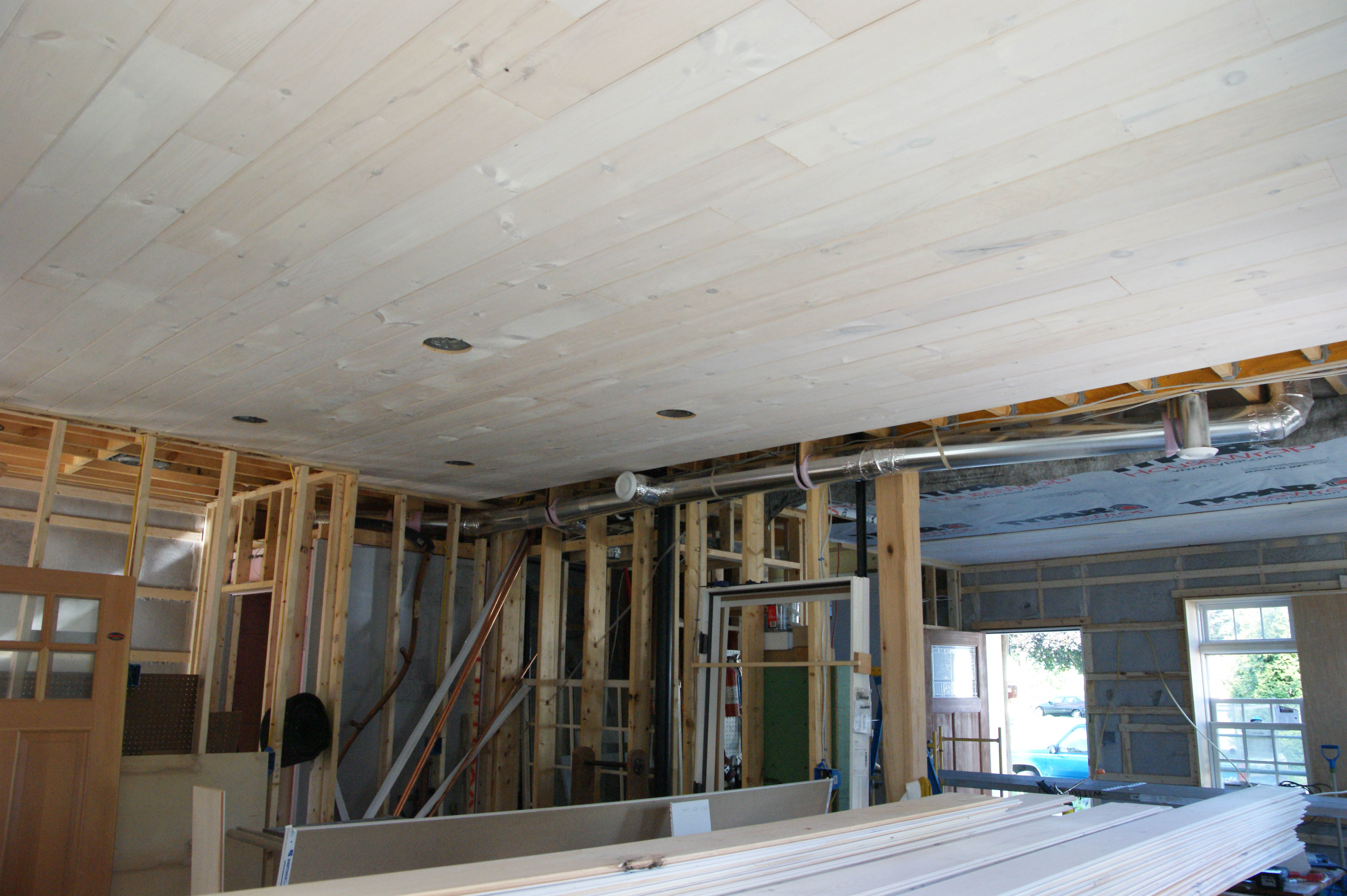
Nearly the entire first floor ceiling is knotty pine tongue and groove 1x8's. We chose this material for a couple of reasons sheet rock has a high carbon foot print, and I didn't want to deal with installing heavy sheets of sheet rock on the ceiling. Oh, and I suppose the fact that it looks awesome might be a reason as well.

In order to keep cellulose dust from entering the living space through the T&G pine boards, we first installed Typar.
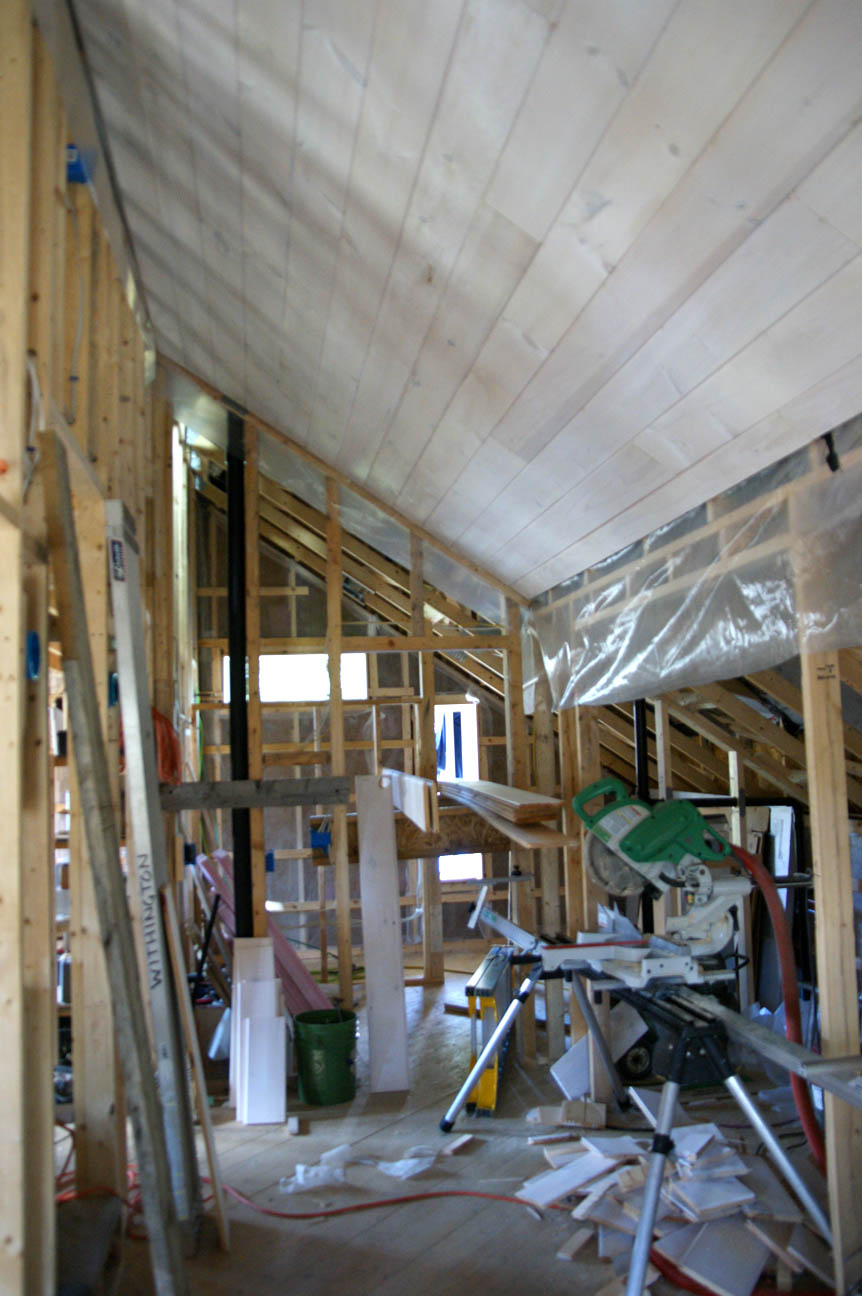
The upstairs hall way.
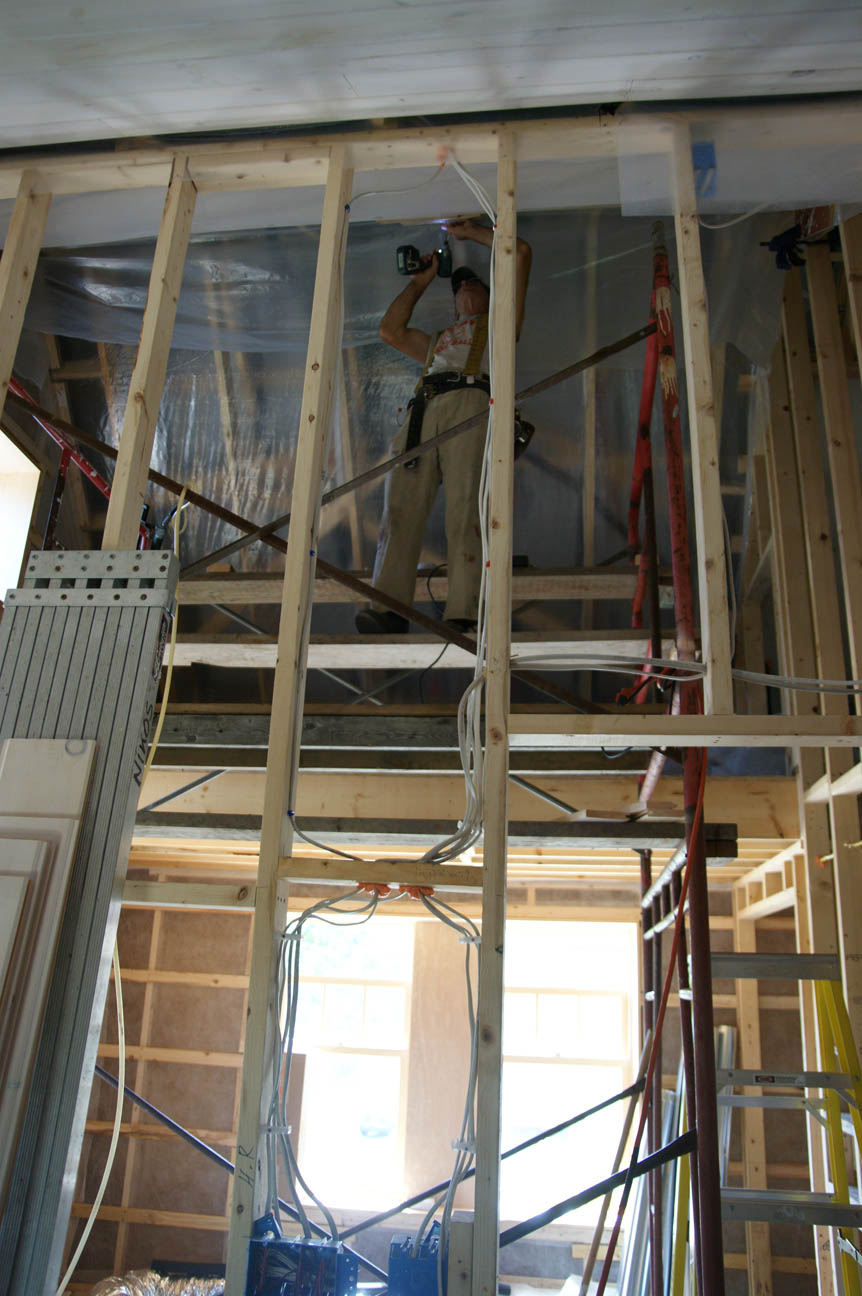
Adam installing tongue and groove boards in the master bedroom

The third floor space has changed dramatically over the last couple of weeks.
Over the past weeks we have been steadily putting up our siding. All that remains is the top 1/3 of the west face.
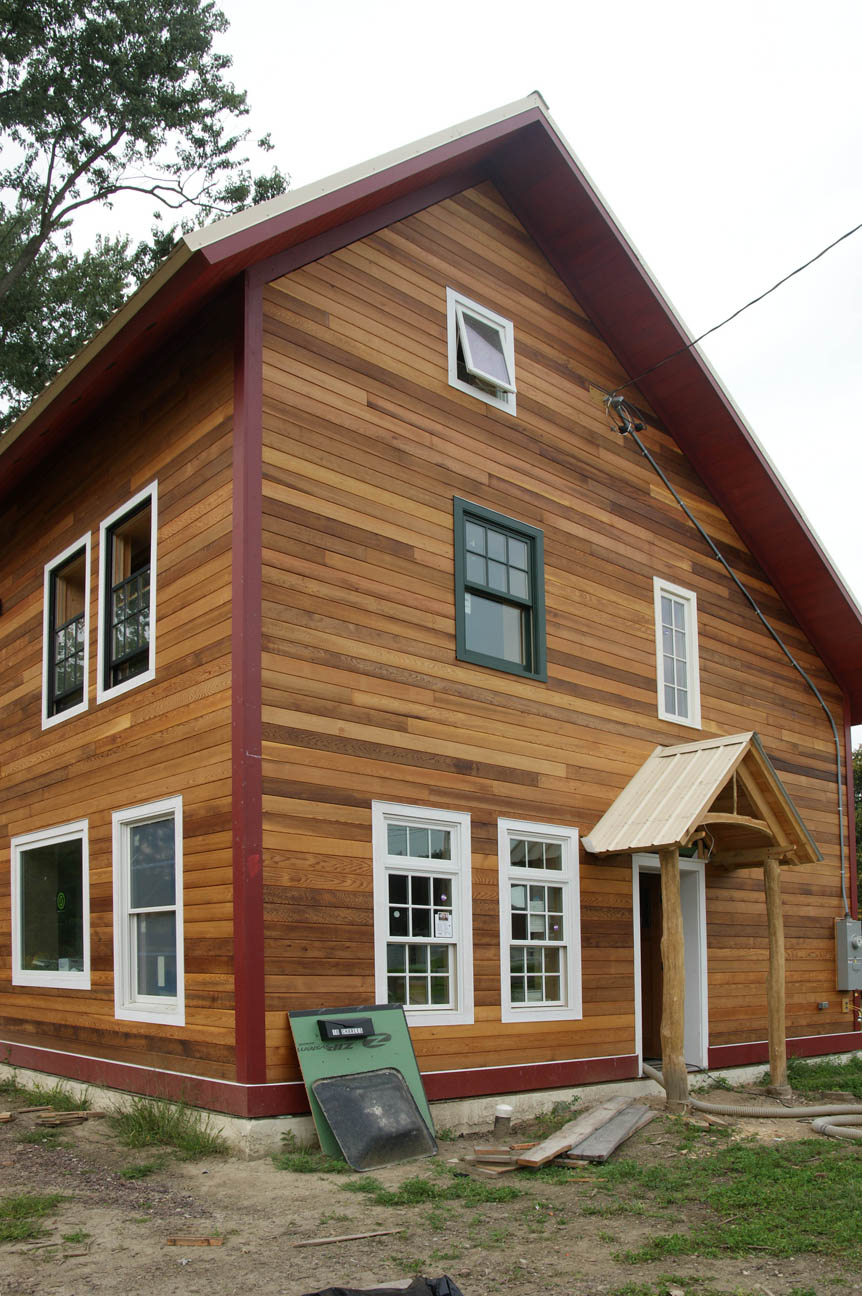
The finished east side of our house. Luckily, we finished just before hurricane Irene swept through. Just prior to this photograph, the staging was stacked four high. In other preparations, we emptied our makeshift garage into the house and put 125 bales of cellulose into the box truck.
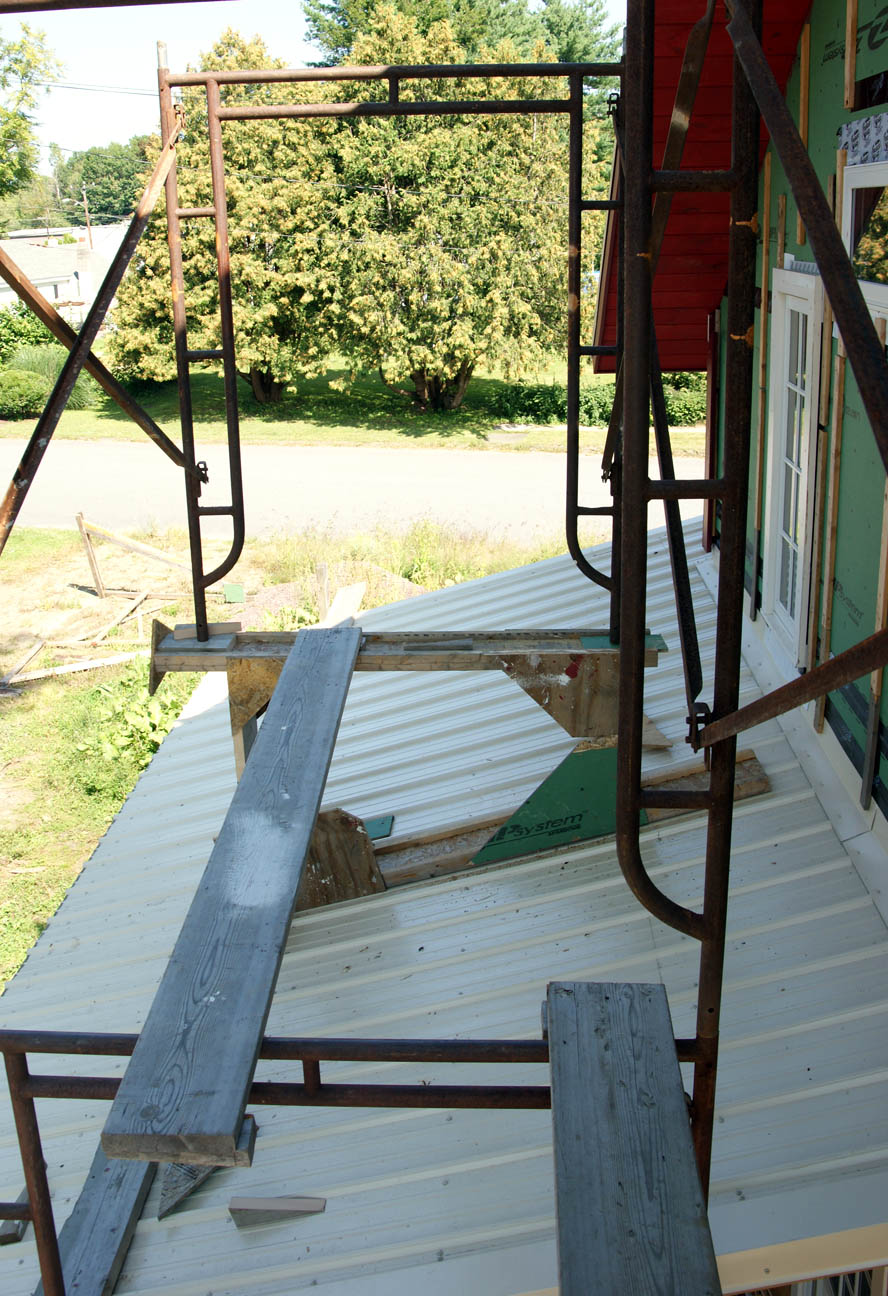
Here is our solution to putting staging on our 15 degree sloped porch roof. You can't see it here, but we have a 2x12 connected to the under side of the porch and spanning the length of the roof that prevents the assembly from sliding off.
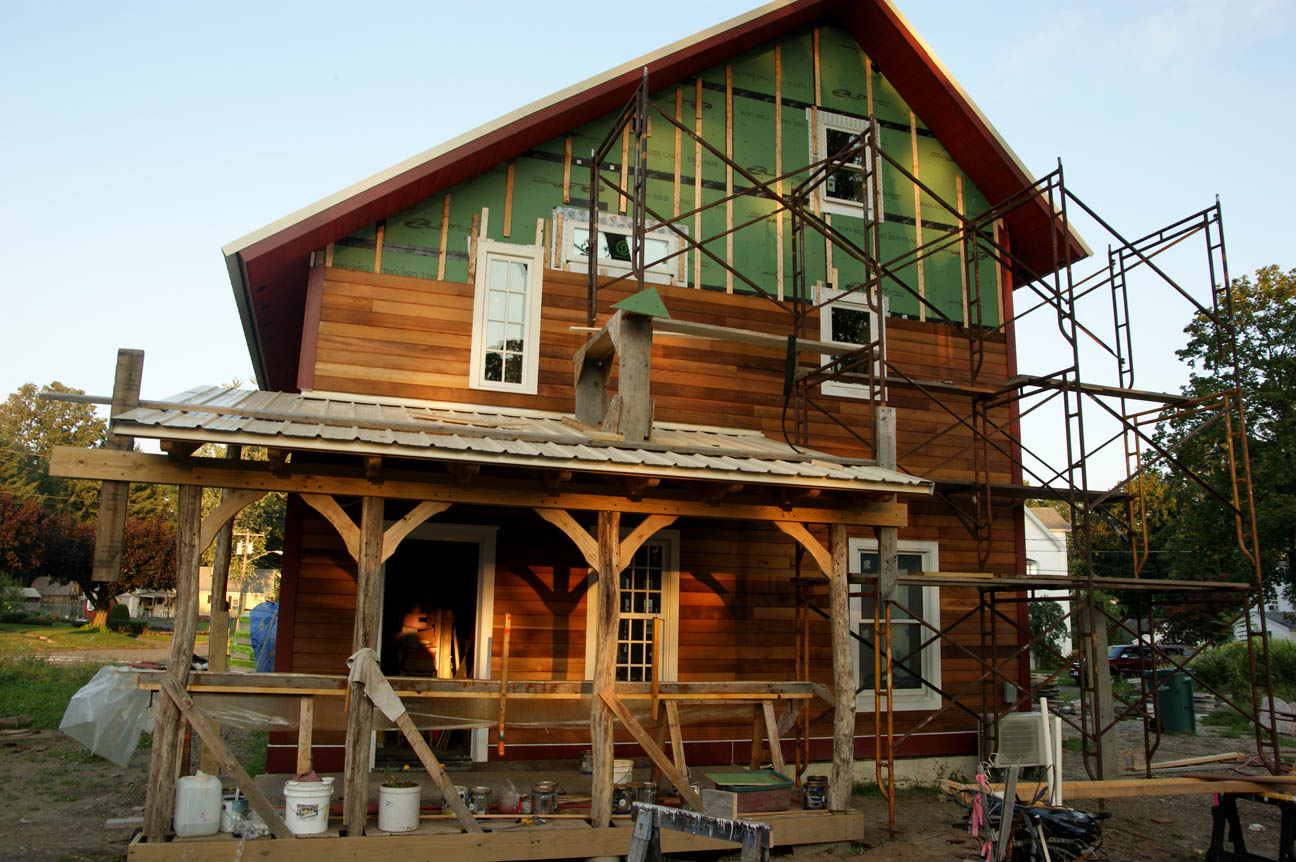
The west face of the house and another view on the scaffolding on top of the porch. Note the shadow of the curved porch braces.
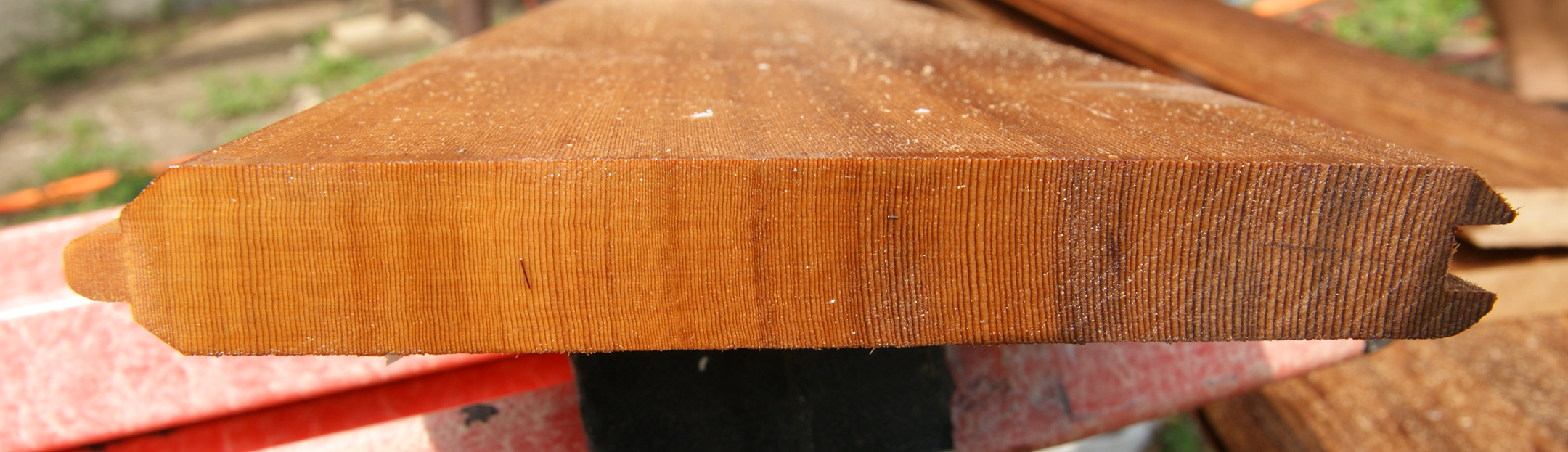
This wood is amazing. It took 283 years for this redwood tree to grow five and half inches. This board represents only part of the tree's radius as well. Adam, who has surveyed these trees in person, estimates the tree to be at least 1000 years old (see his comment on this post)! I feel bad about using it, and I keep having to remind myself that I purchased this wood through Craig's List second hand. Frankly, I think it should be a crime to cut down such old trees. I hope we don't inspire more people to seek out this type of material.
We have blown in the large majority of the insulation. This is really exciting because insulation is the foundation of an energy efficient home. The cellulose insulation that we are using is made locally in Belchertown by National Fiber. They use shredded and fluffed unread New York Times and Boston Globe newspapers. The cellulose is mixed with 17% borate which is a non-toxic fire-retardant and insect repellant. It also inhibits the growth of mold and mildew. Competitor’s use ammonia sulfate which is more toxic and less effective.
When all is said and done we will have 12.5″ of cellulose in the walls (R-45)

Cellulose spray box truck.
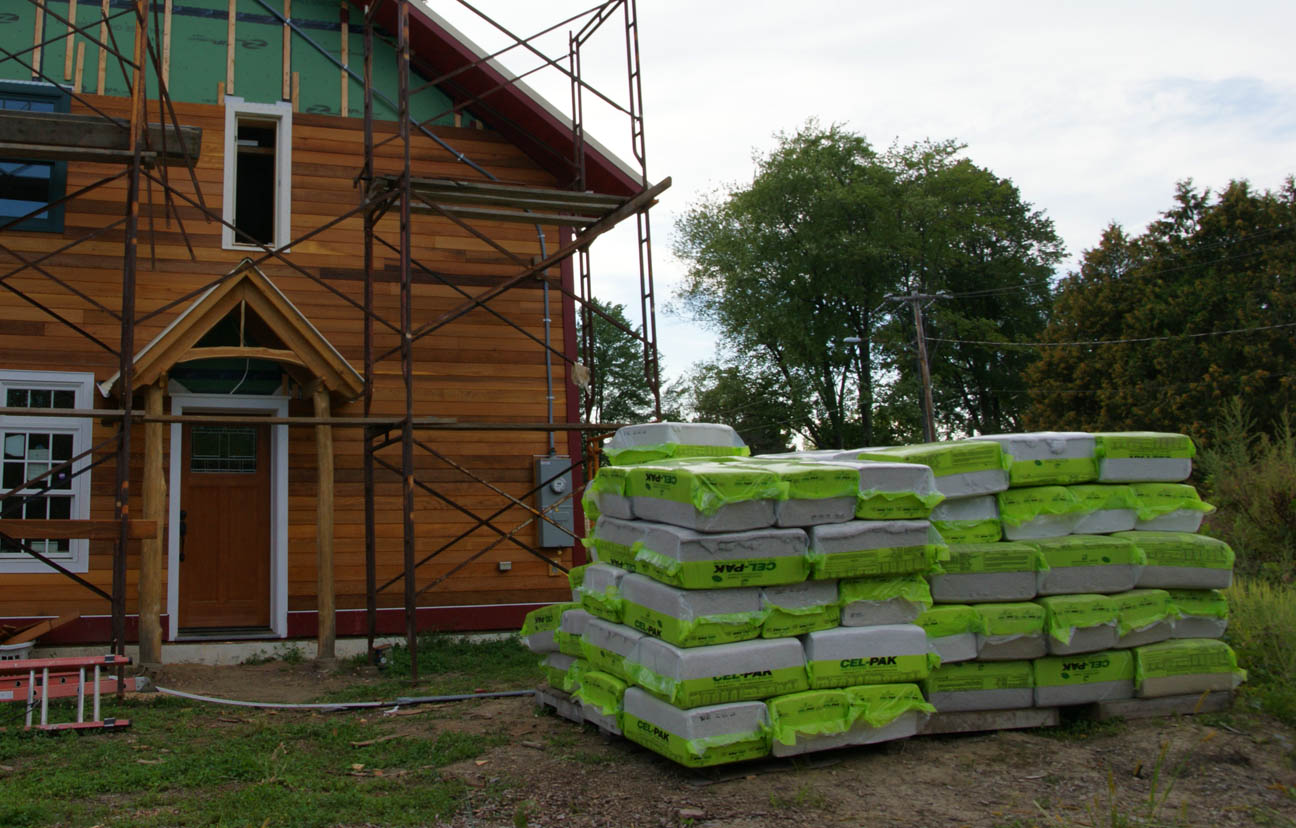
This pile of 125 bales of cellulose is only a fifth of what I estimate the house will need.
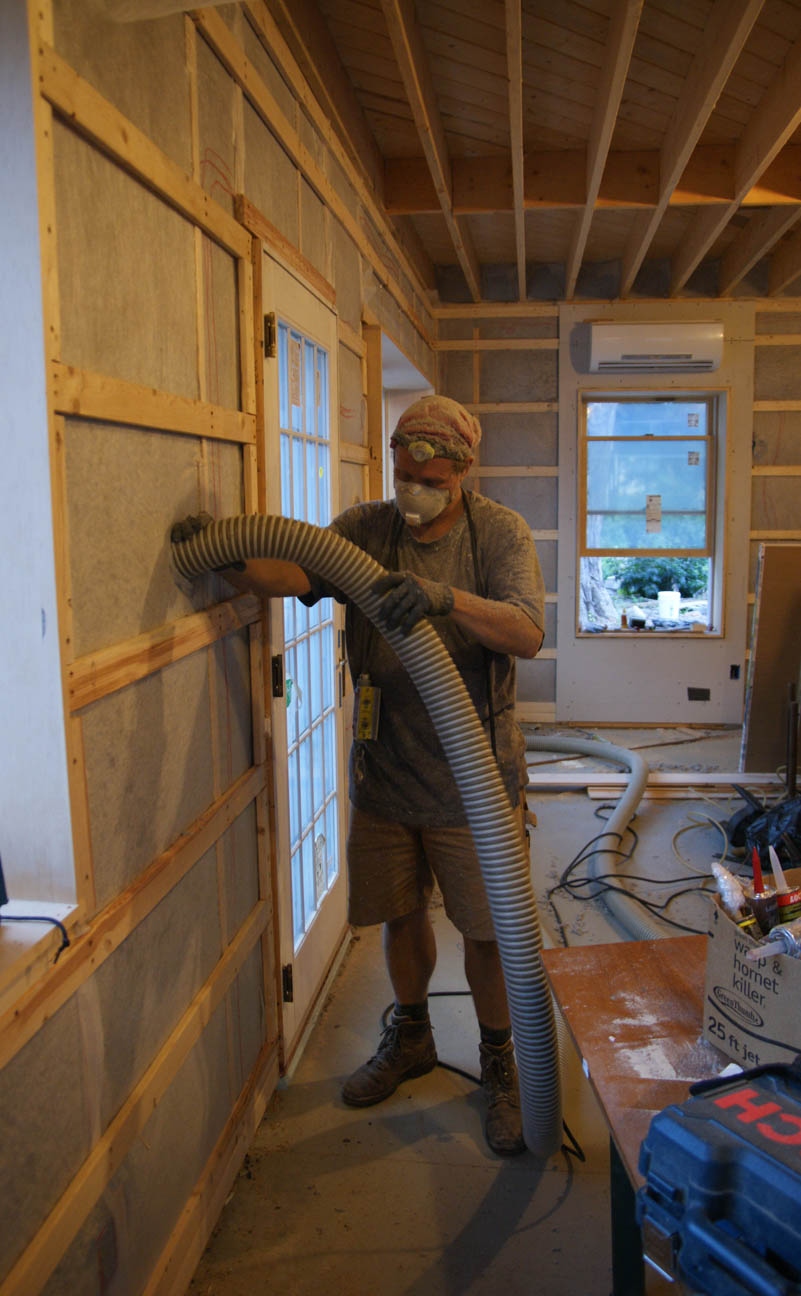
Uptight Insulators at work blowing dense pack cellulose
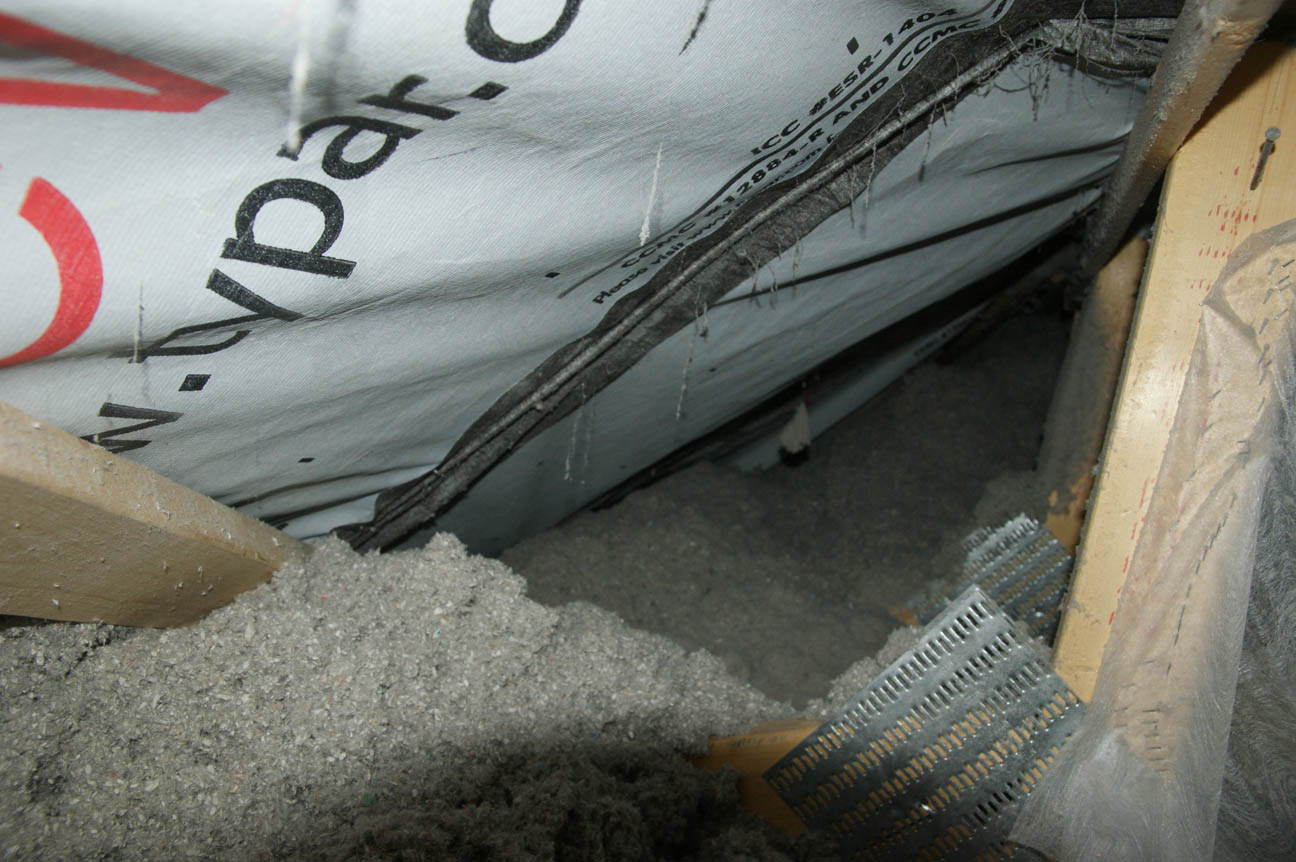
Cellulose in the bays of the parallel chord trusses
Thank you John for helping to load the cellulose!
I forgot to add one other interesting detail about our solar hot water system. We were not terribly excited about the off-the-shelf insulation for the exterior piping for the solar hot water system. It seemed that it would leave exposed gaps. Like the perfectionists we are, we thought we could do it better.
Adam suggested cutting 4″ PVC in half, reassembling it around the pipe, and then blow in spray foam insulation. The process certainly took more time than using off the shelf materials, and we experienced some problems with the spray foam. It turned out there wasn’t enough moisture in the PVC after we sprayed in the foam and it never cured. Rather than take the whole thing apart, we drilled in new holes and sprayed in water and foam. This seemed to solidify it all, but I am sure that the resulting foam is not as insulative as it could be.
In the end, I am not sure we would use this method again–even if we did spray in some extra water to start. Probably the way to go is to try to double up Armaflex pipe insulation.
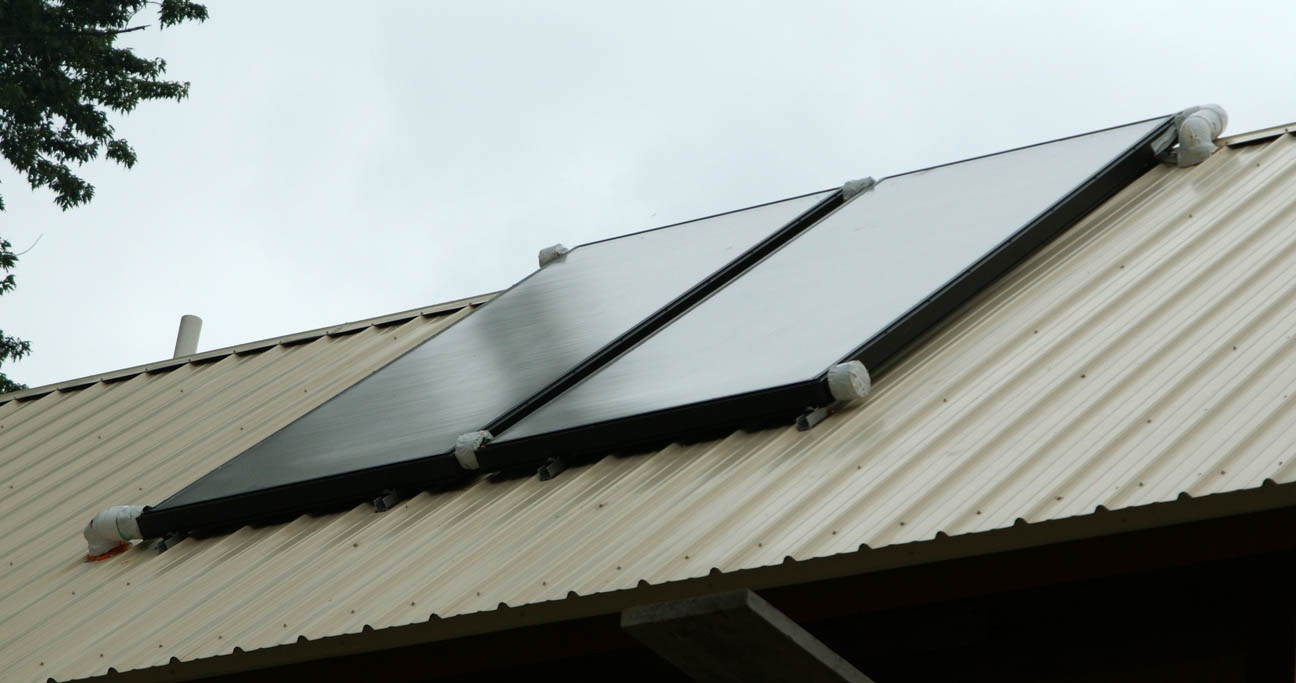
Experiment with alternative method for insulating exterior solar hot water piping
Another milestone that I never thought would happen is all but done–the preparations for insulation. This involves netting and strapping all of our exterior walls and ceilings as well as any interior walls we want to sound/fire proof. This process has taken about a week and a half and we will begin blowing insulation tomorrow.
One of the more complicated aspects of this job is the exterior ceiling. Before we were able to begin we needed to work with our local building inspectors who didn’t think that using Typar in the roof was allowed by code. Eventually, we got an engineer to provide us with a stamped diagram of the assembly. The assembly itself is fairly complicated to execute because we wanted to create a solid air-vapor barrier below the cellulose and we are using two different ceiling materials. In the master bedroom and hallway we are using tongue and groove knotty pine, while the third floor, the bathroom, and the closet will be sheet-rocked. The vapor-air barrier behind the pine will be a cross-laced polyethylene plastic called Tu-Tuf (a superior plastic available through EFI.org); the sheet rock will be the air barrier elsewhere and it will be treated with a vapor barrier primer. Making sure that the air-vapor barrier is continuous across the top plates of the partition walls is the challenging part. This involves using acoustical sealant behind the Tu-Tuf, sheet-rock, and strapping so they all seal to the top plates. The acoustical sealant is desirable because it never hardens. So when one installs the sheetrock it can just compress the sealant that may have been applied the day before.
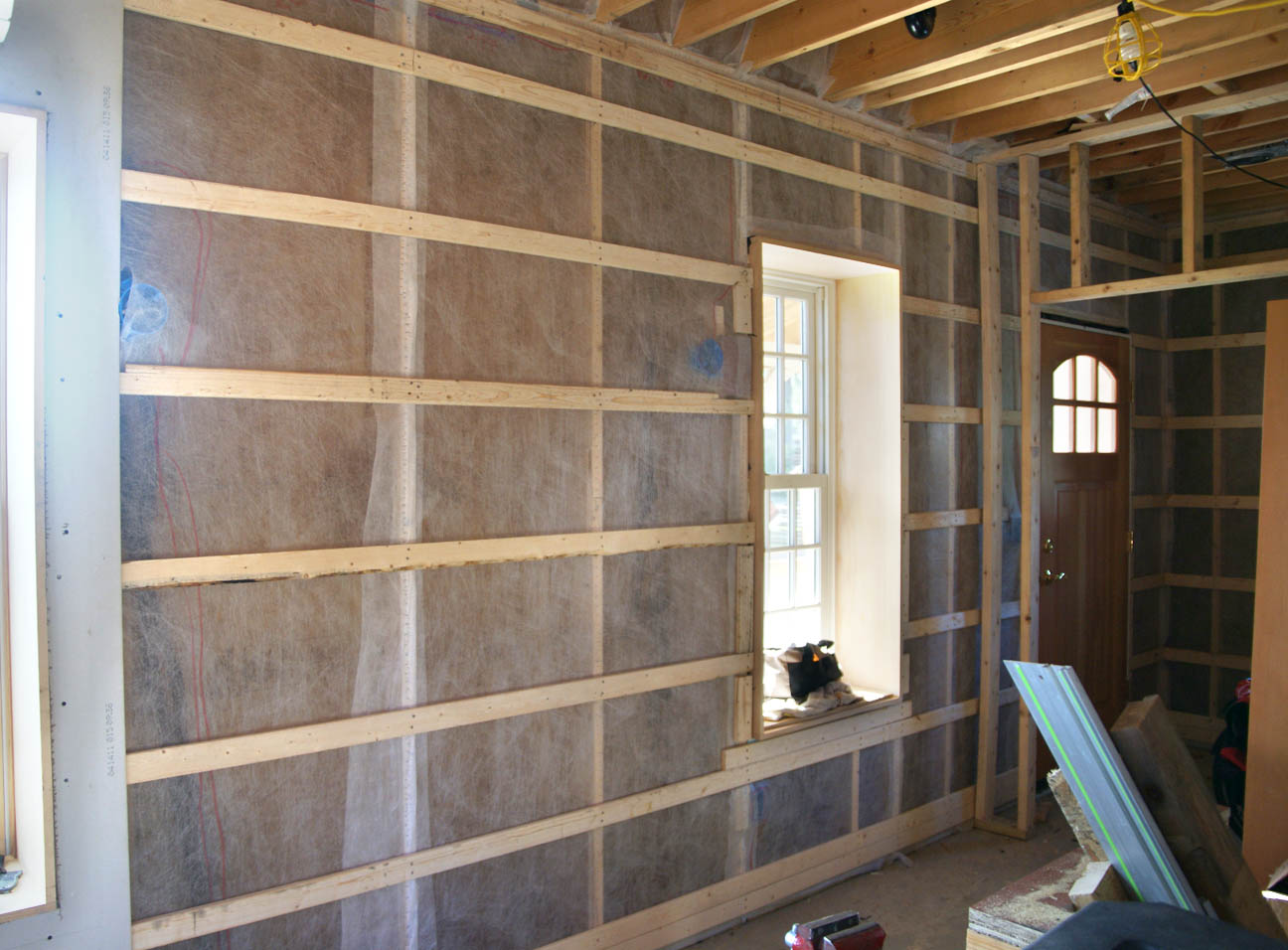
Netting and strapping first floor west wall. We are really starting to get a feel for the actual space in the house--much smaller and cozier.
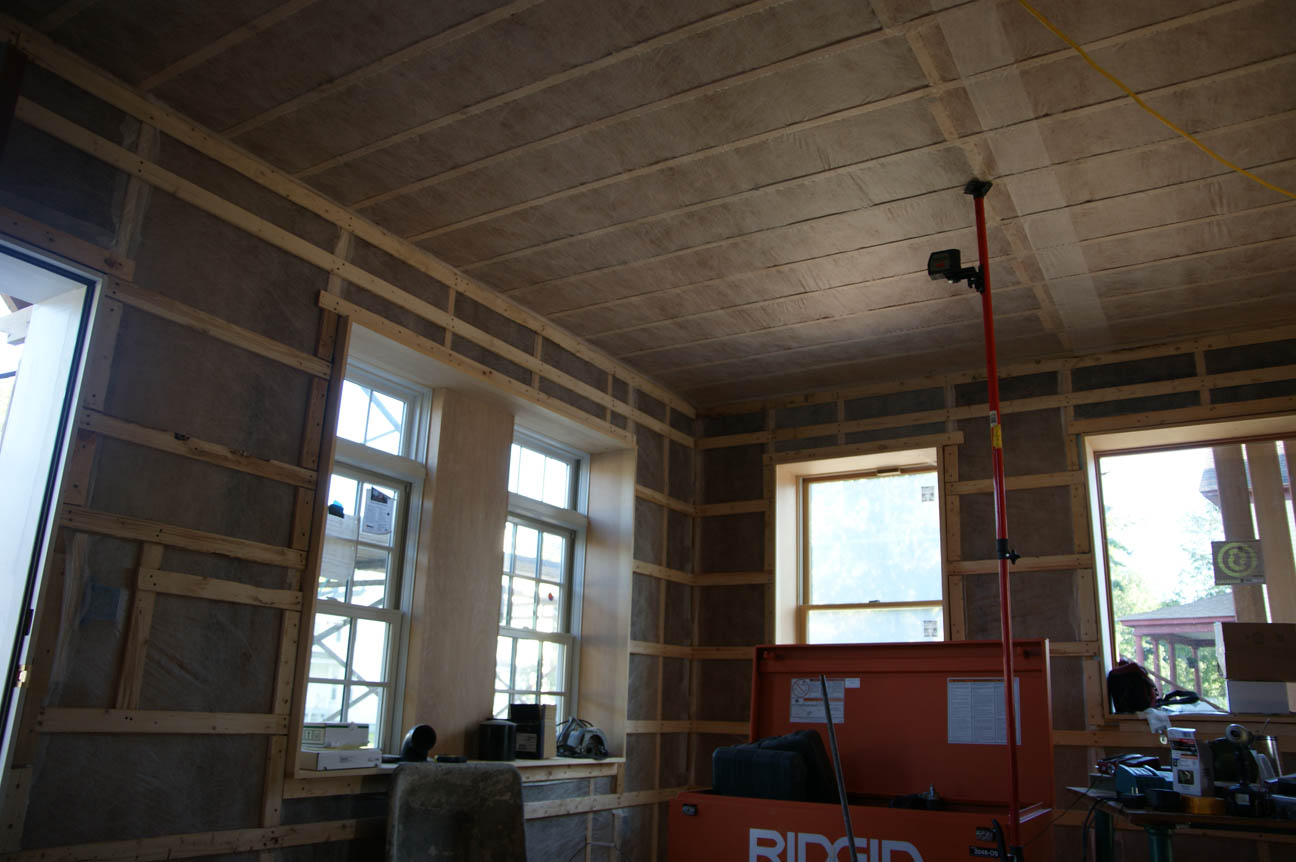
Netting and strapping first floor living room. The ceiling, which is below the master bedroom will also be insulated for sound proofing.
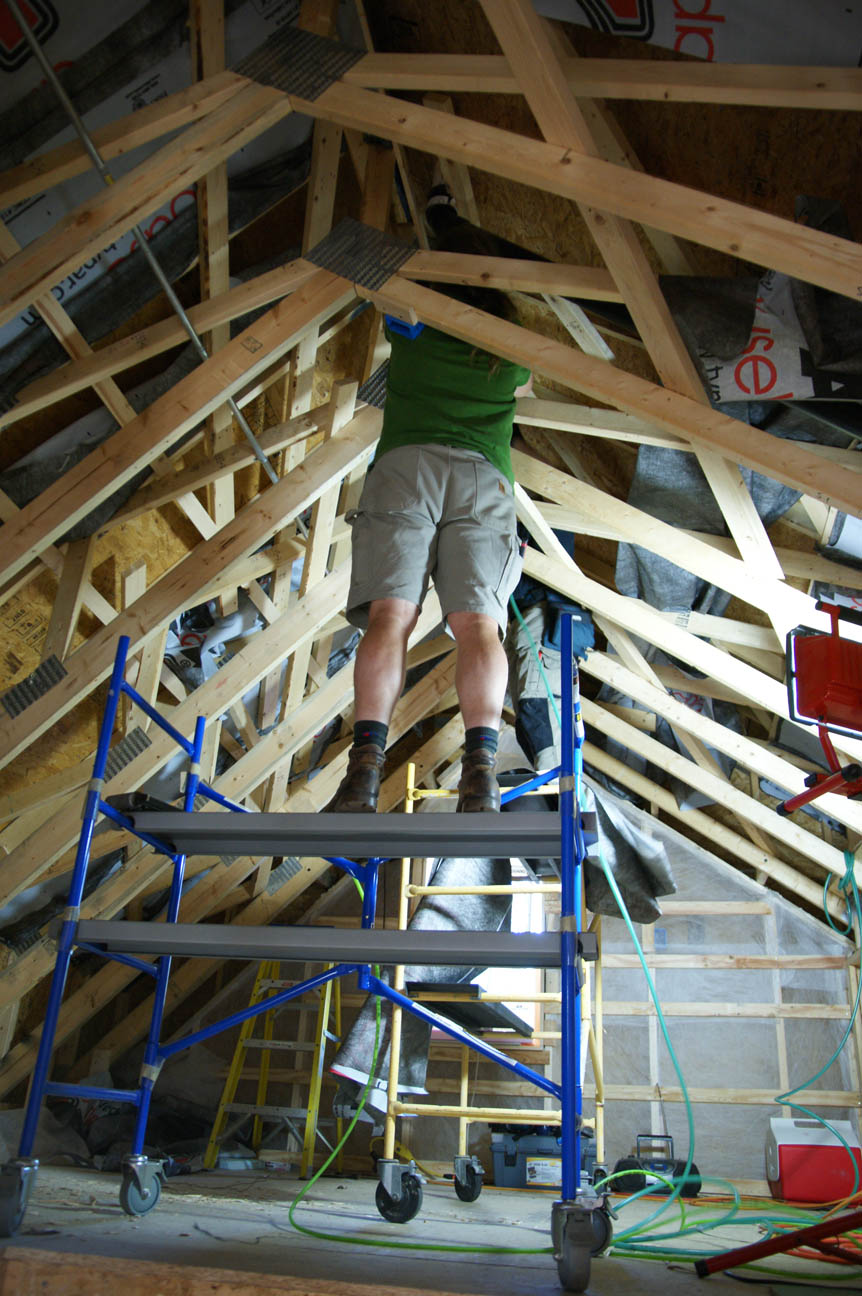
Uptight Insulators installing Typar in the roof

Using Typar to create a ventilation plane below the sheathing of the roof. In the bottom left hand corner you can also see that we used white styrofoam packaging for insulation.
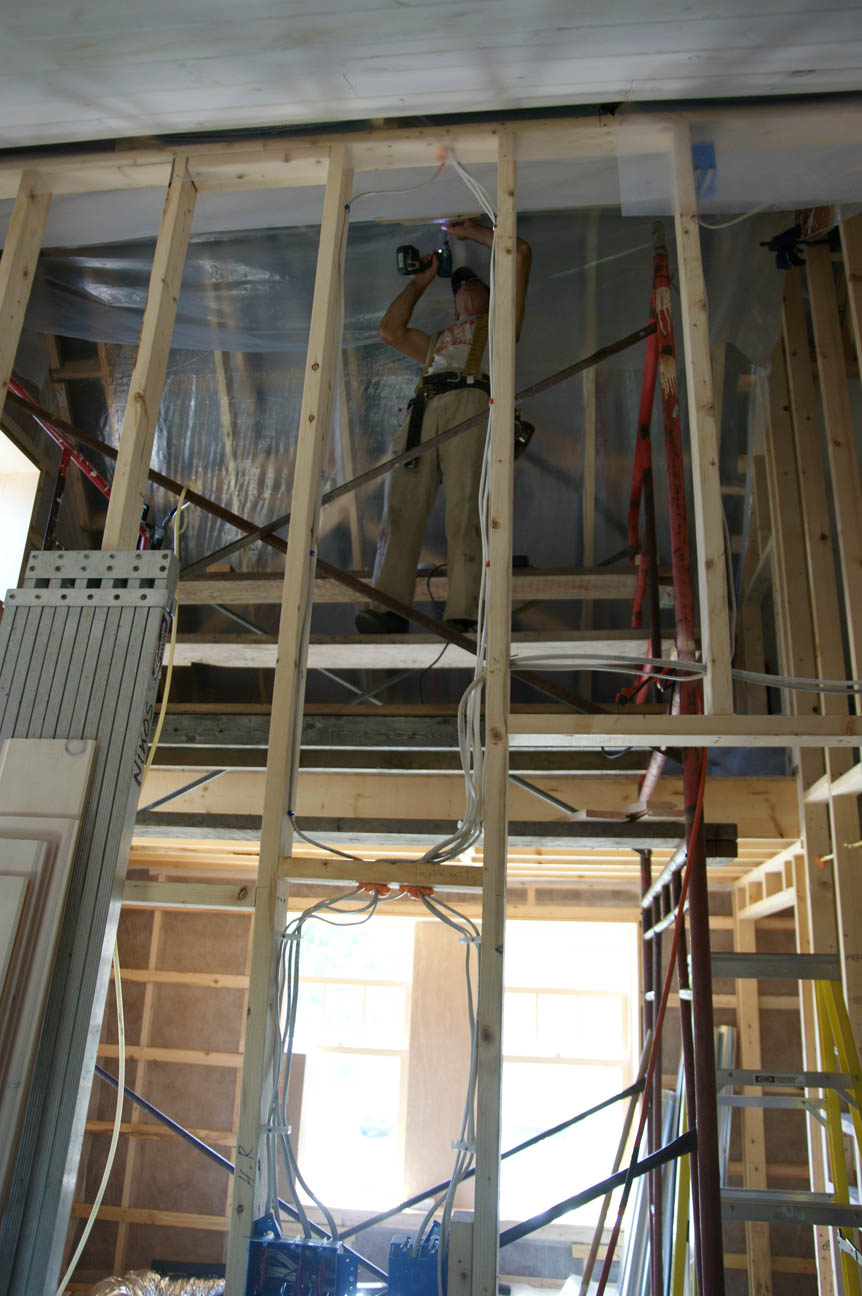
Adam installing bedroom ceiling tongue and groove boards.
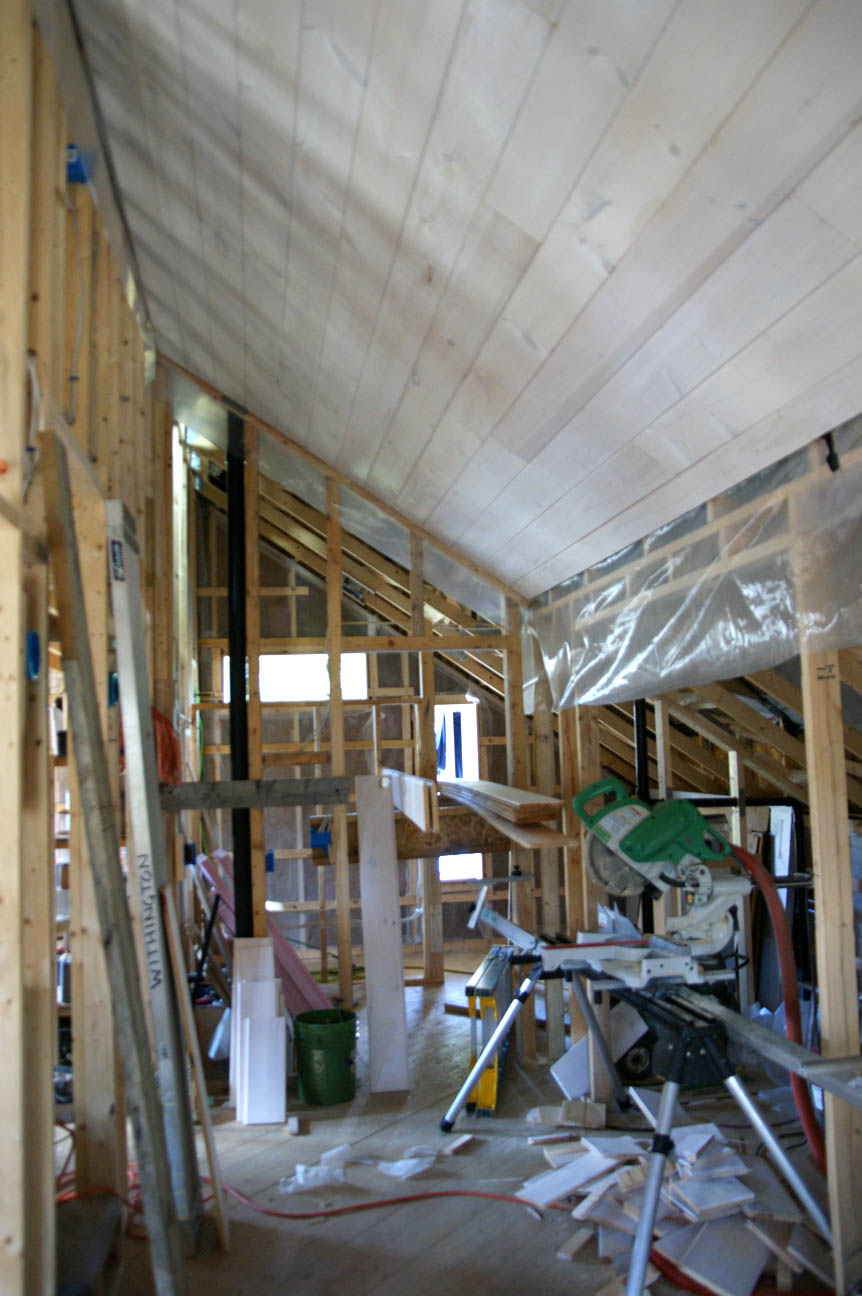
Tongue and groove knotty pine boards used for the ceiling in the upstairs hall. We really like the look. After finding out that a white wash stain was $54 a gallon we figured out how to make our own at a fraction of the cost. We combined our white exterior solid stain with water at a ratio of 1:1. Voila, semi-solid white-wash stain at $20 a gallon. You can see the Tu-Tuf vapor-air barrier hanging down on the right. When doing this type of installation you want to leave a generous flap so it is easy to use the acoustical sealant behind it.
Over the last couple of weeks I have installed the solar hot water piping runs from the third floor drain-back tank room to the mechanical room on the first floor. The drain back tank is on the third floor in its own little mechanical room to improve the electrical efficiency of the system. The pump has to work harder to restart the system after it has drained back and the shorter the distance between the drain back tank and the panels the less the pump has to work.
Installing the pipes was quite easy with the help of my plumber’s ProPress. Rather than soldering all of the fittings this tool–along with its associated specialized fittings uses rubber O-rings and compression to make a seal.
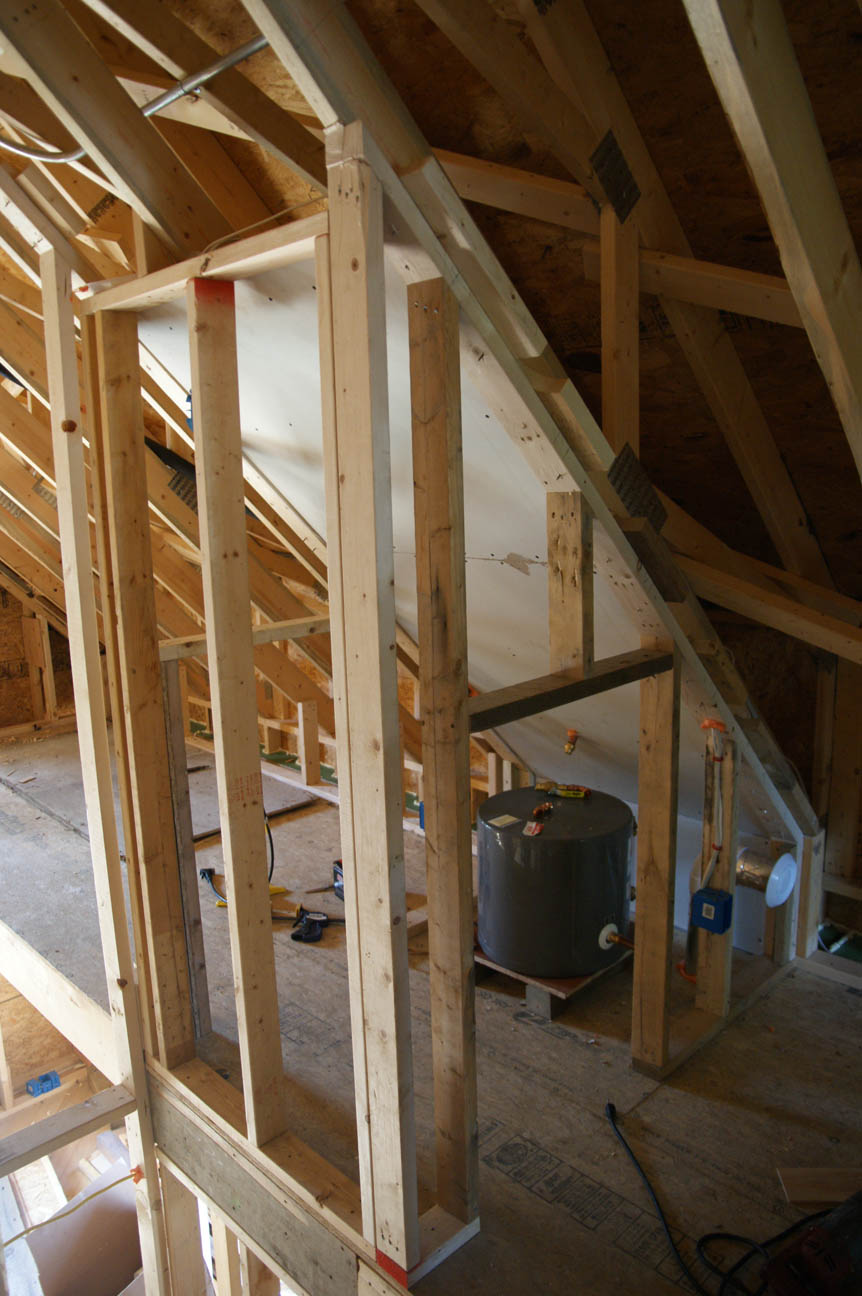
Third floor drain back tank room

Here is our drain back tank.

Solar hot water pipe run under third floor stairs. The aren't parallel because I ran out of soft copper. I was creating 60 degree bends whereas you can only purchase 45 and 90 fittings. We had the soft copper for use in the area where the pipe ran through the roof insulation--this way we avoided any fittings in an area that we don't want to ever have to disassemble.

Solar hot water pipe runs along the first floor ceiling heading to the mechanical room.

Before we take down the staging to the solar hot water panels or cover any of the pipes with insulation, we wanted to make sure there were no leaks. We capped off one end and put this gauge/schrader valve combination on the other. The panel loop held 80 psi for several days (an hour would have sufficed). It was neat to see it oscillate between 70 psi at night and 80 during the day.
 Design & Construction of Spartan & Hannah's Home